Materials & Applications
Chantilly vs Alençon Lace: Read the Ground and Outline
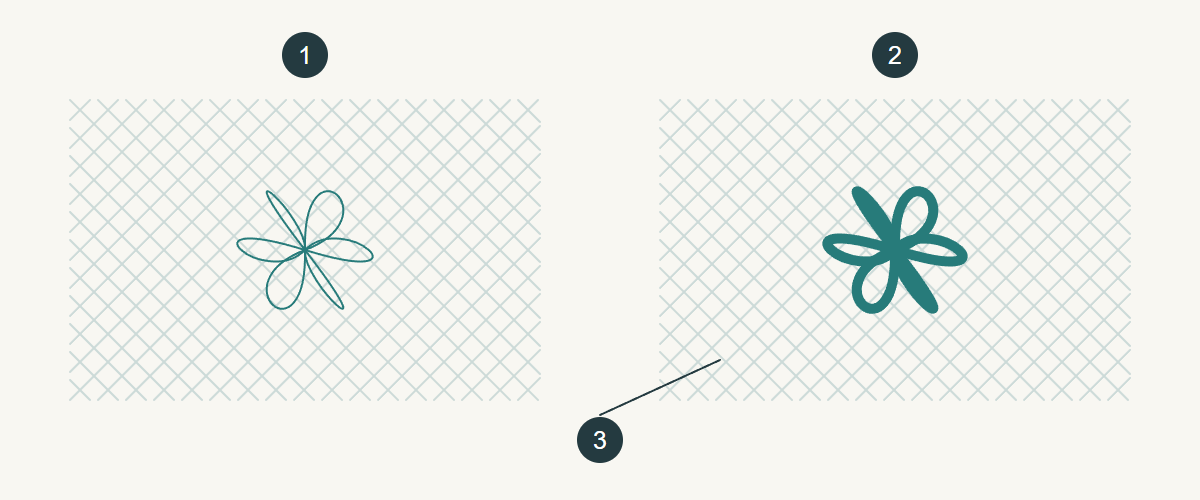
Chantilly usually suggests a fine, transparent lace with shaded motifs; modern bridal Alençon often suggests a more pronounced, raised outline. That is a useful visual distinction, not a test of manufacture or origin. Historical Chantilly is associated with bobbin lace, while point d’Alençon is needle lace. A modern corded product may imitate either appearance through a different process. Ask separately what it looks like, how it was made and what the garment needs.
Separate three questions hidden inside one name
The Metropolitan Museum of Art identifies its nineteenth-century Chantilly piece 03.1.2c as bobbin lace. Solstiss describes contemporary Chantilly and bourdon effects in its own production: a thicker outlining or filling yarn can give depth. Neither source supports identifying every floral net with an outline as handmade Alençon. Record historical names as context, then use the seller’s documented construction for the actual order.
A useful sample label has separate fields for style, manufacturing process and declared components. “Alençon-style, embroidered and corded on a retained net, composition pending” is a clearer provisional description than “authentic French lace” copied from a reference photo. If provenance is a purchase condition, require evidence tied to the supplied article and maker. Appearance cannot fill a missing origin declaration.
Compare the parts you can actually inspect
Place both samples over the same contrast card and then over the proposed underlayer. Use the same orientation and lighting. Examine a complete flower, the space between flowers and a border. A dark photograph can make a fine ground disappear; an ivory lining can hide differences in shading. Turn the pieces over to see whether the raised line is integrated, embroidered or separately attached; an uncertain observation stays uncertain.
The table describes appearance cues, not pass/fail grades. A fine Chantilly-style cloth can include outlining, and an Alençon-style article can be light. Touch the outline gently and compare its height with the surrounding motif instead of assuming that a photographed dark line is thick cording. Shadows, yarn colour and stitch coverage can all change its visual prominence.
| Part | Chantilly-style cue | Alençon-style cue | Confirm on sample |
|---|---|---|---|
| Ground | Fine visible net | Net may remain visible | Openness against actual underlayer |
| Motif | Shading within flower | More emphasized contour | Face, reverse and physical relief |
| Border | Fine scallop or fringe possible | Outline may follow scallop | Usable attachment path and repeat |
Match the outline to the panel, not to a prestige ranking
On a transparent sleeve, a raised outline can become the first visible feature, especially where the arm bends. On a layered skirt, a fine shaded flower may disappear over a similar-coloured lining. Hold each candidate at the intended viewing distance, then inspect the contact surface close up. If the design needs a clear flower at a distance, request that effect explicitly instead of ordering the Alençon name as a guarantee.
A corded motif is not automatically safe to cut out. Identify which threads hold the outline, what remains between motifs and where a proposed cutting line crosses connections. Trial a spare motif with the garment maker’s permanent securing plan. If trimming releases the outline or leaves unsupported islands, keep the ground, change the cut line or choose a purpose-made appliqué. Do not trim a whole panel first and invent the attachment afterwards.
A hypothetical neckline decision
Suppose a designer needs a small flower to sit partly above a bodice edge. Candidate A has subtle shading and a fine outline; B has a raised contour but several internal areas depend on the net. The intended effect is a distinct flower without a visible rectangle of ground. No measurements or outcomes in this example are All4Lace sample results.
First trace the flower and proposed neckline on a transparent layout sheet. Ask the maker to mark permanent attachment paths and any ground that must remain. Compare the assembled trial against the same skin or lining reference. If B unravels when prepared for application, its stronger-looking outline does not rescue it. If A becomes visually lost, change contrast, placement or motif scale before rejecting the entire style family.
Put measurable differences into the sample request
Send a close photograph and a wider view with a scale, the intended panel outline, desired transparency and whether the lace must extend. Ask for a full relevant repeat and border, declared composition by retained component, and construction information for the exact reference. When a sample cannot show a complete motif, it cannot settle a cut-appliqué or border-placement decision.
Compare the cost of the accepted layout rather than metre price alone. Extra hand placement, discarded ground and a border repeat can change usable yield. A supplier’s minimum quantity or a fine historical name does not establish the labour your garment requires. Keep the selected sample, placement drawing and agreed changes together so a later “similar” substitute is reviewed against the same features.
Questions that often change the answer
Is Chantilly always silk? A style name does not confirm the present fibre content; obtain the supplied article’s declaration. Is Alençon always heavier? Raised outlining can add prominence, but whole-fabric weight also depends on ground and coverage. Is every corded lace Alençon? Cording describes a feature; traditional point d’Alençon names a specific lace-making tradition. These are different levels of description.
Can the drawing authenticate a sample? No. The illustration isolates a fine motif, a pronounced outline and retained ground so the enquiry is clearer; it is neither a stitch map nor an origin certificate. Historical objects should be examined by a textile specialist rather than cut, stretched or burn-tested to decide a commercial label. For a new garment, approve the actual joined sample under the intended care and movement conditions.
Discuss your embroidery project
For an All4Lace enquiry about a similar decorative effect, send the reference image, panel outline, required ground visibility and whether motifs will stay on net or be applied separately. Current construction and sample options can then be discussed.
Contact Zhijin