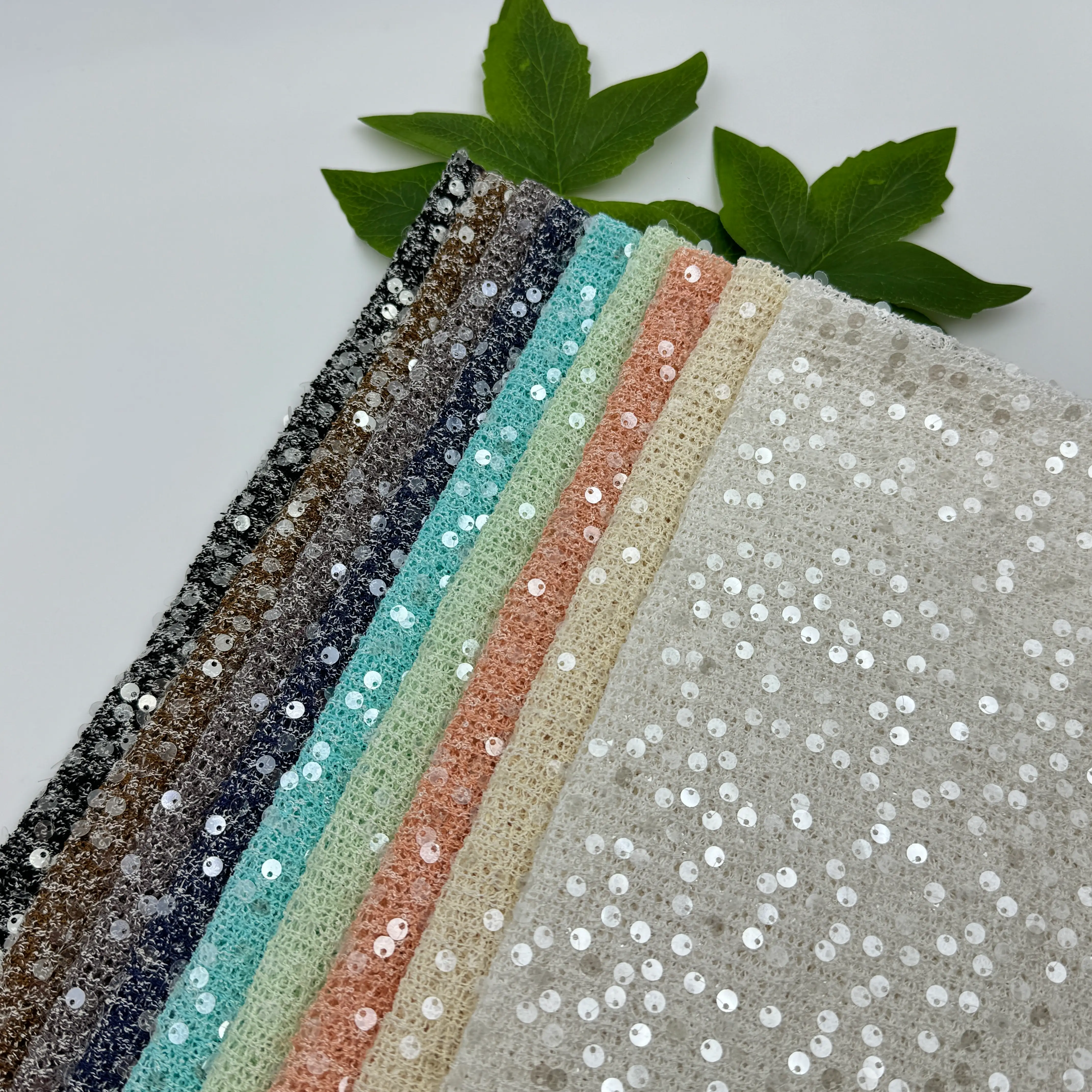
Materials & Applications
Dense vs Sparse Sequin Fabric: Coverage, Ground and Visual Balance
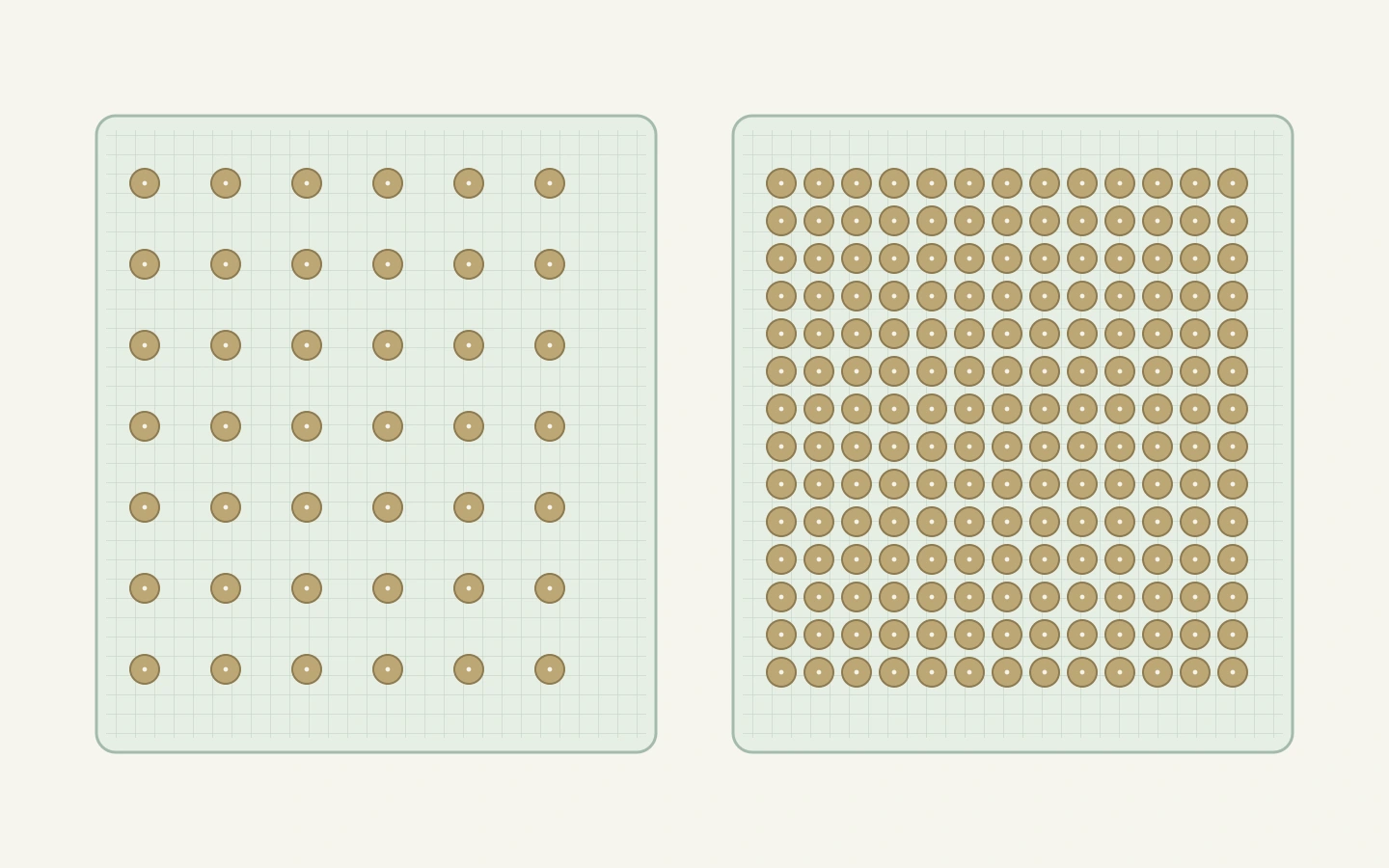
Dense and sparse describe how decoration is distributed, not two fixed grades of sequin fabric. A dense field may reduce the visible gaps between pieces; a sparse arrangement leaves more of the ground as part of the picture. Neither description tells you the exact weight, price or measured coverage. Choose the balance between reflection and visible background that serves the garment, then describe that balance clearly enough to sample.
Coverage, count and size answer different questions
Piece count tells you how many sequins lie in a defined area. Nominal size describes an individual piece. Visible coverage concerns how much of the viewed area the decoration occupies. Overlapping pieces can increase the count without increasing the visible decorated area to the same degree. A few large discs can also occupy more visible space than many smaller ones. Keep these descriptions separate.
Do not label a sample with a coverage percentage estimated from a styled photograph. Glare, the colour behind the net, folds and hidden overlaps make such a number ambiguous. If a percentage is required, agree the viewed area, what is counted as decoration and the measurement method. Otherwise, use an approved visual reference and identify it as a visual target.
What is the space between the sequins doing?
On mesh, open spaces reveal the ground and whatever sits behind it. A sparse arrangement can therefore read differently over a lining close to the ground colour and over a contrasting one. On a more visually solid ground, the gaps may reveal a continuous colour or texture instead. Assess the background as an intended layer of the design rather than assuming empty space is an unfinished area.
For example, a designer may want a sleeve to remain visibly sheer between scattered motifs, while a bodice panel should present a more continuous decorated surface. Those are two placement goals, not a rule that every sleeve needs sparse decoration or every bodice needs dense decoration. Compare samples on the same proposed garment layers.
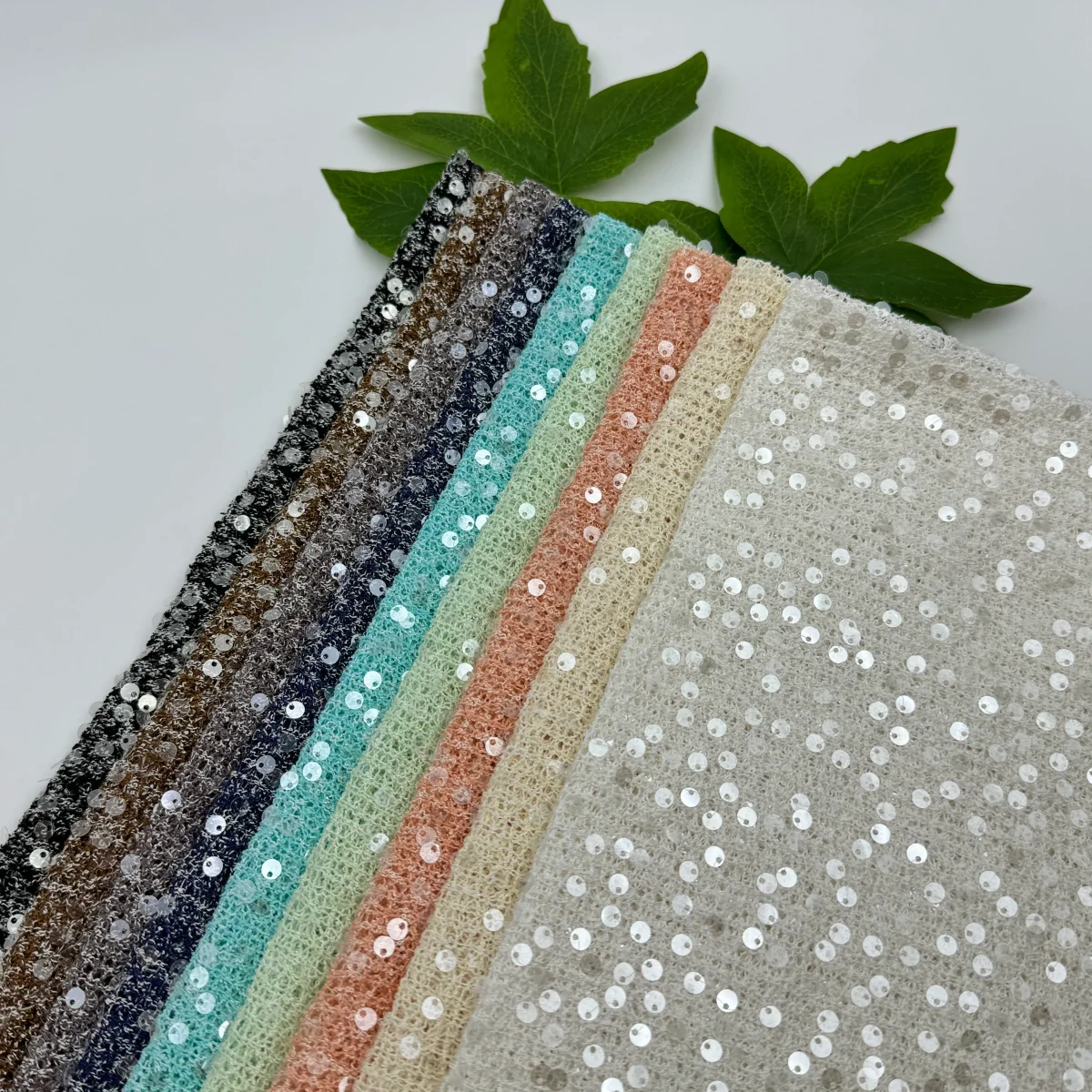
A fabric can be dense in one place and open in another
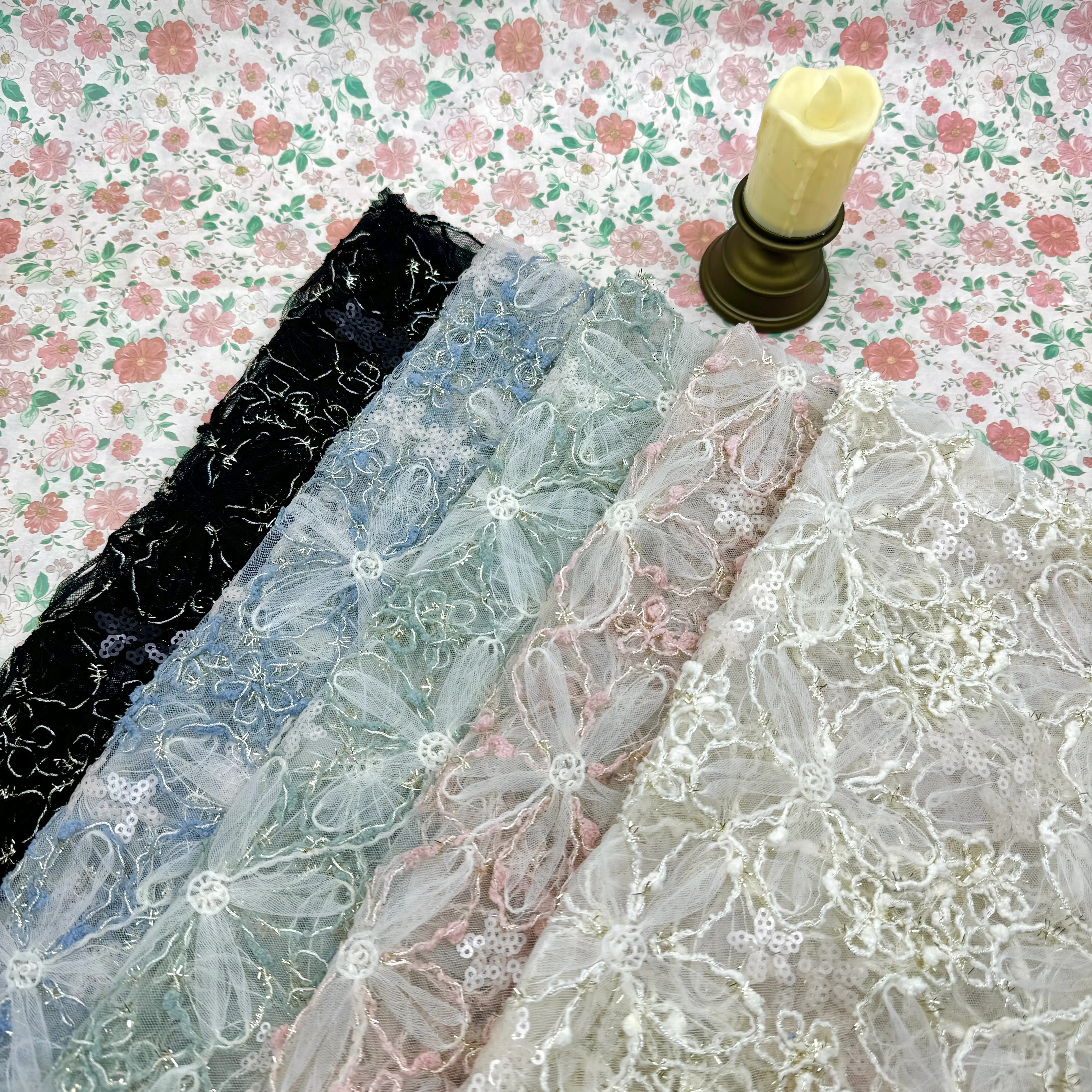
A floral motif can have a compact centre and open branches. A border can concentrate decoration near the hem while the field above it stays quieter. An ombré-like layout can change the spacing gradually. A single close-up of the densest spot does not represent all these areas, so ask for a view that shows the complete motif or the whole transition.
Mark the zones that should remain open in the development brief, not only those that need more sequins. This is useful near a garment opening, a seam or an area where the lining should remain visible. A request to make everything denser can remove the contrast that made the reference attractive.
Compare the visual balance with a common setup
Keep the proposed ground, sequin finish, lining and viewing distance comparable when coverage is the choice you want to isolate. If the references differ in several respects, record those differences and treat them as complete design options. This table organises the observation; it does not assign test results to either layout.
| Question | More open layout | More continuous layout |
|---|---|---|
| Visible background | How do clear areas relate to the lining? | Where does the ground still remain visible? |
| Pattern balance | Do separated motifs stay clear at garment scale? | Does the intended motif remain distinguishable? |
| Movement and light | How do isolated highlights move? | How does the larger reflective field change? |
| Assembly | Which seams cross isolated decoration? | Where is room needed for attachment or joining? |
Density is not a substitute for the finished sample
More pieces do not by themselves establish how two finished fabrics compare in mass, flexibility or price. Piece thickness and material, ground, overlap, stitching and finishing can all differ. When one of those outcomes matters, compare the actual finished references using the agreed unit or evaluation. Do not derive a comfort or durability promise from a coverage description.
For assembly, examine a representative seam area and the reverse with the garment team. A dense centre and an open edge may require different handling within one panel. Record any agreed clear sewing zones as part of the design so a later visual revision does not accidentally fill them.
Questions about sequin coverage
Is sparse sequin fabric lower quality? Density is a design description, not a quality grade. Does dense mean opaque? Gaps, ground and viewing conditions still matter. Can a border have both sparse and dense sections? Yes; show the transition in the reference. Which guide explains piece diameter? Use the 3mm-versus-5mm guide for that separate variable, and the general buying guide for a complete sample specification.
Discuss your embroidery project
Send All4Lace a whole-motif reference and indicate which areas should remain open or become more continuous. Add the intended ground, lining and garment position so we can discuss the visual balance on a representative sample.
Contact Zhijin