Quality & Delivery
Freestanding Lace Bridges: What to Check Before Cutting a Motif
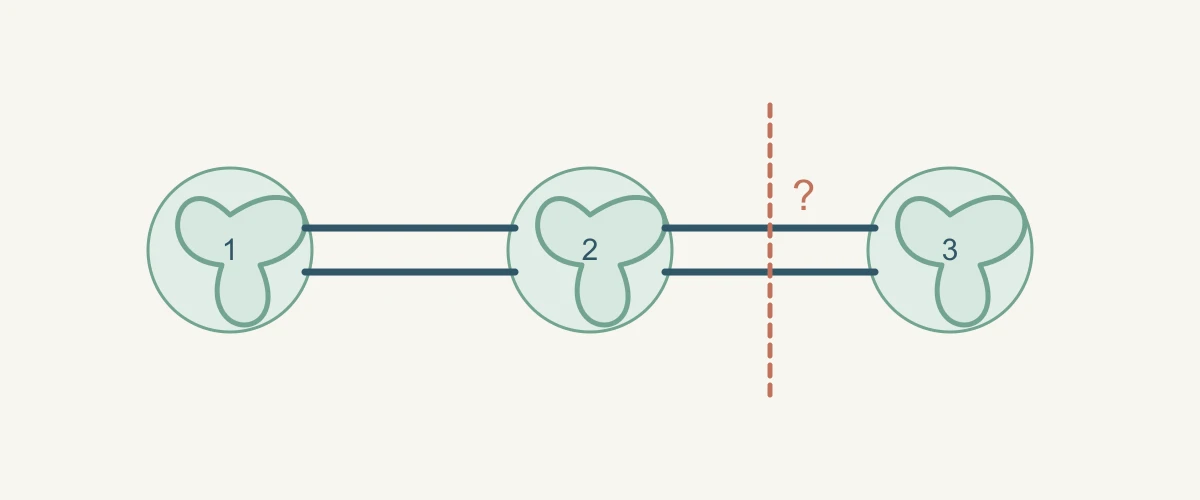
Water-soluble support can hold a lace design during embroidery, but it disappears in finishing. After removal, the permanent stitches must carry the shape. A narrow connection between motifs may be a structural bridge, while a floating travel thread may be only a thread to trim. Cutting the wrong one can separate a flower or open a gap. Buyers should approve the finished, supported-by-stitches sample and agree the cutting route before ordering a custom motif.
1. Confirm what remains after support removal
Ask for both a stitch-out before support removal and a fully finished piece. A freestanding design is built so its stitches interlock and retain the intended shape without a permanent fabric ground. A lace-look embroidery on tulle, by contrast, can depend on that tulle even if the motifs look similar. State which construction is proposed before discussing bridge cutting. Manufacturer tutorials explain water-soluble supports and interlocked stitch layers as general processes; they do not prove that a particular All4Lace item has that construction or has passed a strength test.
2. Map each connection on the approved motif
Place the finished dry sample over a contrasting surface and identify every connection from a motif to its neighbours and to the border. Number junctions on a photograph. Trace a possible path from each motif to the remainder of the piece; an apparently decorative bar may be the only path. Inspect both sides, because underlay and lock stitches may not look alike from the front. Ask the maker which bridges are part of the designed stitch network and which isolated thread tails can be removed. Do not infer cutting permission from appearance alone.
Technical references
3. Approve a cutting route, not a generic clearance
If the garment pattern needs an isolated appliqué, draw the proposed outline on a copy of the finished piece photograph. Mark bridges to retain, bridges that need a redesigned termination, and threads identified for ordinary cleanup. Trial-cut one spare approved sample under the actual handling conditions, without guessing a universal distance from the embroidery. Photograph each junction immediately after cutting and after gentle placement on the proposed garment. A cut that leaves the motif intact on a table may still unravel or distort when sewn into an opening or seam.
4. Recheck after the agreed finishing and care
Water-soluble support selection and removal conditions depend on the actual support, thread and decoration. Do not apply a generic warm-water recipe to an unidentified metal thread, adhesive detail or colour combination. Record the removal route, drying position and any finishing operation used on the approval sample. Look for retained film, stiffness, puckered joining bars, colour change and detached points. If a bridge is weak after removal, approving its appearance before removal cannot close the issue. Care of the eventual assembled garment needs a separate compatible review.
5. Use one decision table for structural and decorative threads
Differentiate a continuous stitched connection from a long floating travel thread and from a loose end. A travel thread may cross an open area without joining motifs structurally; a permanent bridge may be short and unobtrusive. When classification is uncertain, hold trimming and request confirmation from the maker or a controlled spare-piece trial. Ask for a revised motif or support layout if no feasible cutting line preserves the necessary connections. Never hide a broken connection by simply placing the piece on opaque lining without recording the weakness.
| Observed feature | Working question | Decision record |
|---|---|---|
| Stitched bridge between motifs | Does it remain continuous after support removal? | Retain or redesign; mark on photo |
| Floating thread across an opening | Is it a travel thread or a load path? | Confirm with maker before trimming |
| Outer motif point at proposed cut | Can it withstand the intended attachment? | Trial-cut and attach spare sample |
Technical references
6. Record an approval that survives production
The sample card should include artwork version, motif size and orientation, support type as declared, thread identification, pre- and post-removal photographs, numbered junction map, cutting diagram, trial-cut sample ID, garment attachment method and decision owner. Record every altered stitch path as a new sample version rather than silently substituting it during production. Approval of visual appearance does not prove load capacity or guarantee bulk consistency. Where the application carries load or repeated handling, agree relevant physical testing and production sampling separately.
Discuss your embroidery project
When requesting a freestanding lace motif from All4Lace, send the artwork, final size, garment location, proposed cutting line and attachment method. Request a finished sample photographed on both sides after support removal, with structural bridges and any permitted trimming areas marked.
Contact Zhijin