Materials & Applications
Illusion Tulle for Lace Bodices: Colour, Seams and Support
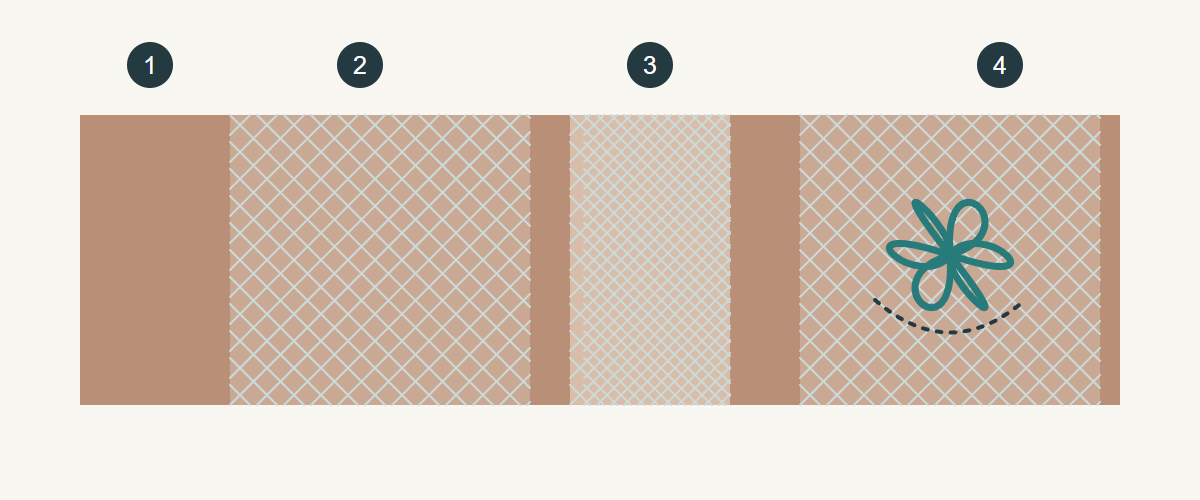
Illusion tulle is a fine, transparent net selected to make a garment area appear less visibly covered. It does not become invisible on every skin tone, and the word does not guarantee stretch or support. For a lace bodice, compare the ground against the wearer’s chosen colour reference, then inspect doubled seams, lace attachment and the planned opening. The best single-layer match can still show a strong seam or distort under decoration.
Illusion is an effect, not a complete specification
Heathcoat lists illusion tulle separately within a range of different nets. Swisstulle’s own skin-colour net products demonstrate that colour choice accompanies fine structure; its wig textiles are not a recommendation to use wig net as a bodice. These primary examples support a limited point: transparency, shade, construction and use must be stated separately. They do not establish an All4Lace illusion product or a universal skin-matching formula.
Ask for the supplied article’s fibre declaration, finish and direction information rather than copying a generic product description. Where a seller’s narrative and specification table disagree, request clarification tied to the sample. Do not choose whichever line seems more attractive or combine two inconsistent declarations into a new composition. Keep unresolved identity as a separate hold point before bulk approval.
Technical references
Compare colour on the person or an agreed reference
Use clean spare swatches in several candidate shades, labelled so later comparisons are possible. With the wearer’s agreement, compare them over the intended body area without pulling the net tight or adhering it to skin. Where personal fitting is unavailable, use a clearly identified colour reference and mark final fitting as outstanding. A screen photograph cannot replace the eventual wearer’s approval.
Check under the intended indoor light and another relevant viewing condition, keeping comparison positions consistent. Photograph a wider view and a close view with the same exposure for all candidates where possible; automatic exposure can hide the net in one frame and reveal it in another. Ask whether the design values a close match, a warmer cast or a deliberately visible contrast rather than assuming one shade is neutral for everyone.
Double the seam before approving the single layer
A seam allowance, facing, folded edge or repair can create doubled or tripled net. Place those layers exactly where the finished garment would show them, beside an unchanged single-layer area. Differences in tone and texture can become visible even when one layer blends. Compare the actual permanent seam support, thread and closure rather than judging a raw overlap held by temporary basting alone.
Keep a garment seam away from a highly exposed region when the pattern allows it, but do not move a structural seam merely to hide colour without checking fit. A narrow finish is only useful if it permanently holds the actual net. If it pulls through openings or cuts yarns, change the seam or support construction with the garment maker; finer thread and tighter stitches are not automatic cures.
Decide what carries the load
Fine net can carry appearance without carrying the whole garment. Identify whether the bodice’s foundation, seam, strap or other permanent component supports the dress and decorations. A lower neckline held only by a transparent panel is a different engineering problem from lace laid over a supported bodice. This guide does not specify a load capacity for illusion tulle.
Check the complete trial through the movement required by the pattern, including opening and closing. Inspect motif edges, net holes and recovery after release. If heavy embroidery sags, revise placement or permanent support before searching for a darker shade to conceal it. If an arm movement pulls the neckline, revisit ease and load paths rather than stretching the panel further to make it smooth.
Use a decision table tied to visible zones
A sample can pass the central panel and fail only at a junction. Record that location and proposed revision instead of rejecting or approving the entire fabric from one overall photograph. The following table is an evaluation aid, not a promise that any named net meets a particular structural need.
| Zone | Compare | If it fails |
|---|---|---|
| Single exposed panel | Shade and texture on agreed reference | Try adjacent shade or different ground |
| Seam / opening | Doubled colour and permanent finish | Change location or supported finish, refit |
| Lace junction | Attachment visibility and local distortion | Revise attachment or ground/support |
| Whole bodice | Required movement, closure and support | Revise pattern or structural component |
A hypothetical choice between two shades
Suppose shade A disappears best as one layer, while B is slightly more visible. In an assembled trial A’s doubled side seam is markedly darker; B gives an acceptable seam and slightly visible panel under the agreed lighting. The designer’s priority is a clean side silhouette. This is an invented decision scenario, not measured colour data or a wearer’s testimonial.
Compare a revised seam for A before choosing. If that revision holds the net permanently and passes fitting, A may remain the better option. If it creates damage or an unacceptable ridge, B or another ground is more rational. Keep final personal fitting, intended care and any formal performance requirement as separate approvals; a successful colour photograph closes none of those automatically.
Discuss your embroidery project
For an All4Lace lace-bodice enquiry, send the panel outline, chosen colour reference, exposed and doubled areas, lace weight distribution and proposed support. Personal photographs are optional; a labelled reference and construction sketch can begin the discussion.
Contact Zhijin