Quality & Delivery
Checking Lace Fabric Roll Length: Tension, Joins and Net Quantity
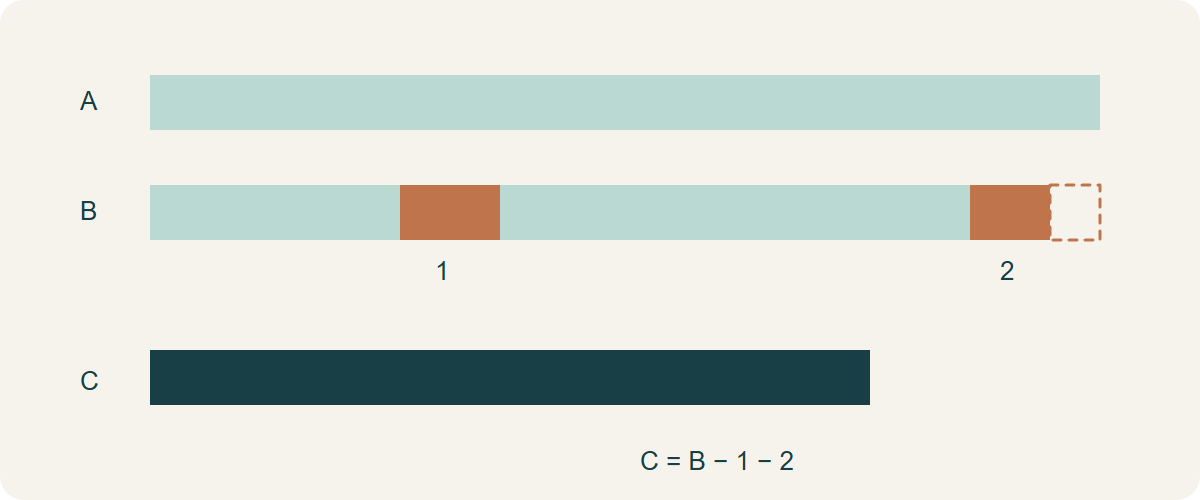
A roll-length check is meaningful only when the material state and measuring method are defined. Extensible lace can read differently under different tension, and a counter reading is not automatically a relaxed usable length. Agree the measurement basis, identify joins and excluded sections, and keep physical length separate from commercial deductions. Reconcile discrepancies before cutting consumes the evidence.
1. Define what the invoice metre means
State whether the order concerns measured delivered length under an agreed procedure, relaxed length after specified preparation or another explicitly agreed basis. A buyer cannot fairly compare a stretched counter reading with a table measure taken after an undocumented relaxation period. Record material type, measuring direction, relevant preparation, instrument and start/end definition. The required preparation and acceptance tolerance belong in the agreement, not in a guessed universal lace rule.
ASTM D3773/D3773M’s public abstract describes length measurement for woven fabrics and names hand, drum, clock and folding options. It does not automatically cover every knitted or embroidered net, nor does its short public abstract supply the full operating conditions. If a buyer names this standard, have the responsible laboratory or inspector verify material applicability and the agreed edition before calling a measurement conforming.
Use the same length unit throughout the ledger. If a counter is in yards and the invoice in metres, convert with 1 yd = 0.9144 m before comparing quantities; changing the display label without converting the number is an accounting error, separate from physical extension.
2. Support the fabric so handling does not become extension
Heavy decorated cloth hanging over a table edge can pull on the section being measured. A tight rewind, dragging roll or operator pulling against resistance can also alter the material state. Use the apparatus and handling specified for the agreed method, keep the measured section supported and avoid stretching it to remove every visual ripple. A flattened appearance obtained by pulling is not evidence that the original length was short.
Machine makers list adjustable tension and length-counting functions because presentation and measurement need control. Those features do not establish that a particular setup is correct for your lace. Check the measuring wheel or drive arrangement, contact/slip behaviour and reference-length comparison according to the apparatus instructions. Document settings and calibration or verification records; do not apply a guessed correction percentage to all rolls after seeing one discrepancy.
Technical references
3. Plan a repeatable check without losing continuity
Before unrolling, photograph the roll ticket, article, colour, lot and roll identity. Mark the first physical fabric end separately from paper leaders, packaging and detachable support. As the cloth is presented, record agreed measurement intervals without cutting through decoration or weakening the ground. Where interval hand measurements are used, preserve a common boundary mark between successive intervals so overlap is not counted twice and a gap is not skipped.
Record each joint and whether two sections merely overlap during presentation. Measure the cloth actually present once; commercial treatment of seams, unusable overlaps or leaders is a separate decision. At the final end, reconcile interval totals with any machine total and write the state of the material. If repeat measurements disagree, isolate a retained reference section and compare methods before changing a supplier’s quantity label.
4. Use a quantity ledger, not one ambiguous net figure
Physical shortage means less measured material than the agreed supplied quantity on the same basis. A defect allowance is a contractual deduction on material that may physically exist. A joint allowance, end loss and pattern-matching loss are different again. Keep them separate, because the cutter’s useful output and the invoice adjustment need not be the same number. Cutting loss should not be disguised as a supplier shortage.
| Field | What it records | Avoid |
|---|---|---|
| Ticket quantity | Supplier declared physical quantity and basis | Treating a label as independent measurement |
| Measured gross length | Actual cloth measured once | Double-counting an overlap |
| Contract deductions | Identified excluded length under agreement | Subtracting the same zone for two reasons |
| Cuttable continuous runs | Segments that suit actual patterns | Summing scraps as equivalent full-length fabric |
5. Reconcile a hypothetical 50 m ticket
Assume a roll ticket states 50.0 m and the agreed procedure measures 49.4 m. The physical difference is 0.6 m, or 0.6 ÷ 50.0 × 100 = 1.2% of the ticket quantity. That is a discrepancy to assess against the contract, not an automatic finding of fraud or an invented permissible tolerance. Repeat the relevant measurement and check the definition of the ticket quantity before making a claim.
Suppose the parties additionally agree that a distinct 0.8 m damaged zone and a distinct 0.4 m unusable end are deductible. If neither overlaps the other or the physical shortage, accepted billable length in this hypothetical ledger is 49.4 − 0.8 − 0.4 = 48.2 m. Do not subtract the 0.6 m again: it is already absent from the measured 49.4 m. Actual cuttable garment yield still needs the defect positions and pattern layout.
6. Investigate disagreement before applying a correction
If the machine and table disagree, compare a common reference length under the same agreed material state. Look for slippage, extension, unit settings, interval errors, a joint being counted twice or a reset at the wrong point. Do not stretch the table sample until it equals the machine reading. Agreement achieved by changing the specimen state hides the cause rather than resolving it.
Preserve the disputed roll or representative retained sections until the parties agree what further inspection is required. An independent inspector can remeasure under the agreed basis; a calibration check can assess an instrument, but neither proves every prior roll was correct. Keep amended quantity labels linked to the original label, method, date and reason for correction so the warehouse and cutting room use the same accepted record.
7. Questions buyers should settle early
Can roll weight prove length? Only a validated product-specific mass relationship under controlled conditions might estimate it; variable decoration and packaging make a generic weight shortcut unreliable. Does measuring a short swatch establish the whole roll? No. Is a short discrepancy always chargeable? Its treatment depends on the agreed quantity basis, tolerance and remedy, not on a rule invented after delivery.
For repeat orders, keep the measurement basis alongside the approved article and lot records. A new ground construction or finish may alter handling and relaxation, so review the method rather than copying the last counter setting. The useful outcome is a quantity both parties can reproduce, plus a map showing which continuous lengths remain available for the intended garment.
Discuss your embroidery project
Send All4Lace the roll ticket, agreed measuring basis, article and lot, interval record and photographs of any joins or excluded zones. Keep the roll uncut while a quantity discrepancy is being reconciled.
Contact Zhijin