Quality & Delivery
Lace Seam Slippage vs Seam Strength: Specify the Right Evidence
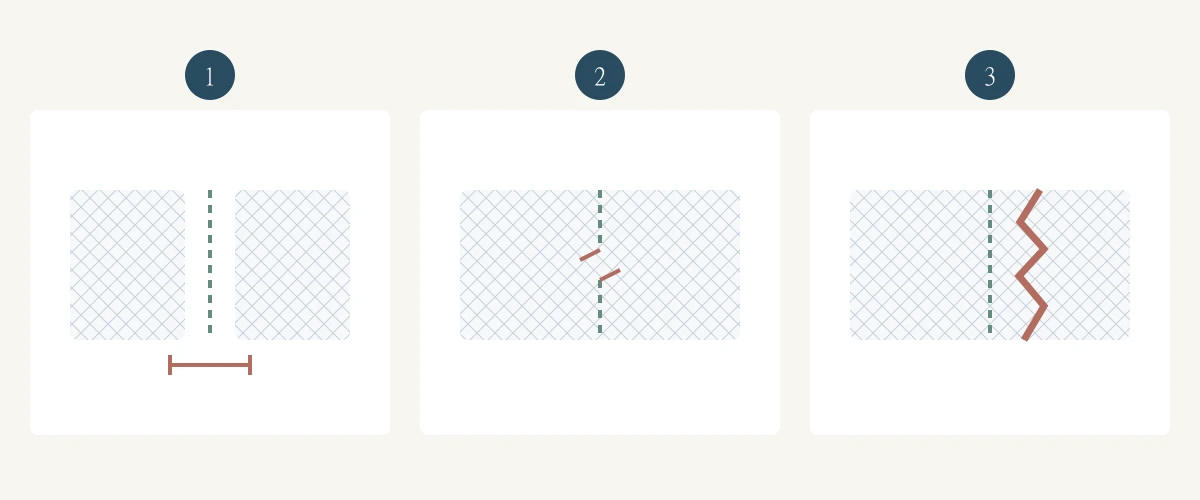
A seam can open while its sewing thread remains intact. Yarn slippage beside the seam and the force needed to rupture a seam are different questions. For lace buyers, the first task is to identify the ground construction and the observed failure, then agree evidence that applies to that fabric and garment seam.
Separate three failures before choosing a fix
Inspect the failed area before cutting away loose threads. Coats describes seam slippage as fabric yarns moving away from a stitched seam and leaving a gap. Broken sewing thread and torn ground are different observations, even when the finished garment appears to have the same open seam.
| Observed failure | Evidence to preserve |
|---|---|
| Yarn movement | Gap beside stitches, fabric direction and intact thread |
| Sewing-thread rupture | Broken ends and exact seam construction |
| Ground rupture | Tear path relative to needle holes and motifs |
Technical references
Match the test to the actual construction
A method explicitly written for yarn slippage in woven fabric cannot automatically be applied to warp-knitted lace, free-standing embroidery or a highly open network. SATRA TM269 identifies woven fabrics in its published scope. Ask the laboratory whether the selected construction can be tested meaningfully and how its limitations will be reported.
ISO 13935-2:2026 concerns maximum seam force using the grab method; its public scope is for straight seams and specifies a testing-machine type. It does not turn a successful force result into proof of acceptable yarn movement, nor directly validate a curved neckline. This guide uses public method scopes, not a reproduced laboratory procedure.
Read the report as a sample-specific statement
Match the report sample number to the fabric lot and approved construction. Request the tested direction, seam preparation, conditioning or treatment state, method edition, result units and failure description. Keep the laboratory result separate from the buyer’s acceptance rule; the rule should identify which result is being compared with which agreed limit.
Do not compare a force in newtons with a gap in millimetres as if they were the same metric. A sample passing one direction also does not establish the other direction or a different seam location. If the report does not identify the construction tested, pause that comparison and resolve the missing identity.
Review the real garment junction alongside laboratory evidence
Prepare a representative seam using the intended pattern direction, allowance, lining and reinforcement. Include a sparse and a dense motif area if the join crosses both. Keep any fit or movement review documented as a garment-development exercise, not as a substitute laboratory test with an invented load.
Possible changes include seam construction, allowance, support or panel placement, but none should be approved merely because it is commonly suggested. Compare the revised assembly for transparency, bulk and drape as well as the failure being addressed. Record when a change also requires renewed laboratory evidence.
Questions buyers should settle in writing
Does stronger sewing thread prevent all slippage? No; intact thread does not stop every form of movement in the surrounding ground. Does every lace need the same test? No; woven, knitted and embroidered structures require a scope check. A test name without the sample identity and requirement is incomplete evidence.
Before bulk release, connect four records: the approved fabric, the tested seam construction, the report and the garment-junction decision. This guide sets no universal strength or opening limit and claims no measured result for an All4Lace article. Acceptance must follow the actual product brief and suitable evidence.
Discuss your embroidery project
Send All4Lace the selected fabric reference, seam location, pattern direction and proposed seam construction. Include any buyer test requirement with its method version and acceptance criteria so sampling and quotation refer to the same assembly.
Contact Zhijin