Materials & Applications
Long Fringe Trim for a Hem: Check Drop, Swing and Attachment
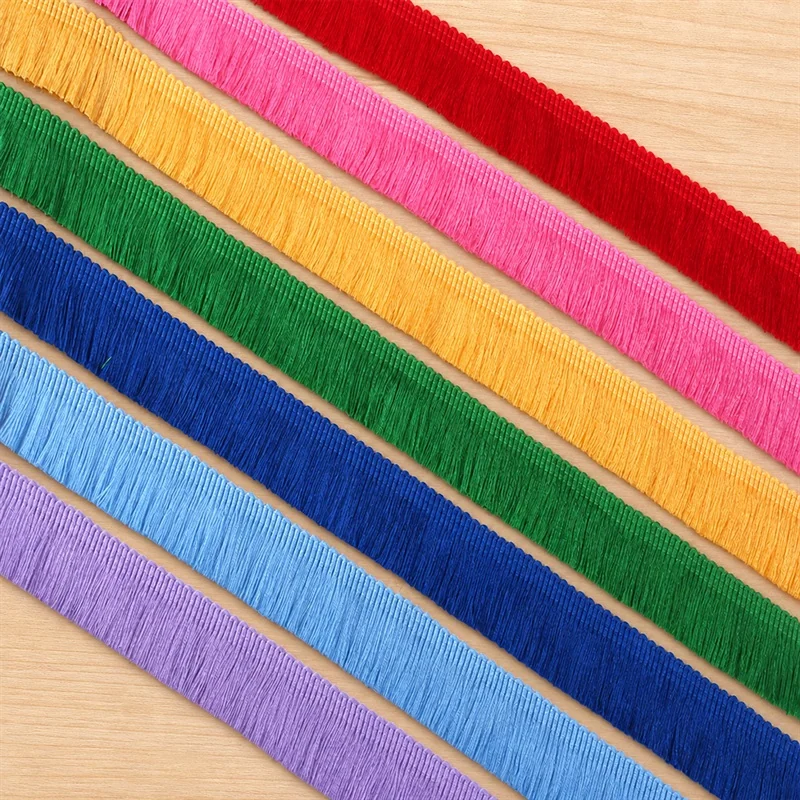
Fringe changes the finished silhouette after it is sewn, especially on a moving skirt or costume. The photographed length is not a reliable finished drop: the header may be hidden in a seam, and individual strands may settle differently. A moving garment sample is more informative than a flat swatch.
Read the construction
Measure from the proposed stitch line to the free ends on several places of a relaxed sample. Record the header depth, strand length and any visible irregularity. Run fingers through a short section to see whether strands separate cleanly; do not infer fibre content or washability from appearance.
Test the intended placement
Sew the trim to a section of the actual hem with the planned lining and seam finish. Hang it for an agreed period, then move and turn the panel. Check whether the strands catch on footwear, neighboring panels or embellishment, and whether the header pulls the hem out of line.
Write the approval record
Set the accepted finished drop and appearance with a dated, worn or suspended sample photo. State whether joins may fall at a side seam and how cut ends will be secured. Obtain care guidance for the assembled garment; a hand swing is not a durability test.
Discuss your embroidery project
Tell All4Lace the hem circumference, target finished drop, base fabric and planned attachment method.
Contact Zhijin