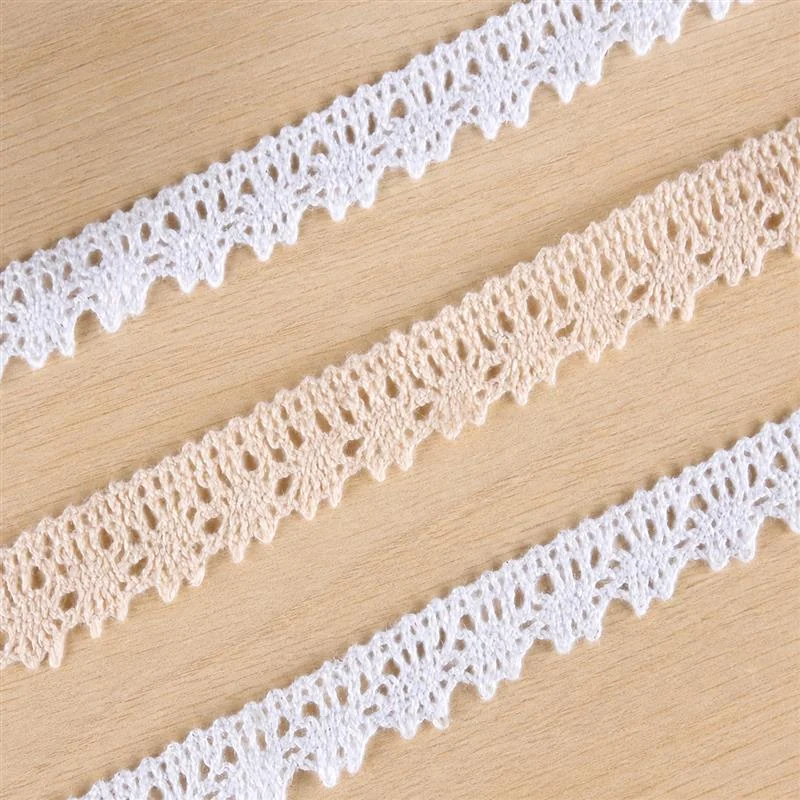
A listed width can include a plain sewing edge, an open centre and projecting scallops. For a pattern piece, the useful decorative width is the part that remains visible after attachment; ask for a measured sample rather than treating a catalogue number as a cutting allowance.
Read the construction
Lay the trim flat without pulling it. Mark the straight attachment edge, the deepest opening and the furthest intact decorative point. Measure at several repeats and note whether the outer tips alternate; a single widest point does not describe the continuous coverage.
Test the intended placement
Pin the exact trim to the intended neckline or hem on the real base fabric. Mark the stitch line and fold or seam allowance, then photograph front and back. Check whether the edge still lies flat and whether openings reveal the lining where the pattern expects coverage.
Write the approval record
Approve three dimensions separately: total edge-to-tip width, continuous visible coverage after stitching and repeat length. Add the measurement points to a dated sample photo and quote request. If the usable width is insufficient, revise the placement or choose a different trim before pricing the garment.
Discuss your embroidery project
Send the trim reference, garment location, required visible coverage and a marked sample photo to All4Lace.
Contact Zhijin