Materials & Applications
Sequin Fabric vs Glitter Fabric: Identify the Decoration First
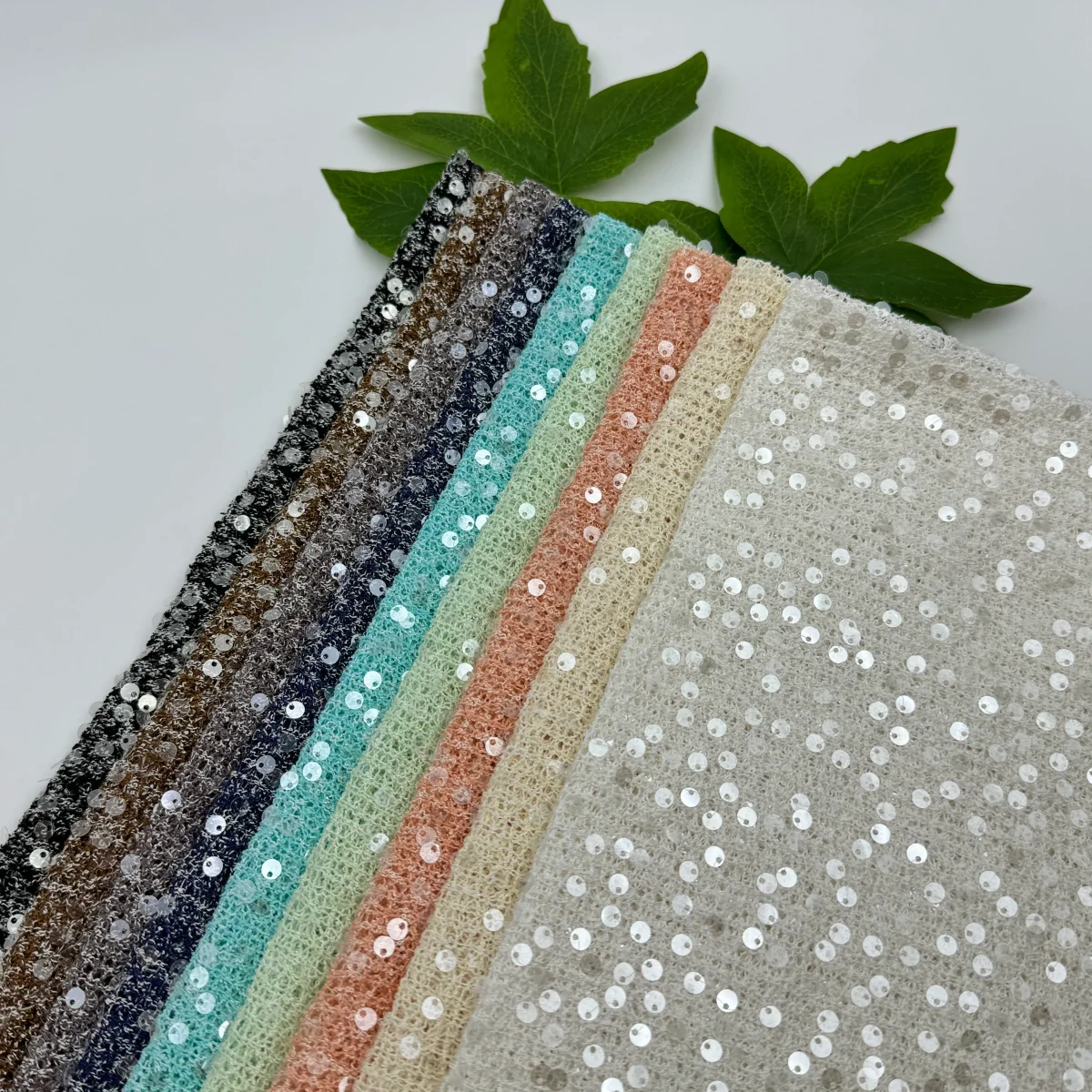
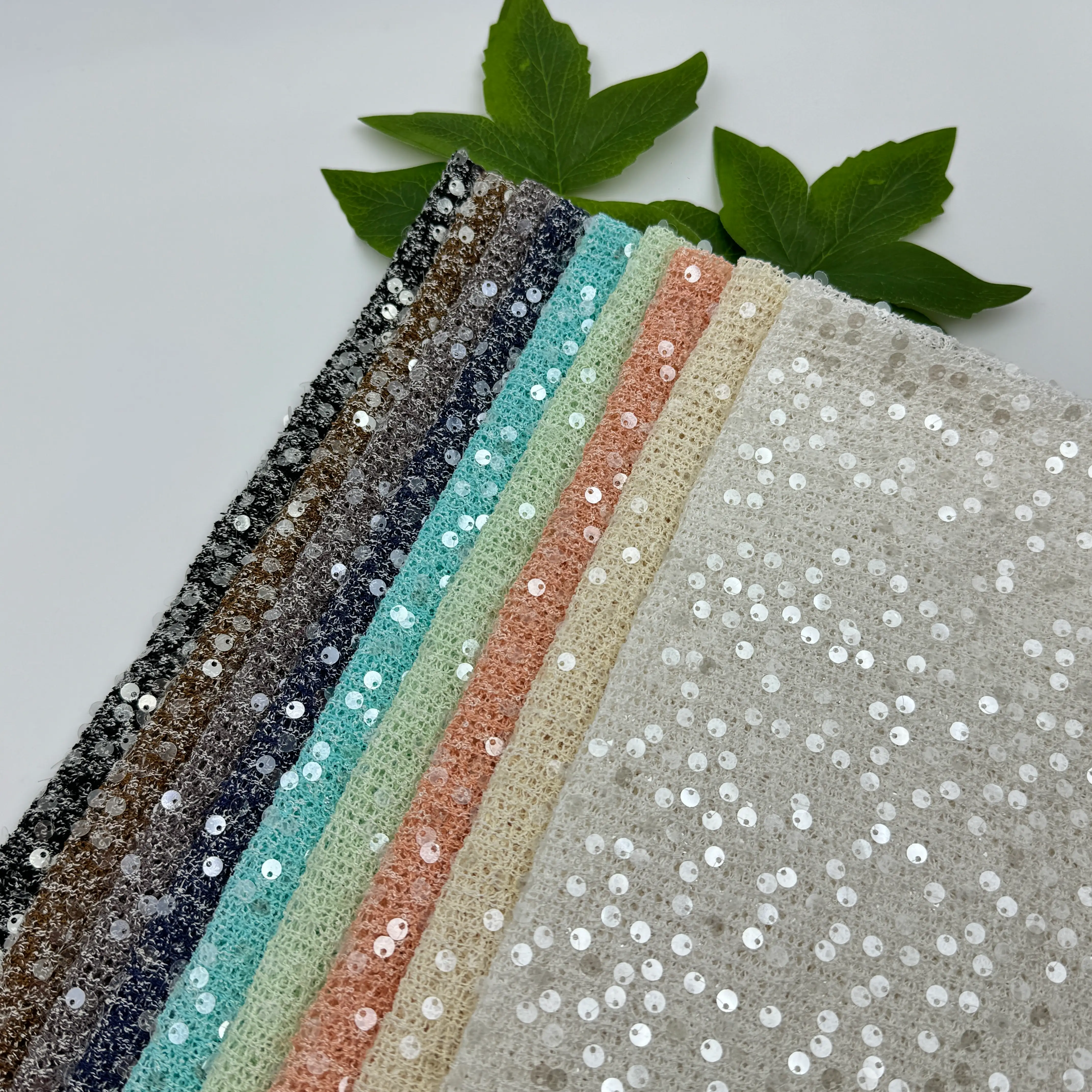
Sequin fabric commonly uses separate decorative pieces, while glitter fabric commonly describes a surface decorated with small reflective particles. Both can sparkle, but the names do not specify one construction, fibre or performance grade. Start by identifying what produces the reflection and how it is held on the fabric. A bright photograph alone cannot settle that distinction.
Identify the reflective component and its attachment
A sewn-sequin reference has individual pieces and an attachment arrangement to inspect. Sequins USA describes examples attached through holes and also lists pieces without holes. Consequently, neither a visible disc nor the word sequin establishes a universal fixing method. Identify the offered material rather than assuming every reflective piece is sewn in the same way.
For glitter, Meadowbrook describes textile applications using particles applied by screening or flocking. This is an example of a particle-based textile decoration, not a recipe for every fabric sold as glitter. Ask how the particles are incorporated or fixed in the particular sample; do not infer adhesive chemistry from the trade name.
Technical references
Read the face and reverse at two scales
In a close view, look for the outline of individual pieces, fixing points, or a granular decorated field. Then step back and locate the motif, clear areas and overall coverage. A small glitter particle and a tiny sequin can be difficult to distinguish in a compressed listing image, especially when highlights obscure their edges.
A reverse view can help explain where stitches or a surface treatment sit, but it cannot prove chemical composition or attachment strength. Request a representative physical reference when the construction remains unclear. Keep that reference identifiable instead of deciding from unrelated photographs whose scale, focus and lighting differ.
Compare the intended garment effect
Consider an evening skirt intended to show separate flashes as it moves. A design with distinct sequin pieces and a design with a fine sparkling field answer different visual briefs. This does not make one universally brighter or more luxurious. Decoration size, arrangement, ground colour and the light all belong in the comparison.
Place the candidate references over the intended lining, under the same light and at the same viewing distance. Observe both a still view and a gentle turn. Record whether the desired effect is a sequence of separate flashes, a more continuous sparkling field, or a combination. If a camera is used for the approval record, keep its position and exposure consistent between candidates.
Keep a construction-specific comparison record
Use a short record that distinguishes the two structures. The questions below preserve the reason for choosing a reference and make it easier to discuss an alternative without replacing the original visual brief.
| Decision | Sequin-based reference | Particle-decorated reference |
|---|---|---|
| Structure to identify | Individual pieces and their fixing arrangement | Reflective particles and their application or incorporation |
| Visual target | Discernible pieces, spacing and changing highlights | Character and distribution of the sparkling field |
| Assembly question | How pieces and attachment meet the proposed seam | How the decorated area meets the proposed fold or join |
| Approval reference | Identified swatch including piece layout | Identified swatch including decorated and clear areas |
Review assembly on the decorated material
A row of pieces meeting a seam raises a different construction question from a particle-decorated field crossing a fold. Ask the garment maker to review the actual reference and proposed seam or fold. Record the selected joining and pressing procedure for that material, then inspect the visible edge, the reverse and the transition between decorated and clear areas.
Compare the decorated ground and selected lining together. If assembly affects the visible surface, retain a trial section with the proposed edge or join and record the method used. A loose component description is insufficient to approve the complete material. Include both decorated and clear areas where the design contains them.
- Identify the ground, decoration and attachment separately.
- Compare the intended lining and viewing conditions.
- Keep the actual assembly trial with its method and reference code.
Describe mixed sparkling surfaces precisely
A reference may combine separate sequins, fine glitter, metallic-effect thread or another reflective decoration. Identify each part instead of calling the whole design glitter. For example, silver glitter flowers might mean a fine particle filling, a separate-disc outline, or both. Mark the intended filling and outline on the reference and request their respective material and attachment details. This gives an alternative sample a clear visual target rather than simply asking for more sparkle.
Discuss your embroidery project
Send All4Lace a reference photo and describe whether you need separate sequins or a fine sparkling surface, plus the garment location and lining. We can use the relevant sequin references to clarify the requested construction; availability of any other decoration needs separate confirmation.
Contact Zhijin