Quality & Delivery
Stretch Lace Recovery After Care: Separate Growth from Shrinkage
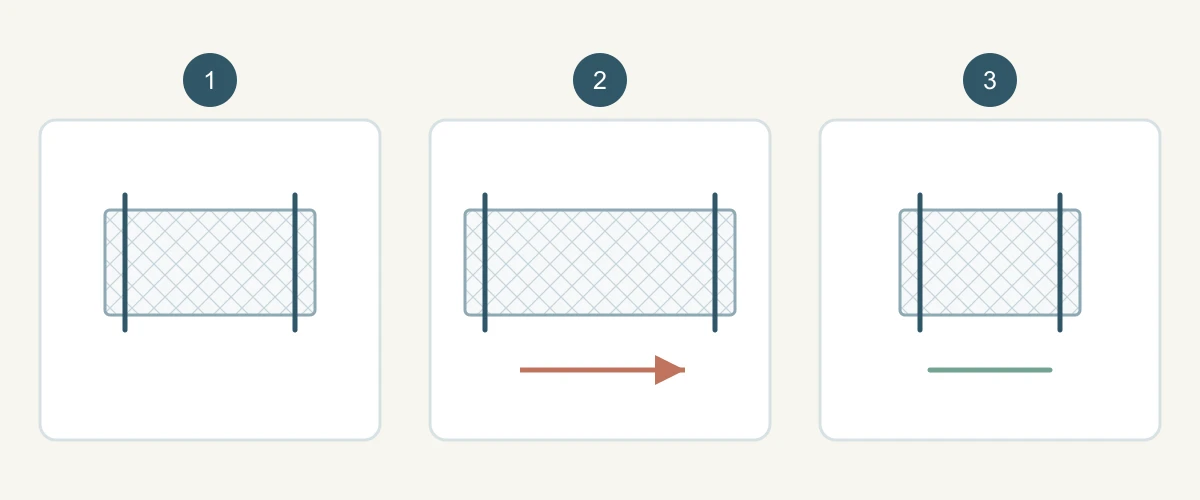
A lace can stretch easily yet fail to return to its intended size after wear or care. Buyers therefore need two different questions answered: how far it extends under an agreed load, and what length remains after that load is removed and the sample rests. Washing may add a separate dimensional change. The following record is a practical comparison plan, not a substitute for a complete laboratory method or a universal tolerance.
1. Define the use and the direction
Start with the exact lace reference, its elastomer content if known, the intended panel and the direction in which the garment must stretch. The width direction may carry the intended fit while the length direction holds shape; a scalloped edge or embroidered motif can behave differently from the open ground. State whether the concern is a snug sleeve, a neckline, a close-fitting bodice or a loose overlay. Cut comparison pieces with matching orientation and identify which edge and motif each piece includes. Record the expected care of the assembled garment before testing the lace alone.
2. Distinguish extension, recovery and care change
Maximum extension under a chosen load does not tell you how much fabric returns. Observe the marked span before loading, while held at a pre-agreed load or extension, and again after unloading and a fixed rest interval. A larger final span than the starting span is residual growth in that comparison. In a separate care trial, compare the same marked span before and after the agreed wash, dry or professional-care route without applying the stretch load. That second difference is dimensional change; mixing it with recovery hides the cause of a poor garment fit.
3. Make the small-sample comparison reproducible
Mark internal endpoints on representative continuous ground, photograph their position and measure with the specimen relaxed and supported. Do not use scallop tips or cut ends as unstable endpoints. Specify the load or extension, holding time, number of cycles and rest interval before trying the sample; use the same sequence on each candidate. A hand pull can identify an obvious concern but cannot establish comparable elastic performance. Formal work should follow the full agreed test method, equipment setup, sampling and conditioning; the public ISO strip-test scope excludes narrow fabrics, so trim may need a different method.
4. Run care only where it suits the complete construction
Check the lace, embroidery thread, finishes, lining and main fabric together when selecting a care route. A dry-clean-only assembly should not be machine washed merely to obtain a number. Label each specimen as before care, after the specified care and after any separate stretch cycle; use comparable dry, relaxed states for the first and last care readings. Record number of cycles and any visible twisting, curling or motif distortion. Care labels communicate the most severe treatment that avoids irreversible damage to the textile article, not permission to assume that an unidentified trim withstands a generic cycle.
5. Compare candidates with the same decision fields
Do not call the sample with the highest extension the best. A candidate may feel comfortable initially yet leave a longer neckline after repeated pull; another may recover acceptably but distort the embroidery after care. Write the buyer’s intended range and appearance requirement before seeing results. For a narrow trim, document a feasible repeatable gauge and the method selected rather than forcing a wide-fabric strip procedure onto it. Assess the actual sewn joint where the lace meets a lining or another fabric, because restraint at the seam can change the wearable result.
| Question | Evidence to record | Decision if unresolved |
|---|---|---|
| Extension in use | Direction, chosen load or extension, held span | Repeat with a fixed setup |
| Return after release | Original span, rest time, final span | Hold fit approval |
| Change after care | Care route, cycles, dry span, appearance | Revise care or construction |
6. Keep a sample record that supports the next order
For each specimen write the supplier reference, lot or source, fibre information as declared, actual width, motif location, cutting direction, endpoint photo, initial span, loading sequence, hold and rest times, final span, care sequence, and operator. Attach both front and back photographs and note whether the decorative thread, ground or sewn seam drove concern. Separate observed values from a tentative explanation. Approve only for the specified panel and next stage if measurements and appearance meet requirements written in advance; otherwise revise one variable, retest and retain the failed specimen for comparison.
Discuss your embroidery project
To discuss stretch lace with All4Lace, send the garment panel, required stretch direction, existing sample reference, proposed complete-garment care and your prewritten extension, recovery and appearance requirements. Include labelled before/after photographs and any formal laboratory method you need.
Contact Zhijin