Materials & Applications
How to Choose Bridal Lace: Types, Lining, Motifs and Sample Decisions
Choose bridal lace in two stages: identify the effect you want, then check whether the actual construction works in the dress. Fine net-based patterns, corded outlines, open guipure motifs and raised decoration create different visual starting points. The type name alone does not specify fibre, stretch, weight or origin. Use it to request useful first samples, then decide with the intended lining, pattern, seams and wearer movement.
Recognise the construction before choosing a bridal style
The descriptions below are visual and construction cues for initial sampling. A trade label can overlap with another: an eyelash edge is an edge treatment, for example, not a separate fibre or a guarantee of soft skin contact. “Chantilly-style” or “corded” does not certify a historical production method or French origin.
Manufacturer references from Solstiss and Sophie Hallette distinguish fine Chantilly effects, raised outlining and guipure structures. Use those distinctions to describe what is visible, then ask for the actual candidate’s declared composition, construction and dimensions.
| Visible cue | A useful first sample | What needs a closer look |
|---|---|---|
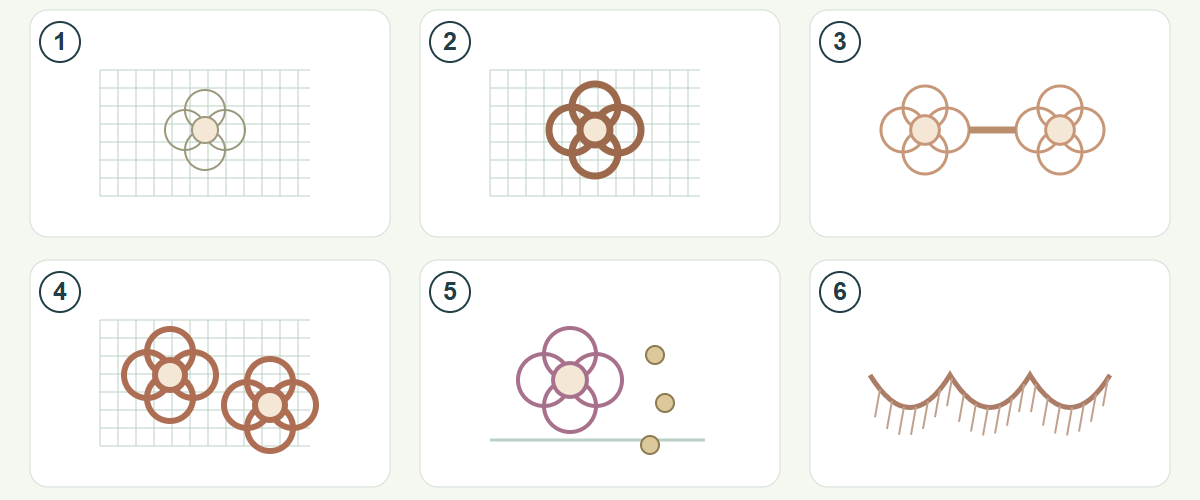
| Fine motifs with visible net; Chantilly-style effect | A sample over the proposed underlayer for a light patterned overlay | Net colour, motif scale, seam interruption and actual handling |
| Raised outline around a motif; corded effect | A bodice or border sample where outline definition is wanted | Reverse contact, bulk at joins and the actual outlining construction |
| Motifs connected by bars with no retained continuous net; guipure effect | An open graphic panel or defined border candidate | Connections at cut edges, motif placement and the required support |
| Embroidery on a retained tulle ground | A placement sample combining visible ground and dense embroidery | Ground shade, transparency and different behaviour of ground and motif |
| Raised flowers, beads or sequins | A sample for the specific accent zone and adjacent layers | Attachment, contact, joining and the actual care requirement |
| Fine fringe extending from an edge; eyelash effect | The exact neckline, sleeve or hem edge sample | Whether the edge can follow that shape and how it meets the seam |
Shortlist by the part of the dress, not a single best lace
For a sheer sleeve or upper panel, begin with the desired background visibility, motif coverage and movement. A fine net-based candidate may approach the visual brief, but its sleeve seam and required extension remain open decisions. For a strongly defined bodice motif, a corded or applied effect may be worth sampling; the separately shaped base must still provide whatever support the garment design needs.
For a graphic border, consider a guipure-effect candidate with connections and motif size that can survive the planned layout. Do not assume every guipure is heavy or that a visible connection may be cut freely. For a flowing skirt or train, compare a hanging panel with its intended underlayers: a small flat swatch does not show the outline of the layered skirt.
Place raised decoration in the shortlist for the zone where its effect is wanted, then inspect any surface it will touch. A sleeve brushing a bodice, a train folding on itself or jewellery crossing a decorated edge creates a specific contact question. These are prompts for sample review, not claims that all embellishments will snag or pass a durability test.
Use one lace piece to compare the actual linings
Lay the same face of the same lace over each lining candidate, with the planned number of layers. View flat and hanging in consistent light, and include a fitting form or the intended wearer when appropriate. Record two separate decisions: whether the coverage meets the brief and whether the motif contrast is preferred.
A closer-matching pale lining can reduce visible ground contrast; another lining can make the motif stand out differently. Neither is a universal bridal colour rule. Ask for physical colour approval and keep both material references together. Screen images help communicate placement but cannot close an exact shade decision.
A lining chosen for coverage, colour or contact does not automatically supply structural support. If the bodice design requires a foundation, interlining or another structural layer, include that actual layer in the representative sample; changing only the lining shade does not verify support.
Check where the pattern has to cut or join the motif
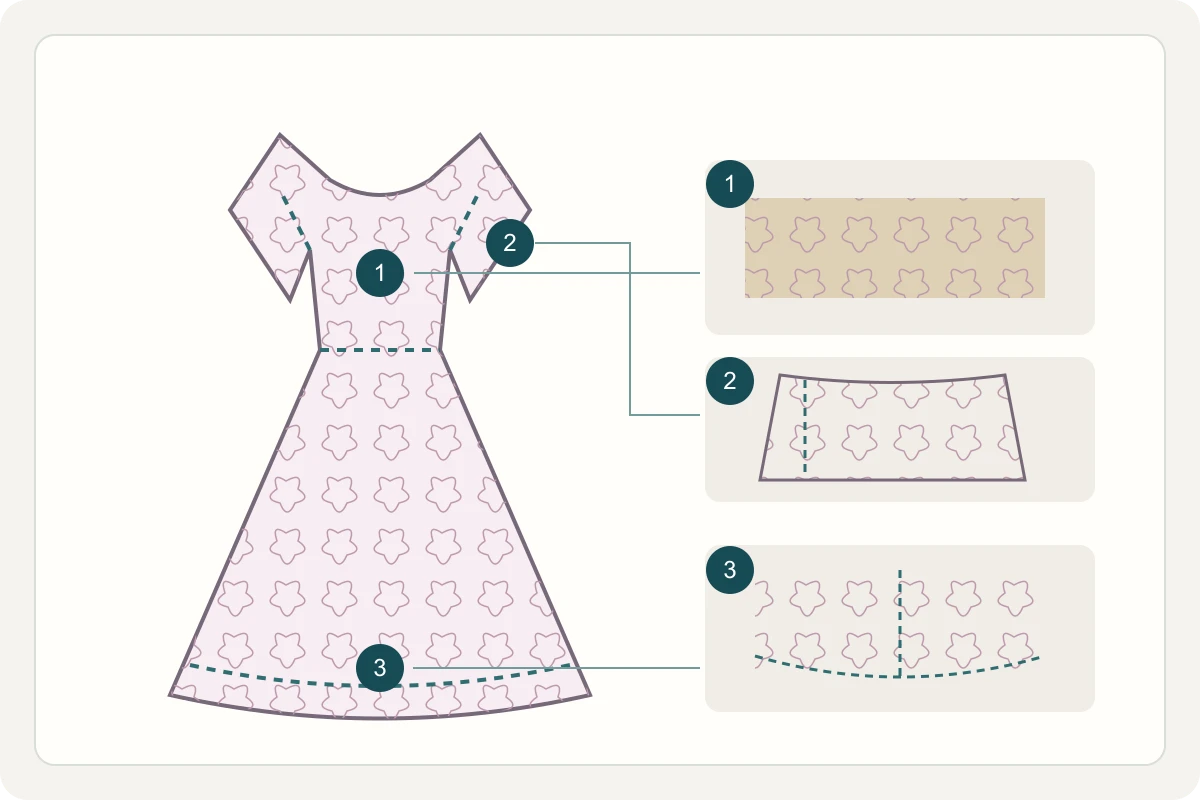
Mark centre front, neckline, waist, sleeve seam and hem on the current pattern. Place it over the real sample or a verified repeat map, using the actual usable width. State which flower must stay complete and what paired balance means: mirrored major motifs, matched border height or another agreed relationship.
Then examine the seam allowance and cutting line. A motif centred on a flat rectangle may be cut at a shaped neckline or partly hidden in a seam. Ask the maker whether the proposed construction needs a different placement, an applied motif or another candidate. Do not cut supporting bars, remove beads or detach outlines on the assumption that every lace can be rearranged the same way.
The pattern determines usable material cost. Include repeat placement, paired pieces, border direction and joining work in the estimate. Compare quotations for the accepted layout and decoration scope, rather than assuming that a named lace type always costs more or represents a higher quality grade.
Each sample should close a different decision
Agree project acceptance conditions before reviewing the trial. The table suggests what to request; it sets no manufacturing tolerance and does not replace any required physical test.
| Zone | Representative sample | Decision to record |
|---|---|---|
| Bodice | Actual lining, lace, any foundation/interlining or other structural layer required by the design, and a critical join | Required coverage, motif position and join appearance |
| Sleeve | Shaped section, seam and actual cuff or edge | The agreed actions, contact points and paired appearance |
| Skirt or train | Hanging layered panel and a representative border join | Outline, motif direction and continuity at the join |
| Raised accent | The attachment and adjacent material | Visible attachment and the observed contact problem, if any |
A hypothetical dress that needs two revisions
The following is a fictional decision example, not an All4Lace order or fitting result. The design is D2, with lined bodice, sheer sleeves and a border at the skirt hem. Before sampling, the designer specifies a complete central neckline flower, bodice coverage to the marked line, an uninterrupted-looking border join, and sleeves that allow the garment team’s agreed bend and reach actions.
In the invented first trial, candidate L-A gives the preferred bodice flower against lining U1. At the sleeve seam, however, a dense motif crosses the movement zone and the agreed reach is restricted. The hem sample also cuts the dominant border flower at the planned join. “Bodice appearance accepted” therefore leaves sleeve and hem unapproved; approving the entire dress would hide two different failures.
For sleeve revision 2, the maker proposes moving the motif on the same ground and repeats the actions with the same seam and pattern. If this cannot meet the visual and movement brief together, request a different sleeve candidate and check that its ground and shade still coordinate with the bodice. For the hem, revise the layout to put the join in an agreed less prominent part of the repeat, or request a suitable alternate border. Recalculate material allowance before quoting either change.
The fictional final record closes the bodice with L-A/U1 and its approved placement drawing; sleeve and border remain pending until the revised samples meet their separate conditions. If a new lining shade is proposed, reopen the affected transparency and colour decisions. This is the honest end of the example: an accepted combination for one zone does not stand in for evidence missing in another.
Turn the selection into a clear enquiry and approval record
Keep lace and lining references, component declarations, usable width and repeat information, placement drawing, sample revision and each zone’s decision together. Specify the intended care for the complete garment and ask the maker or testing party what evidence is required for its ground, decoration and attachments. A visual sample review is not a cleaning, wear or attachment-strength test.
Ask the supplier which current samples match the written brief and what can be developed before confirming any order specification. Do not infer stock, custom capability, certification or performance from a style name. The useful outcome is a defined bridal combination with clear accepted and unresolved items, rather than a generic promise of bridal quality.
Discuss your embroidery project
For an All4Lace bridal enquiry, send the dress zone drawing, desired lace effect, lining references, required component composition and priority motif positions. Identify the specific sample decision to resolve so current suitable options can be discussed.
Contact Zhijin