Materials & Applications
Embroidered Organza vs Embroidered Tulle: Compare the Ground First
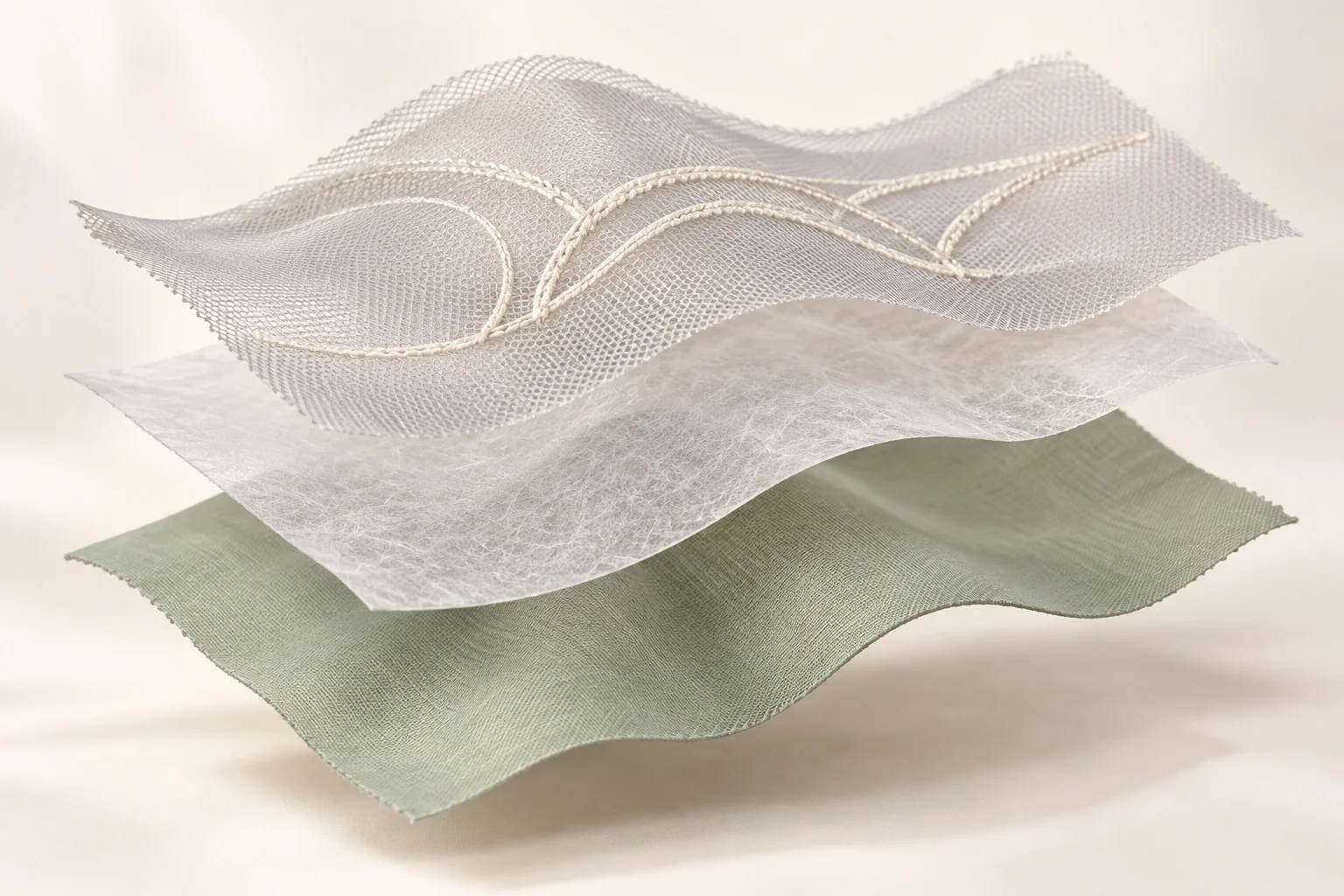
Embroidered organza and embroidered tulle differ first in the ground carrying the stitches. Organza is a sheer plain-woven fabric; tulle is a fine net material. Embroidery can cover parts of either, so a close crop of a flower may hide the most useful distinction. Examine an unembroidered area and the complete proposed garment combination before deciding which sample supports the intended look.
Find the construction between the motifs
A plain weave interlaces warp and weft. The organza manufacturer Ysilks describes its silk organza as plain-woven. Fine tulle belongs to net constructions, and equipment maker KARL MAYER describes different tulle and embroidery-ground structures. Use this distinction to direct the first sample check toward the ground between the motifs.
Look beyond the decoration for the ground’s crossing yarns or net openings. If the reference is too small to show them, record ground unconfirmed rather than choosing a name from appearance alone. Also request composition separately: the word organza does not by itself confirm the fibre in the material being offered.
Separate the retained ground from other layers
In both comparisons here, embroidered means that decoration is carried by a ground which remains in the material. Any temporary embroidery support and any separate garment lining have different roles. Ask which components are included in the quotation, especially when a reference photograph places a sheer material over a coloured surface.
Label the layers in the sample photographs: retained ground, visible embroidery and separately proposed lining. If two proposals are presented over different coloured surfaces, request a matching-background view before judging their transparency. A separate photo of each layer helps the garment team see which component needs changing when the combined appearance is not the intended one.
Compare transparency under matched conditions
Do not rank all organzas as less transparent or all tulles as softer. Select the actual candidates, place them over the same background, and compare both a clear area and an embroidered area. Then repeat with the proposed lining. This keeps ground appearance separate from the background colour and the amount of embroidery covering it.
Keep the number of layers, sample orientation and viewing distance consistent. If a second layer is part of the design, record it explicitly. A single layer held against a bright window and two layers laid on a table answer different questions. This is a visual comparison method, not a test of air permeability or garment modesty.
| Comparison point | Embroidered organza candidate | Embroidered tulle candidate |
|---|---|---|
| Ground construction | Confirm the plain-woven ground | Confirm the fine net structure |
| Visible background | View clear areas over the selected lining | Use the same lining and layer count |
| Garment form | Review the intended assembly | Repeat that assembly with this candidate |
Review the garment shape rather than the name
For a gathered sleeve, compare both candidates in the intended gathering and cuff assembly. For a fitted upper panel, show the opening and seams. For an overlay, compare the hanging panel over the chosen underlayer. Do not assume a familiar fabric name settles the amount of body, movement or stretch required by the design.
For example, the same floral motif may be reviewed on two candidate grounds. Mark whether the concern is the visible background, the shape of the sleeve, or the seam area. If the decoration also changes, identify that change separately. Otherwise a preference for a different motif could be mistaken for a preference for organza or tulle.
Build a record that makes alternatives comparable
Identify each sample by ground name, declared fibre composition, decoration and reference number. Mark the face, garment direction and proposed layer arrangement. Include a clear-area close-up and a full-repeat view. Request any needed measurements or evaluations against the actual end use rather than assuming strength, breathability or care from the category name.
Keep observations concrete: background more visible over this lining, cuff shape preferred in this assembly, or motif interrupted at this seam. Agree how unresolved points will be checked before bulk approval. If an alternative ground is proposed later, revisit the assembled sample instead of transferring approval solely because both materials are described as sheer.
Discuss your embroidery project
Send All4Lace your reference with a clear area and reverse view, the intended garment position and proposed lining. Ask us to clarify the ground in an available sample before requesting a comparable embroidered-material quotation.
Contact Zhijin