Materials & Applications
Embroidered Tulle Fabric: Ground, Motifs and Garment Placement
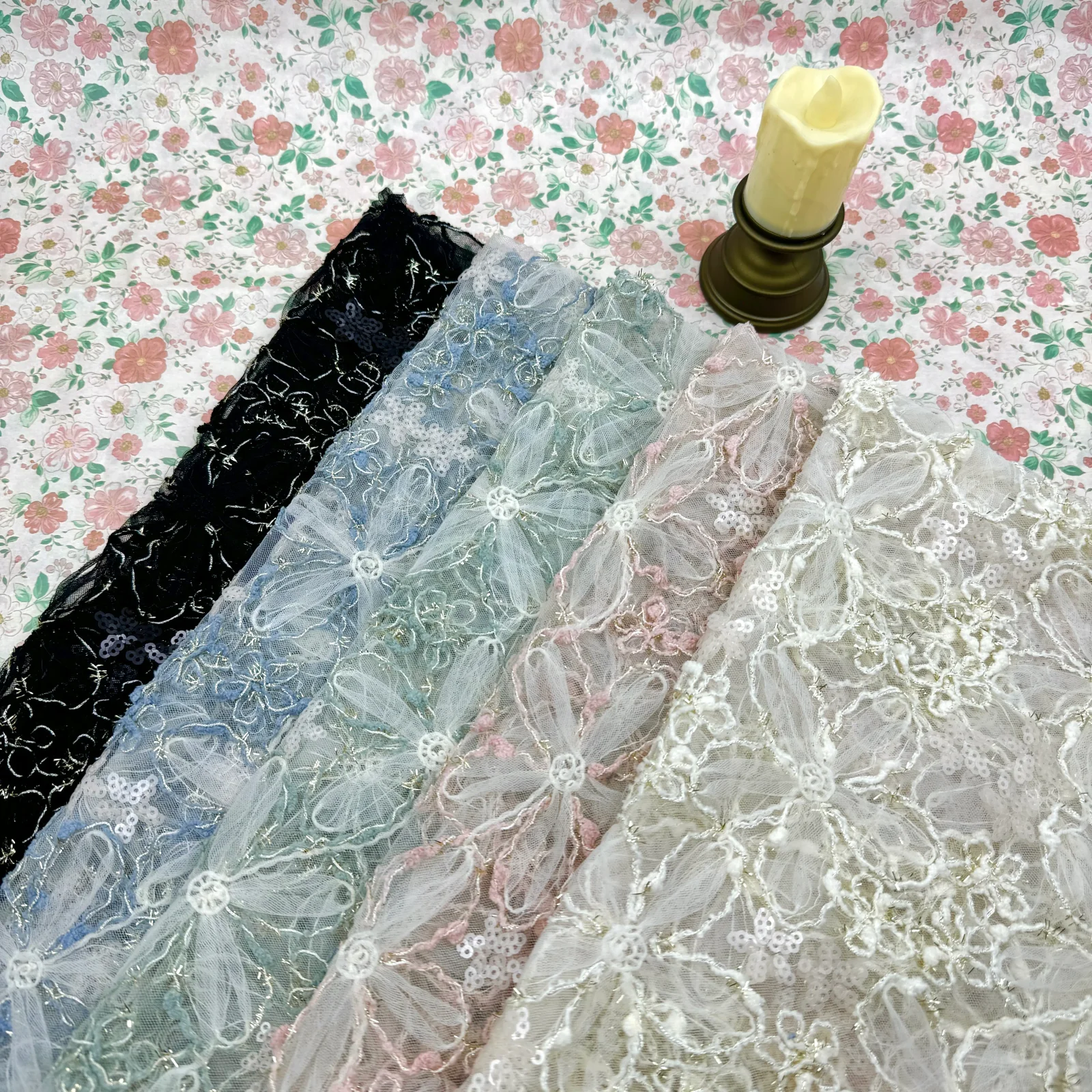
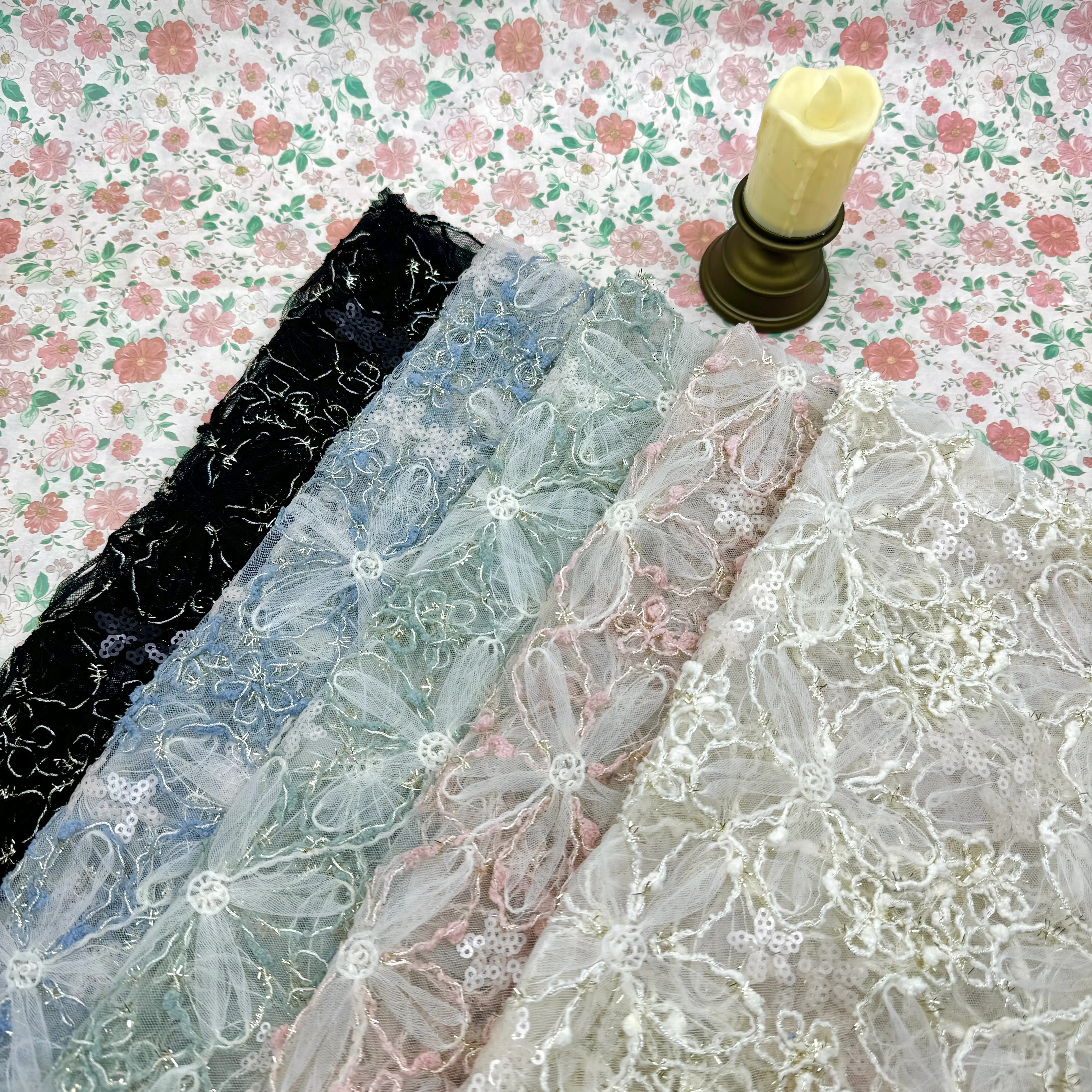
Embroidered tulle fabric combines a net ground with a decorative pattern stitched onto it. The net normally remains in this finished construction, so both the ground and the embroidery form part of the material you cut and sew. A close-up of the flowers tells only half the story: the spaces between them often decide how the fabric looks over lining and across the body.
Read the ground and pattern separately
Begin with an undecorated space. Look at the size and visibility of the openings, the colour of the ground and the way it continues beneath the motifs. Then examine the embroidery: how compact it is, whether it links adjacent motifs and whether raised or reflective components are added. This order helps you avoid attributing a property of the embroidery to the net, or the reverse.
Names such as mesh, tulle and embroidered net are used with different levels of precision in sales descriptions. Do not assume that a particular word establishes a fibre, a hole size or a stretch percentage. A reference should identify the offered ground, embroidery thread and any sequins, beads or cords separately.
See the same sample over different linings
The lining becomes part of what the viewer sees through the net. A lining close to the ground colour can make the overall surface look more continuous. A contrasting lining can emphasise openings and motif outlines. Neither arrangement is inherently better: the choice depends on whether the design should read as a sheer layer, a strong pattern or a more unified surface.
Use the same lining and lighting when comparing two fabrics. A photograph of one net over black and another over white can exaggerate differences that would be smaller on the garment. Keep the ground colour in the sample record rather than recording only the embroidery colour.
Match the motif layout to the garment piece
An allover repeat may work well on a large panel while a border-led pattern is designed around one edge. Before ordering, place the garment pattern over a representative repeat and consider the shoulder, neckline, darts, openings and hem. The prettiest central motif may not be the one that lands at the desired position once cutting allowances are included.
For sleeves or a fitted bodice, review mirrored parts together. A repeat that looks balanced on one flat swatch can look different when the left and right pieces are cut in opposite directions. If motifs need to meet at a seam, show the intended match on the drawing and discuss the material allowance needed for it.
Three layouts and the questions they raise
These are layout descriptions, not separate fibre categories. They help the supplier send a sample that shows the relevant area instead of a random small cutting.
| Layout | Useful view | Garment question |
|---|---|---|
| Repeated allover motifs | A complete repeat with both directions marked | Where will motifs land after cutting? |
| Decorated border | Edge, border depth and adjoining field | Can this edge become the intended hem? |
| Spaced statement motifs | Whole motif and surrounding net | Do seams cross decoration or clear ground? |
Review the decorated material, not the blank net
Embroidery can change the way a net moves. A ground may give in one direction while dense stitched sections give less, so the finished material needs to be assessed as a whole. This matters especially where a garment relies on stretch for fit. A gentle hand stretch can help identify a direction, but it is not a measured recovery or performance result.
At a seam, the sewing team also handles changes in thickness between clear net and decorated areas. A small assembled trial can show how a seam crosses those changes and whether the reverse needs a lining or another finishing approach. Agree care evaluation for the actual finished combination, not for an isolated ground-fabric name.
Questions about embroidered tulle
Is embroidered tulle the same as water-soluble lace? Not when one retains a ground and the other is designed around a removed support; use the dedicated construction comparison if that is the choice. Is every tulle fabric stretchy? The name alone does not establish stretch. Can one sample represent every part of a border fabric? Only if it shows the border and repeat relevant to the order.
Discuss your embroidery project
Tell All4Lace whether the fabric is for a sleeve, overlay, panel or border. Send the planned lining colour and a placement sketch so we can discuss a representative sample rather than only a close-up of the embroidery.
Contact Zhijin