Quality & Delivery
Bobbin Thread Showing on Embroidery: A Controlled Tension Review
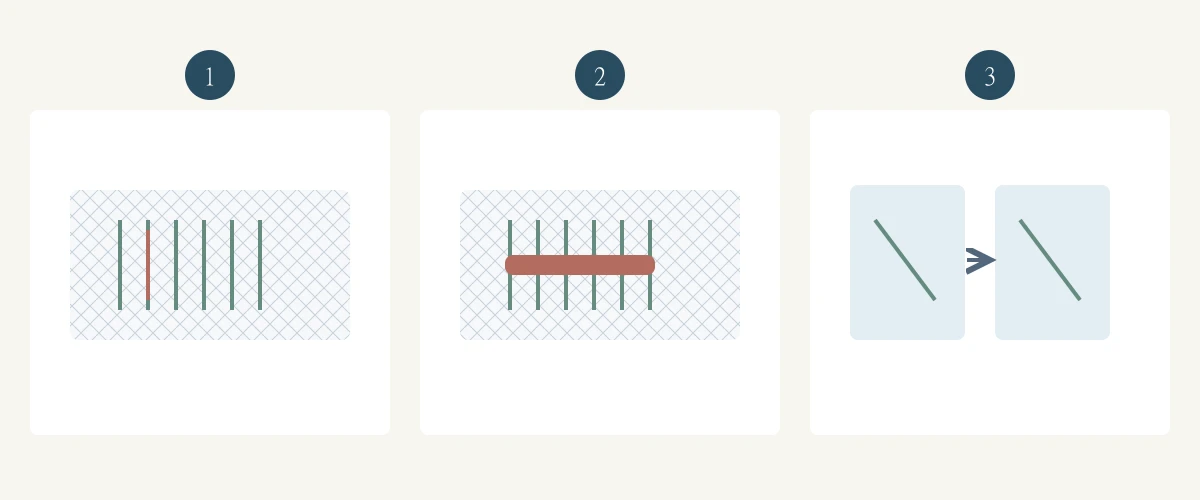
When bobbin thread appears on the face of embroidery, review the balance between upper and lower threads, but do not assume tension is the only cause. Begin with an identified sample, correct threading and the actual production materials. The goal is a stable finished motif, not a dial setting copied from another machine.
Identify which thread is visible and where
Use the thread identities from the sample record, not colour alone. The same colour can be used above and below, and pale net can reveal the reverse through its openings. Confirm whether the bobbin thread has actually been pulled onto the decorated face or is merely visible through the sheer ground.
Mark the defect against a motif position: an outline, a narrow satin column, a fill area or a restart point. Photograph the same position on both sides. If the defect is intermittent, keep more than the best-looking swatch so the review includes the condition that needs correction.
Check the thread path before changing settings
Have the operator verify threading, bobbin installation, needle compatibility and the condition of thread-contact surfaces using the machine instructions. Coats lists these as interacting troubleshooting factors. A snag in the path or an irregularly running bobbin can make a tension adjustment appear to work briefly without removing the underlying problem.
Technical references
Use both faces, not one universal ratio
Madeira’s tension guidance uses the reverse of satin stitching as a diagnostic aid and describes upper/lower imbalance as a possible source of bobbin visibility. That is a setup clue. It does not make a single reverse-side proportion an acceptance rule for every running stitch, narrow column, open lace or thread combination.
| Observation | Record before deciding |
|---|---|
| Bobbin visible on the face | Actual thread identity and motif location |
| Loops or loose stitches | Face/reverse evidence and verified threading |
| Distortion after release | Support, hooping and finished-state comparison |
Technical references
Compare controlled trials after finishing
Keep the design revision, ground lot, thread identities and support constant. Let the qualified embroidery team adjust one relevant setting and label the new trial. Use a diagnostic motif suited to the machine, then confirm the full production motif because overlaps, direction changes and small features may behave differently.
Inspect after unhooping and the agreed finishing route, with the intended lining where relevant. Record whether the improvement survives that stage and whether any new puckering or looseness appears. A change that hides the bobbin but damages the ground is not a successful sample correction.
If a tension gauge is used, record its model, displayed units and measurement method alongside the reading. Numbers from different gauges or thread paths are not automatically comparable. Have the operator interpret the result against the relevant equipment instructions instead of treating the number as a fabric acceptance certificate.
What the approval record must answer
Can the supplier use a matching bobbin colour? It may change what is noticeable, but it does not prove the stitch balance is stable. Can a photograph confirm tension? It can document an appearance problem; it cannot reproduce the machine setup, thread running behaviour or the finished panel’s performance.
Retain the approved face-and-reverse swatch, machine/head reference, thread specifications, setup revision and finishing identity. Write the visible-face requirement and any separate reverse-side requirement explicitly. This makes later comparisons traceable without publishing a universal tension value that the evidence does not support.
Discuss your embroidery project
Share a marked face-and-reverse sample with All4Lace, including the ground, thread identities and artwork revision. Request a recorded comparison after finishing and agree the visible-face requirement before approving bulk embroidery.
Contact Zhijin