Materials & Applications
Choosing Sequin Fabric for an Evening Dress: Review the Whole Garment
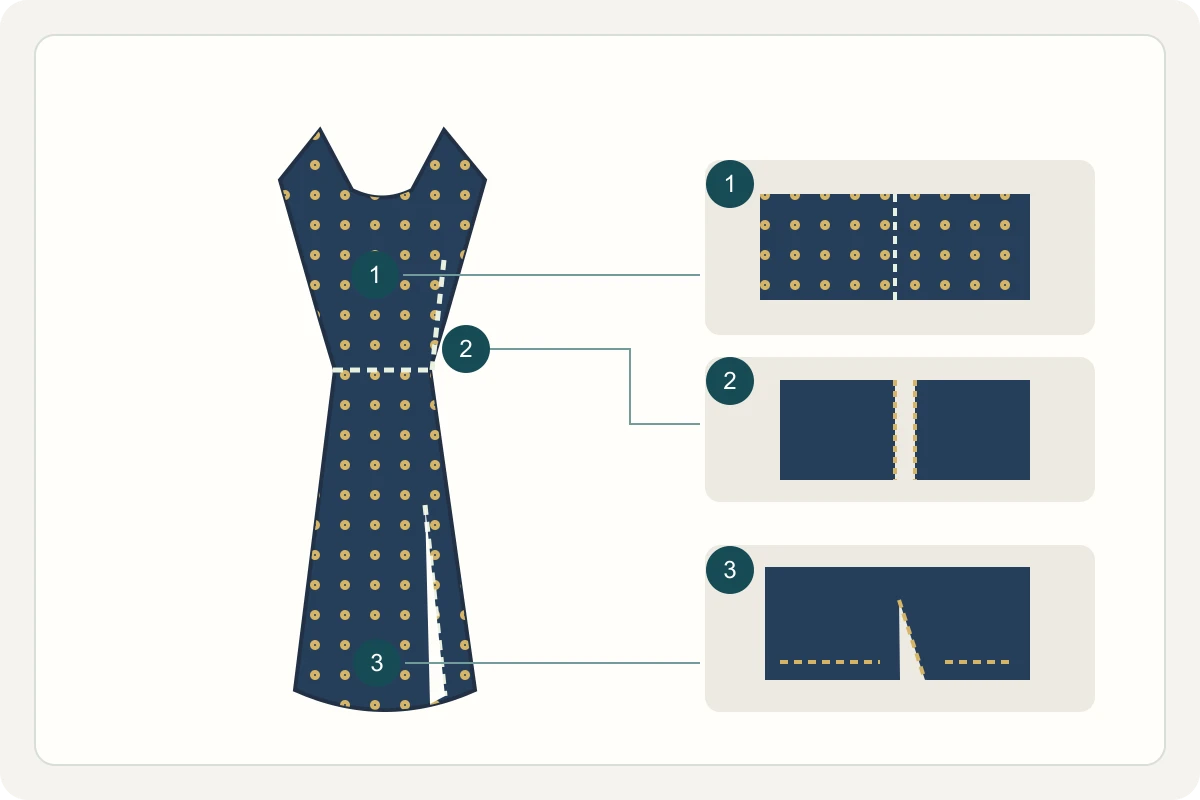
Choose evening dress sequin fabric by the silhouette and the parts of the dress that must be assembled, then review the surface effect. A dramatic hanging swatch leaves questions about the zip, slit, lining and hem unanswered. The right sampling brief connects the desired appearance to those locations without assuming that sequin size or a catalogue photograph proves garment performance.
Define the silhouette before choosing the sparkle
Show whether the dress is a fitted column, a flared skirt or a layered design, and mark which panels carry sequins. State whether the decorated layer is expected to shape the garment or sit over another structure. The pattern maker should decide the support and fit; a fabric name alone cannot provide that decision.
List the appearance priorities separately: a continuous reflective field, individual visible points, visible ground between motifs, or another specified effect. Review them at the intended viewing distance as well as close up. This gives two fabrics a shared comparison question even when their decoration and ground differ.
Treat mesh and velvet as complete fabric candidates
Sequin mesh and sequin velvet are alternative constructions, not a controlled experiment in the effect of changing the ground alone. Existing catalogue options may also differ in motif, decoration and colour. Compare the actual candidates on the proposed lining, with each reference identified, and ask what remains unknown about the individual fabric.
Do not infer stretch, weight or support from which candidate looks denser in a photograph. If the fitted design depends on any of these properties, ask for the relevant specification and a garment trial. A visual preference can be recorded while those construction questions remain open.
Make the reflection review repeatable
Hang each candidate in the same orientation and review it under the intended presentation conditions where practical. Keep the camera position and exposure consistent when sharing comparison videos, and show a gentle turn as well as a still view. This is an observation workflow, not a laboratory test or a promise of how every event light will behave.
Identify the candidate and lining in the recording. Avoid selecting from a clipped highlight alone: inspect the spaces between reflective areas and the overall motif when the fabric faces away from the light. Record which effect is preferred and the conditions used, so a later sample is judged against a clear reference.
Make the opening and edge decisions visible
This proposed checklist separates decorative preference from garment assembly. Let the garment maker select the construction and judge the result with the real layers.
| Location | Request | Decision |
|---|---|---|
| Bodice and side seam | Representative joined and lined section | Fit review and motif interruption |
| Zip or other opening | Opening sample using the actual layers | Closure access and visible edge |
| Slit and lower edge | Hanging finished sample | Appearance when still and moving |
| Sleeve or armhole | Relevant fitted section | Contact and movement observations |
Check panel layout before calculating the order
Use the actual pattern pieces and a confirmed usable area or repeat map for layout discussion. Mark motif direction and the panels that must relate to one another. Ask whether an opening crosses a decorated area, rather than assuming its treatment is included in an attractive fabric photograph.
For a hypothetical column dress with a side opening and a front slit, compare a full front panel with the two critical edge samples. A small swatch cannot establish the arrangement around both locations. Agree the order unit and the basis of the layout calculation separately; do not apply an invented universal waste percentage.
Approve appearance and assembly with separate records
Keep the chosen fabric, lining, reflection reference and placement drawing together. Mark which assembled zones have been accepted, which need revision and which performance questions need separate evidence. Record the sample version, rather than treating a general colour approval as approval of every seam and edge.
If the decoration layout, ground or lining changes, revisit the affected decisions. A useful final brief makes the intended dress understandable to both the fabric supplier and garment maker. It also prevents an untested assumption about stretch, cleaning or comfort from becoming an order promise.
Discuss your embroidery project
Send All4Lace your evening dress sketch, proposed lining and critical opening or edge details to discuss suitable sequin fabric samples.
Contact Zhijin