Materials & Applications
Glued vs Sewn Sequins on Fabric: Identify What Holds Each Layer
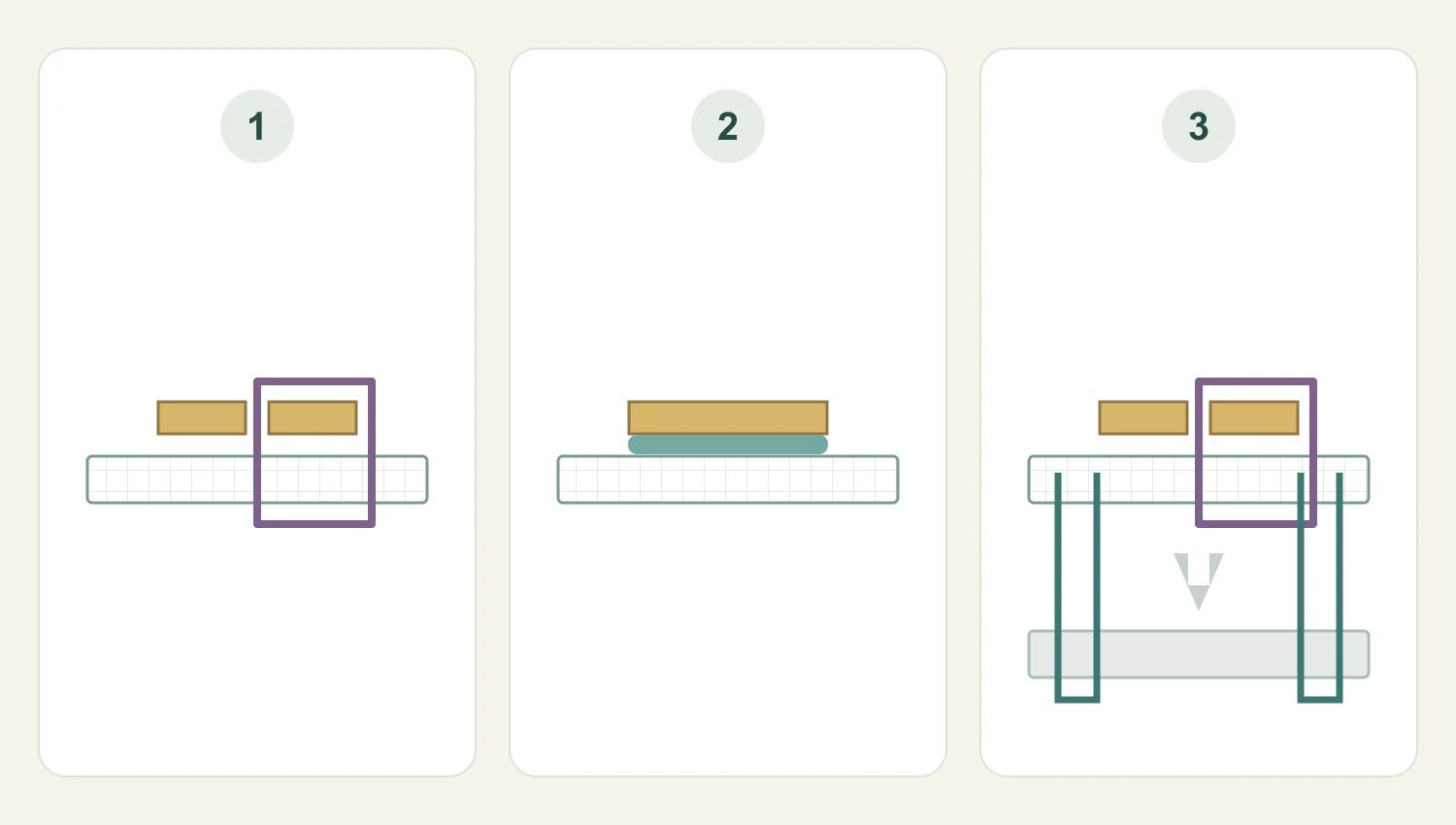
Glued sequins are held by an adhesive bond; sewn sequins are held by fixing thread. A design can also combine the two, or attach an already decorated motif to a garment. The useful distinction is therefore the attachment at each interface, rather than a universal ranking of glued and sewn fabric. Identify the actual construction, then compare it in the garment area and care route you intend to use.
Identify the attachment system, including mixed methods
For stitched decoration, inspect where the thread fixes the piece to its ground. Wilcom’s documentation treats sequin selection and fixing stitches as separately configurable parts of an embroidery design. This is why the position of a piece and the route of its fixing thread deserve separate descriptions.
For adhesive attachment, identify the bond between the decorative piece and its support. Aleene’s distinguishes a temporary positioning adhesive from products intended for a longer-lasting attachment, including sequins. Its example shows that glue is not one fixed category: ask which role the adhesive has in the offered construction, including whether stitching is added afterwards.
Read the reference in a practical sequence
Start with a full face view to locate the decorated area. Then inspect a close-up of a representative piece and the corresponding reverse. Look for a fixing thread through or around the piece, stitch marks in the ground, or an identified adhesive interface. Keep the views linked by the same sample code and marked location.
A visible hole alone does not establish that a piece has been sewn, and a smooth reverse alone does not establish a glued construction. If a photograph leaves the attachment unclear, request the construction description and an intact physical reference. Record the observation as unresolved rather than peeling pieces away and treating the damaged result as a normal sample.
Compare alternatives for the same garment use
Use the same design target when comparing candidates. The following garment locations create different questions for either attachment system. They are observation prompts for the actual assembly, not predicted results for all glued or stitched materials.
| Garment area | Compare on the assembled reference | Record for either candidate |
|---|---|---|
| Decorative front panel | Visible piece layout and the planned ground or carrier | Exact attachment and approved outward appearance |
| Fold or opening edge | The selected fold with its facing or lining | Where pieces, thread or bond meet the assembly |
| Repeated-contact area | The proposed garment arrangement and agreed handling | Observed changes and the procedure used |
Separate sequin fixing from motif attachment
Consider a hypothetical jacket with a sequin motif applied beside the opening. The motif may be sewn onto the jacket while the individual sequins are bonded to a separate carrier. Calling the whole item sewn-on sequins hides the first interface. Conversely, a stitched-sequin motif could be attached to a garment by another joining method.
Mark two relationships in the brief: piece to carrier or ground, and carrier to garment where one exists. Request a face and reverse record for both. A change to the carrier join is not automatically a change to sequin fixing, so keep those revision instructions separate when discussing an alternative.
Ask care questions about the complete combination
State the intended cleaning, pressing and wear context before approval. Ask for the proposed care information for the complete material, including its ground, decoration, attachment and any retained carrier. If an adhesive is part of the construction, request the applicable preparation and curing information from its responsible supplier rather than inventing a common waiting time.
Review the selected combination under the agreed procedure and record the observations against that reference. Include the garment fold, seam or lining that matters to the use. Neither a neat photograph nor the word sewn supplies a wash result; likewise, the presence of adhesive does not by itself settle whether the finished combination meets the brief.
Make a decision that another person can trace
Keep an identified sample, the attachment description, a garment-area trial and the agreed evaluation record together. A useful choice says which reference meets the specific visual and assembly target. If the ground, fixing thread, adhesive or carrier changes, identify that changed component and revisit the relevant part of the approval.
- Name every attachment interface that the supplied item contains.
- Keep matching face, reverse and garment-area views.
- Attach care and handling observations to the same sample code.
Discuss your embroidery project
Send All4Lace the decoration reference, intended garment area and the attachment you want clarified. Mark whether the question concerns individual sequins or a complete applied motif, so we can discuss the relevant sample information and available references.
Contact Zhijin