Customization & Sampling
Granny Square–Look Bag Straps: From Decorative Trim to a Tested Assembly
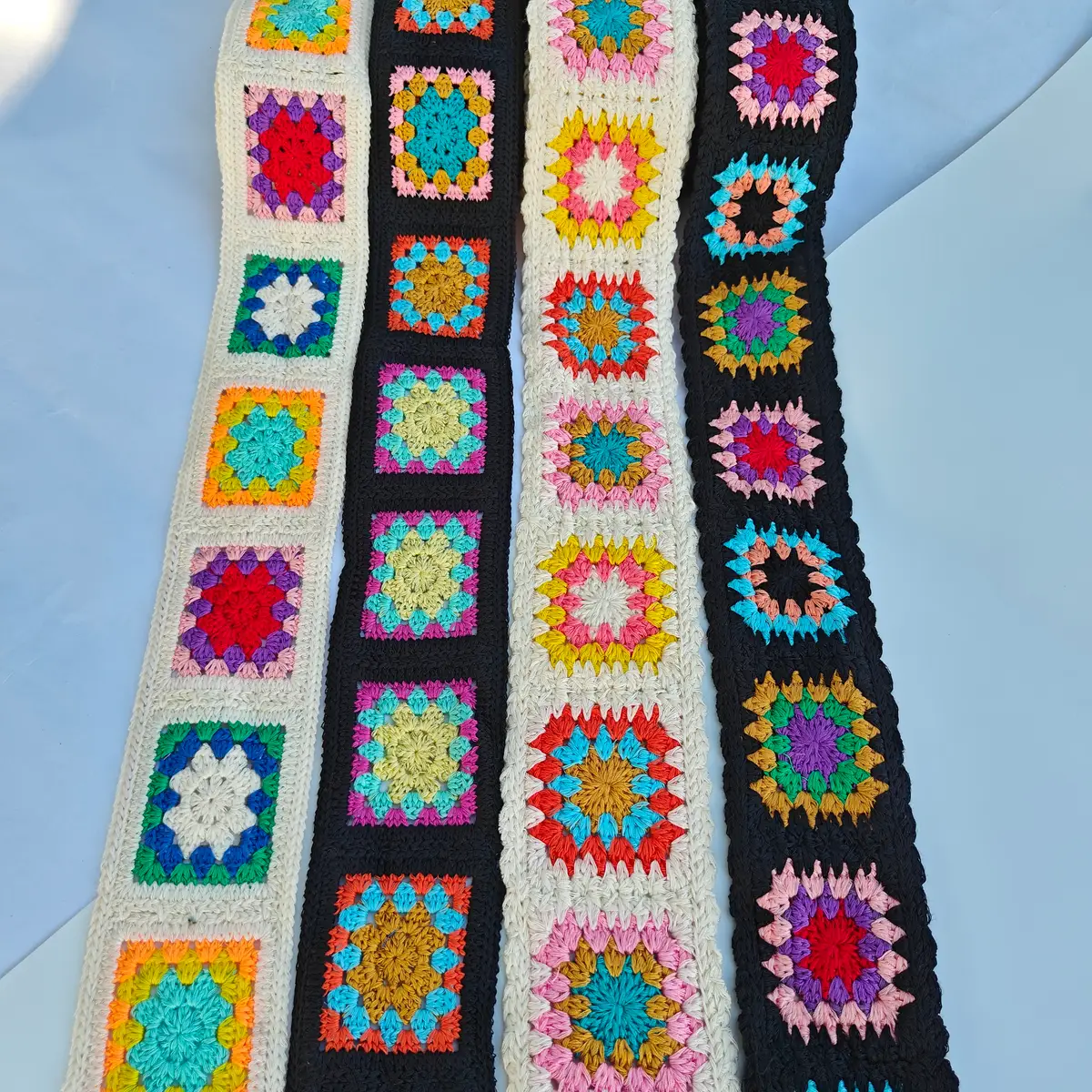
A colourful granny square–look strip can define the appearance of a bag strap, but appearance does not establish how the strap carries a bag. Our catalogue references on this page are decorative lace samples. We have not established a finished bag-strap load rating for them. For a bag brand, the useful development question is therefore how to combine the selected decoration with a suitable structural design, attachment and hardware, then verify the complete assembly against the intended use.
1. Define the bag and the strap’s function
State whether the project is a shoulder strap, a short handle, an adjustable crossbody strap or a removable decorative accessory. Send the bag drawing, attachment locations, finished length range, target width and intended contents. The same square motif may need a different build for each use. A photograph of another bag is a visual brief, not an engineering specification.
Choose the party responsible for approving the complete bag construction and the verification protocol. Agree the relevant market and customer requirements before buying decoration in bulk. If the requirements are not yet defined, the next purchase should support prototype development, not a claim that a decorative lace reference is already suitable for a stated load.
2. Compare our actual square-motif references
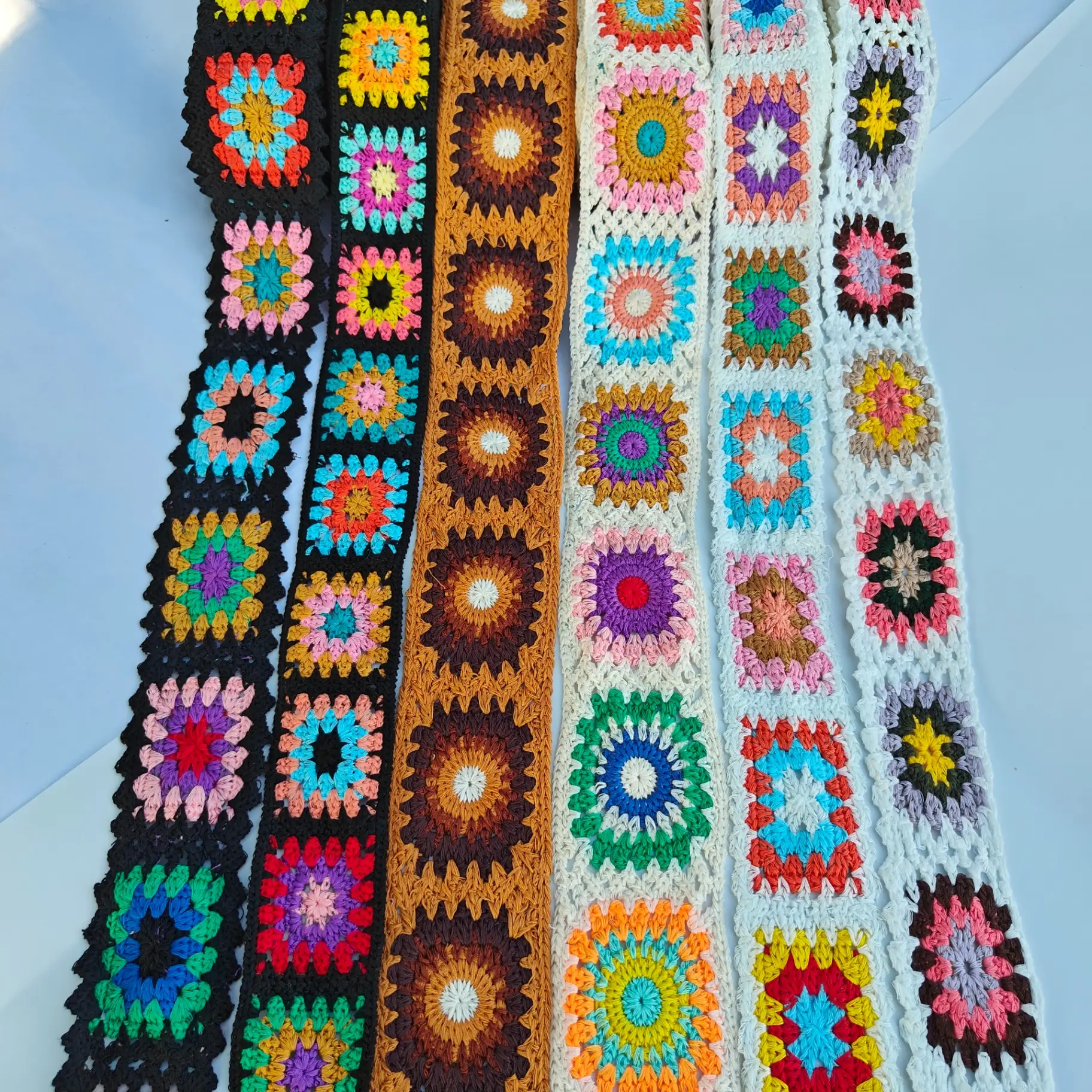
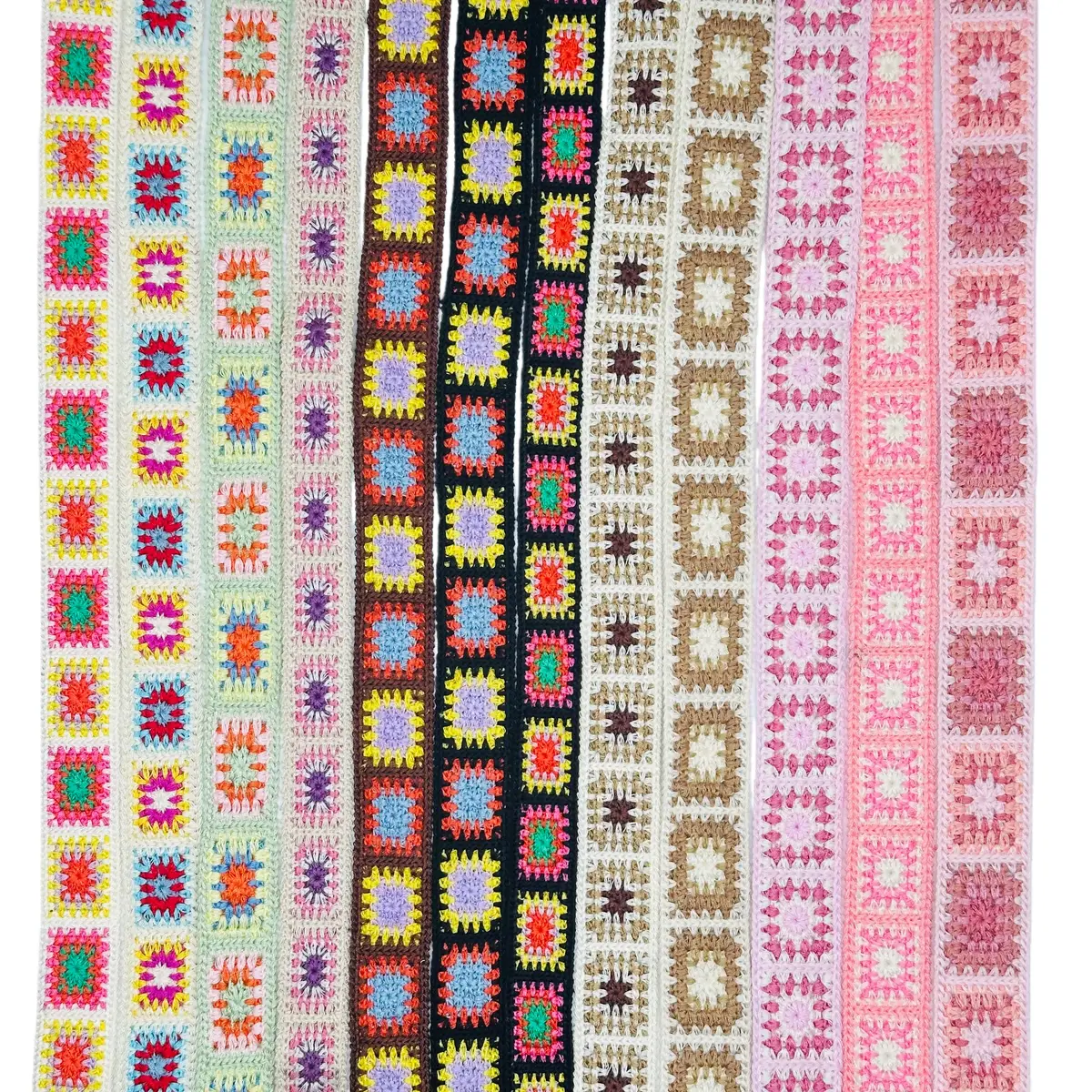
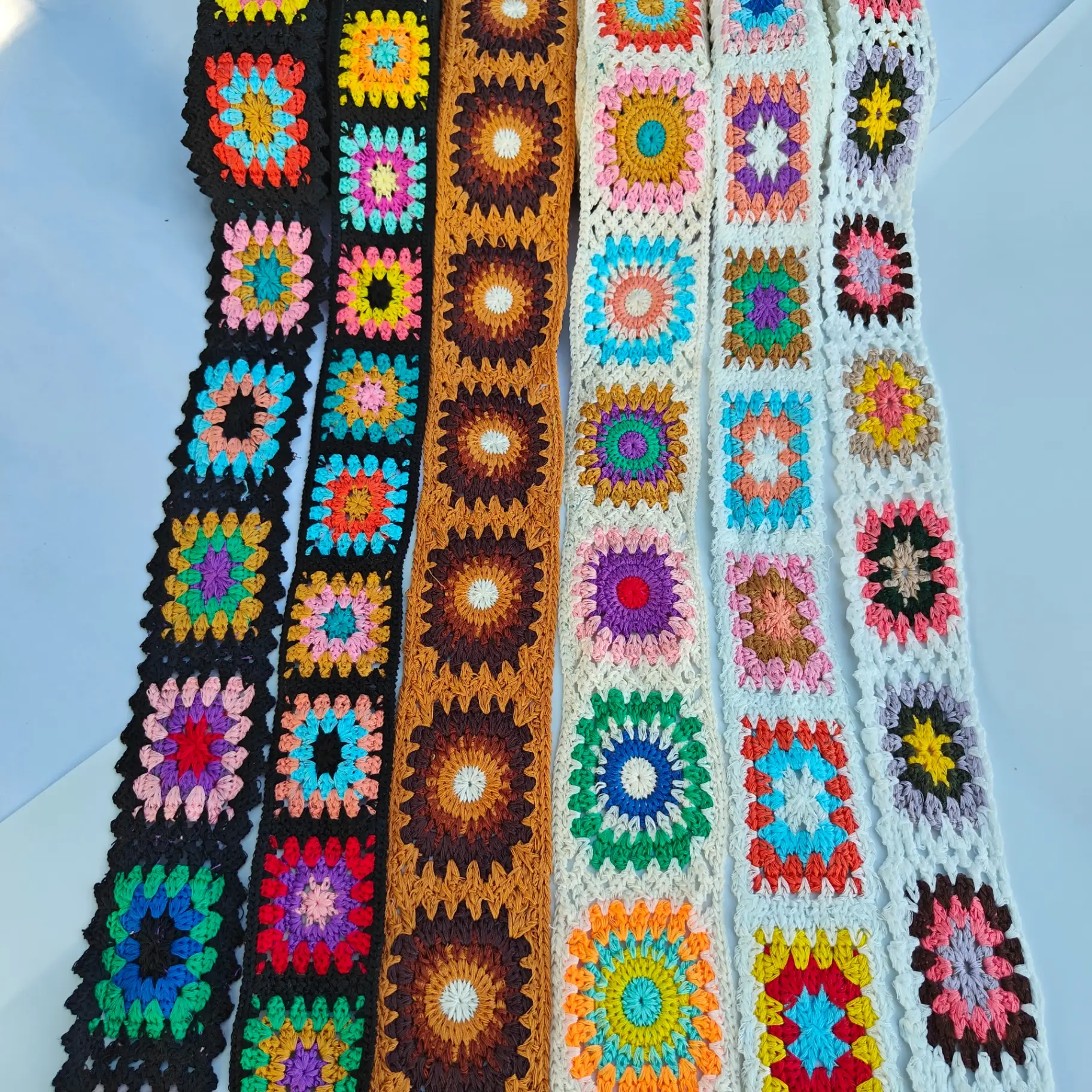
The nominal 70 mm square reference shows colourful repeating units and open spaces. The larger showcase series offers several square-based colour arrangements, while the small-square reference gives another motif scale. Use these photographs to compare rhythm, background colour and edge outline. They do not demonstrate a bag application, fibre test or strength result.
The term “granny square–look” describes the visual direction here, not proof of handmade crochet. Confirm the exact offered construction and material on a labelled sample. If handmade construction is essential to your brand brief, state that requirement explicitly and resolve it before treating a catalogue appearance as a manufacturing promise.
3. Develop the structural path separately from the decoration
One development option is decorative lace applied over a suitably selected structural webbing or other supporting construction. In that arrangement, the engineer or bag maker must define how the load travels from the bag body through seams, backing and hardware. Adding webbing alone does not establish a safe rating or solve a weak end attachment.
Request a construction drawing showing all layers, edge coverage and the intended decorative stitch path. Decide whether the backing should remain visible through the openings or be colour-coordinated. Check for unsupported lace edges and snag points. Approve the decorative appearance and the structural design as related but separately recorded decisions.
4. Check the hardware opening and the folded thickness
Measure the actual clear opening of the ring, slider, buckle or clip, not only its nominal trade size. Compare it with the complete strap width and thickness at the folded end. A decorative edge that fits through once may still bunch, abrade or prevent an adjuster from moving correctly in use.
Prototype the end turnback and attachment to the bag body using the intended production materials. Mark which stitches secure the structural layers and which hold decoration in place. Do not specify a universal stitch count from a photograph: the suitable seam design and acceptance criteria need to be developed for the actual material, hardware and intended load conditions.
5. Lay out square repeats before cutting the strap
Record the measured repeat length and choose what appears at the shoulder centre, adjustment zone and visible ends. Lay out both sides of a pair of handles together. If the strap is adjustable, inspect the visible motif at its shortest and longest positions; the attractive sample-card arrangement may disappear when an end is folded or a slider covers it.
Use the layout to calculate sample and production length, with actual turnbacks and measured losses. Do not cut through connecting bridges simply to make the pattern end neatly, or fold an open edge inward and assume it retains the original behaviour. Any construction change needs another prototype review.
6. Treat custom width as development, not simple scaling
The catalogue’s nominal 70 mm reference is a starting point for selection. Ask whether the selected design can be developed at the required finished width while preserving motif legibility, connections and a practical attachment zone. A narrower version may require a different repeat, yarn arrangement or border; it is not automatically the same design at a smaller percentage.
Confirm development feasibility, sample charges, approval stages, colour conditions and minimum quantities in the current proposal. Approve dimensions after the relevant finishing stage. If the intended width cannot be achieved reliably with the chosen motif, compare another existing reference or revise the strap design instead of forcing a visually similar substitute into an unchanged specification.
7. Verify the complete strap, not a loose lace strip
Agree a verification plan with the bag maker, buyer and, where needed, a suitable laboratory. Define the intended load conditions, repeated-use assessment, attachment inspection and acceptance criteria before the test. Record the sample version and any failure location. Do not invent a kilogram rating or a cycle count because a similar-looking strap appears elsewhere online.
ISO 13934-1 describes a strip-method tensile test for textile fabrics. That scope is not a finished bag-strap rating. A fabric result alone does not verify the assembled seams, clip, adjustment mechanism or bag-body attachment. Select suitable methods for the actual construction and identify exactly what each report does and does not cover.
Technical references
8. Check contact, rubbing and care as a separate approval
Assess the assembled strap against the intended clothing and shoulder contact. Look for rough edges, catching jewellery, colour transfer and decorative parts rubbing on hardware. Include the actual backing colour because it affects both the look through openings and the complete material combination. A visual approval alone is insufficient evidence for a colourfastness claim.
Agree care conditions appropriate to the complete bag or removable strap, then compare before and after the specified treatment. Keep the untreated control and document changes in dimensions, edge curl, attachment and colour. Where a report is required, confirm the method, material combination and acceptance criteria with the buyer; we do not present these catalogue photos as existing test evidence.
9. Send a strap-development brief with decision gates
Keep decoration selection, structural prototype approval and production release as distinct sign-offs. A prototype should not be replaced by a new backing, colour or hardware item without reviewing what that change affects. Use the following record to request a development discussion rather than assuming that a decorative product page is a finished strap offer.
| Decision | Information to record |
|---|---|
| Decorative selection | Exact reference, colour, measured width, repeat and approved appearance |
| Assembly design | Layer drawing, backing, seam paths, hardware opening and bag-body attachment |
| Verification | Use conditions, agreed methods, acceptance criteria, sample version and results |
| Production proposal | Feasibility of custom width, sample scope, MOQ, price and approval schedule |
Discuss your embroidery project
Send All4Lace the chosen square-motif reference, a bag drawing, target strap width and length, backing plan and hardware details. Ask for a decorative-sample or custom-development proposal, and arrange complete bag-strap verification with the party responsible for the finished bag.
Contact Zhijin