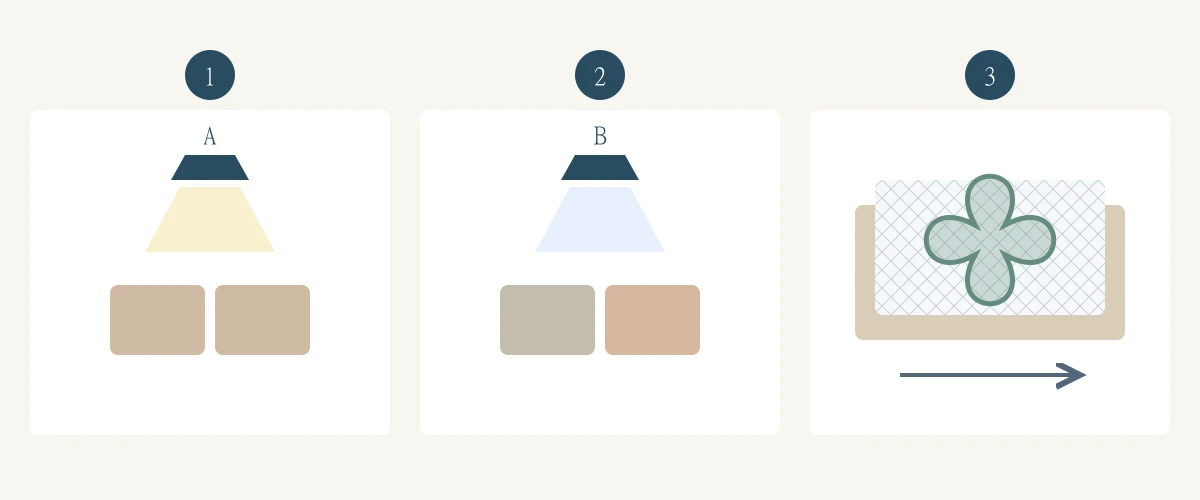
Two materials can look matched under one light and mismatched under another. That can indicate illuminant metamerism, but lace and sequins also change appearance with backing, viewing direction and surface reflection. A useful colour approval separates these variables and identifies the physical reference, lighting and assembled layers being accepted.
Separate a lighting mismatch from a surface effect
X-Rite defines illuminant metamerism as a match under one lighting condition that does not hold under another. Its colour-education material separately discusses geometric effects caused by viewing or illumination alignment. For a sequin panel, changing the light and rotating the fabric at the same time makes those causes difficult to distinguish.
| Change observed | Useful next comparison |
|---|---|
| Pair separates under another light | Hold backing and orientation fixed; change the light |
| Shine changes when rotated | Hold light fixed; compare the recorded orientations |
| Tone changes over another lining | Use the same light and orientation; compare layer stacks |
Technical references
Identify the reference and the complete layer stack
Keep the approved physical reference and its identity with the order: thread colour code, sequin reference, ground lot and lining reference where applicable. A generic colour word such as ivory does not identify one measurable appearance. A screen photograph is useful for discussing direction, but cannot replace the agreed physical colour target.
Compare the decorated material on the intended lining and also retain the individual component swatches. This separates a component mismatch from a combined optical effect. If a buyer changes the lining after approval, review the assembly again instead of assuming the earlier colour decision still applies.
Make the lighting comparison repeatable
Agree the lighting conditions relevant to the customer’s approval and intended use. A light booth can support controlled comparisons; X-Rite’s textile visual-evaluation guidance recommends reviewing harmony across materials under relevant lighting. Record the actual booth or lamp identity and selected condition, not just “daylight” or “office light”.
Keep the same pair, orientation, layer stack and viewing arrangement while changing only the selected lighting condition. Then run a separate orientation comparison under fixed light for directional sequins. If the two sides use different equipment, identify that difference before treating their observations as directly comparable.
Technical references
Use photographs and measurements within their limits
For photographs, keep the pair in one frame and record the light and camera setup. Automatic white balance and processing can hide or exaggerate a difference. Use these images as a traceable discussion record, not as an independent colour pass certificate or evidence that the buyer’s screen shows the same colour.
If instrumental evaluation is required, ask the colour specialist to agree a method suitable for the actual sheer or reflective material. Identify the backing, orientation, measurement geometry, illuminant and colour-difference formula in the report. A numerical difference without those conditions is not a universal pass/fail answer for a sequin assembly.
Turn a mismatch into a precise approval decision
Example: lace and lining match under condition A, but the lining looks warmer under condition B while orientation is unchanged. Record both observations against the same physical pair and ask whether a different component should be sampled. This is an illustrative review scenario, not a claim of a measured All4Lace defect or correction.
Must every component look identical under every possible light? Define the relevant conditions and acceptable harmony with the buyer rather than promising that. Retain the approved assembly, component identities and decision date for reorders. Colour consistency is an agreed comparison task, not a guarantee established by a colour name or one photograph.
Discuss your embroidery project
Send All4Lace a physical colour reference where available, the intended lining, selected sequin or thread references and the lighting conditions that matter to your garment. Ask for an identified assembly sample and record any accepted mismatch before confirming the colour.
Contact Zhijin