Quality & Delivery
Metallic Embroidery Care: Approve the Finished Sample, Not a Thread Name
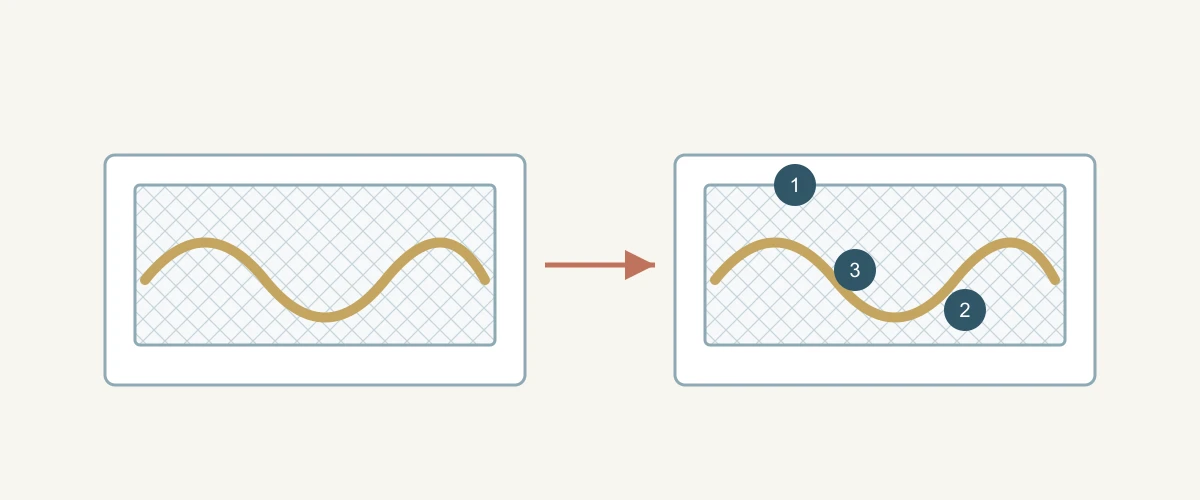
A metallic look does not identify one fibre or one safe wash programme. A supplier data sheet may describe a particular thread, while a finished embellished garment also includes ground fabric, other embroidery, stabiliser residue, beads, adhesive and lining. The care decision therefore belongs to the exact assembled article. Buyers can make a small sample review useful by recording the thread identity, intended care and visible changes without borrowing another maker’s test rating as proof of their own fabric.
1. Identify the metallic component actually supplied
Ask whether shine comes from a metallised film wrapped with another fibre, another specialty thread, a sequin, a foil finish or a mixture. Record the maker and product code of the exact thread if disclosed, along with ground fabric and other decorations. Madeira’s technical sheet for one Supertwist No. 30 product states a specific fibre composition and care data; it is evidence for that manufacturer’s product only. Do not transfer its ratings or needle suggestions to an unidentified All4Lace material. If identity remains unknown, keep the care route provisional and request a representative finished sample.
Technical references
2. Choose care for the weakest relevant component
Review wash, bleach, drying, ironing and professional cleaning as separate decisions for the complete garment. A thread may tolerate one condition while a glued stone, open mesh, bead coating or lining does not. The ISO care-labelling scope explains that the symbol represents the most severe treatment avoiding irreversible damage to the textile article, which requires looking beyond a single decorative strand. A care icon copied from a thread package cannot automatically become the garment label. Agree a route suited to the actual assembly before any trial; where uncertainty is material, seek qualified laboratory or cleaner advice.
3. Photograph and rate the untouched sample first
Identify the sample, colour, lot or source, thread reference, and embroidered location. Photograph the face and reverse under the same controlled lighting with a neutral reference so later change can be judged. Record shine, colour, thread coverage, surface snags, stitch ends, ground distortion and attached components before care. State whether you will evaluate a loose fabric panel, a seam junction or a complete garment; each answers a different question. Write the purchaser’s visual acceptance criteria in advance, including any critical areas near an opening or skin contact, rather than choosing criteria after seeing the outcome.
4. Follow an agreed process and preserve the sequence
For a preliminary comparison, write the intended wash or professional-care process, drying method, any finishing or pressing, number of cycles and operator. Use a spare representative sample and follow the selected care instructions; do not experiment on the only approved reference. After each planned cycle, return the sample to a comparable dry state and photograph the same points. Check if the metallic surface dulls, loses colour, kinks, breaks, shifts in the stitch or pulls the ground. A single unchanged swatch does not establish a formal colourfastness grade or predict all production lots.
5. Record the exact failure mode before revising care
If the shine looks reduced, compare the same lighting and angles before assuming chemical damage. If an edge catches, identify whether it is metallic thread, another yarn or a sequin. If the ground puckers, inspect the component and seam changes separately. Revise only one proposed variable at a time, such as gentler mechanical action or a different stitch placement, and retest a new sample; do not silently substitute a care label that has not been confirmed for the complete article. Keep an unresolved result on hold rather than calling it a pass.
| Observation | Check before explanation | Next decision |
|---|---|---|
| Reduced shine | Same light, angle and dry state? | Confirm change, then review care |
| Broken or snagged strands | Which material and location? | Revise placement or handling |
| Distorted ground or seam | Did layers change differently? | Test assembled construction |
Technical references
6. Send a brief that makes repeat orders comparable
Your request should give the metallic design artwork, reference sample, full material stack, target garment area, desired appearance, intended care market and any specific test method required. The approval record should retain exact supplied thread identity if available, photographs before and after each cycle, observed failure modes, agreed disposition and decision owner. Ask the supplier to flag any subsequent change to thread, ground, finish or decoration so that care approval can be revisited. This article supplies a buyer’s review plan, not All4Lace test results, certification or a universal metallic-thread care label.
Discuss your embroidery project
To review metallic embroidery with All4Lace, send the finished-garment construction and intended care alongside your artwork and sample reference. Ask for the exact supplied thread information available and a labelled assembled trial, then agree what visual and attachment changes are acceptable before bulk approval.
Contact Zhijin