Materials & Applications
Metallic Thread Embroidery Fabric: Structure, Shine and Placement
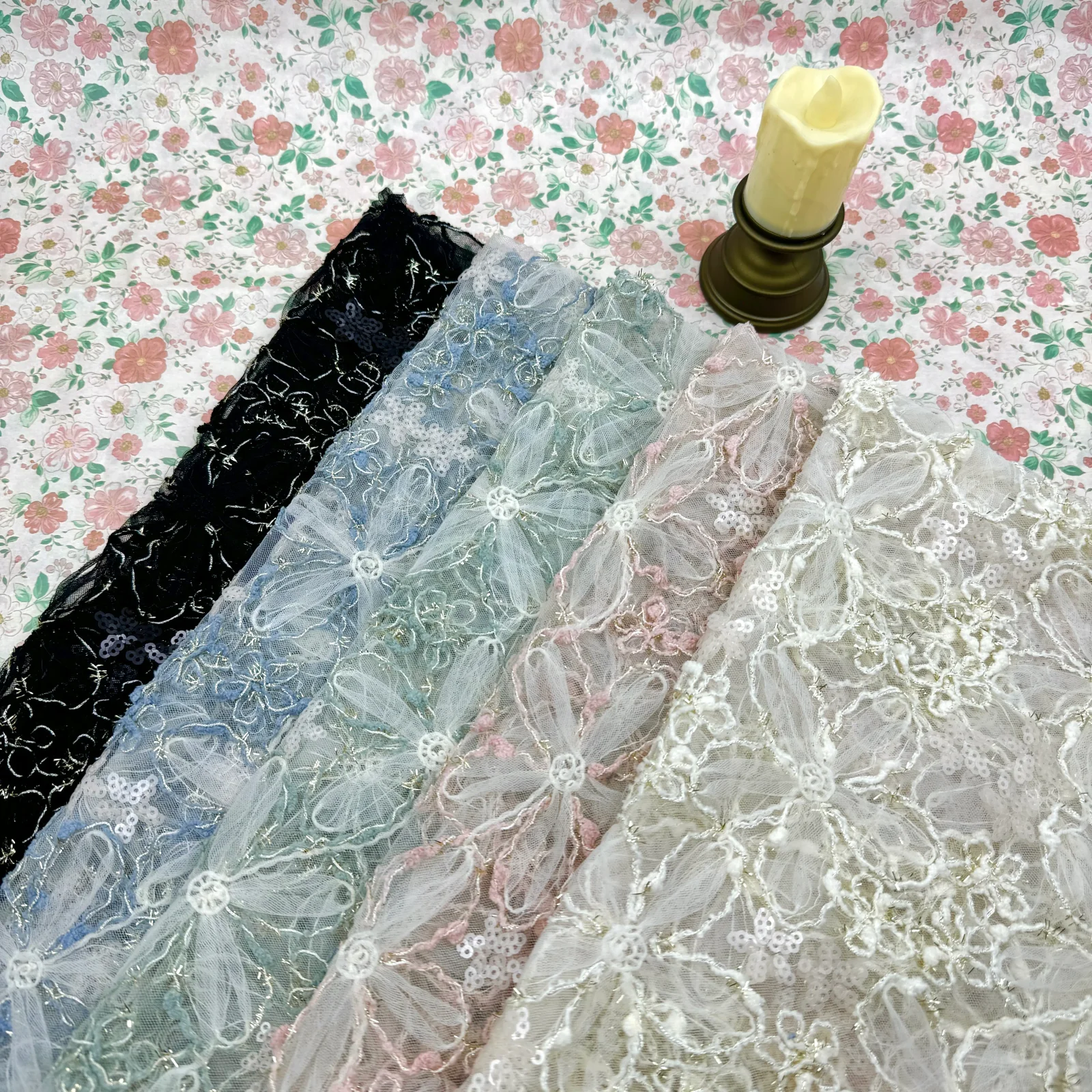
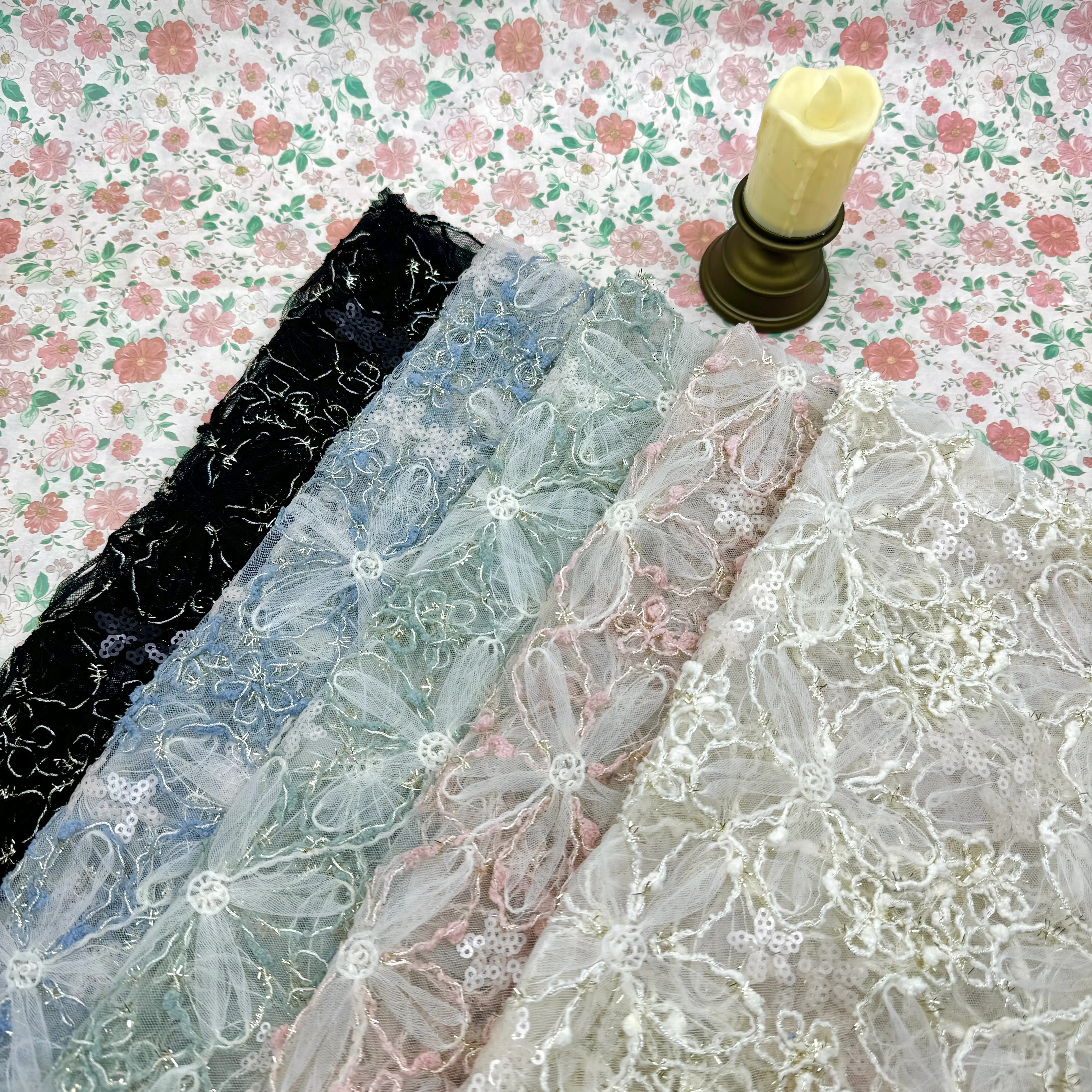
Metallic thread embroidery fabric carries stitched decoration with a metallic-looking surface. That appearance does not mean the thread is solid metal or contains precious gold. The useful buying questions concern the actual thread construction, how much of the motif it covers, and where the finished material will sit in a garment. Start with those questions before approving a gold or silver effect from a small photograph.
Identify the thread before naming the effect
Metallic is an effect description, not a complete composition. For example, Madeira describes metallic threads with a foil wrapped around a polyamide, polyester or viscose core. This demonstrates why the visible surface and the supporting core should be considered separately; it does not identify the thread used in an All4Lace photograph.
Request the offered thread reference and its declared composition. Keep embroidery thread separate from sequins, beads or a reflective ground yarn. A gold-coloured line can be described accurately as a metallic effect until the material is confirmed. Do not turn a colour name into a precious-metal claim or a promise about resistance to wear.
Technical references
Read the motif in a full sample
Look first at an entire repeat, then inspect one outline and one densely stitched area. Note where the reflective effect begins and ends. Is it a narrow accent around a flower, the main filling of a leaf, or a continuous route through the design? Those choices belong in the approval record because they describe very different distributions of the effect.
View the sample flat and gently curved in the intended orientation. Use the same background and lighting when comparing alternatives. On a sample combining reflective lines, cord and sequins, label each element separately in the close-up. Match those labels to the supplier’s material record so the review connects visible details with an identified component.
Compare three ways to distribute metallic detail
The following options are design briefs, not performance rankings. Outline-only decoration may be the intended visual accent even when a larger filled motif looks brighter in an online image. Compare each proposal at the same motif scale, with the same ground and proposed lining, so the decision concerns the distribution of decoration.
If two samples differ in both ground and thread coverage, record both changes. Calling the second sample more metallic hides which part changed. Ask for a separate description of the ground, the embroidery thread and any additional decoration before comparing quotations.
| Design option | What to mark | What to compare in the sample |
|---|---|---|
| Outline accent | Exact reflective paths | Line continuity and visual balance |
| Selected filled motifs | Which leaves or petals receive the effect | Filled areas beside clear ground |
| Distributed allover detail | Repeat and garment direction | Joins, folds and total appearance |
Place the effect where the garment needs it
For a neckline, mark the opening, seam allowance and area facing the wearer. For a sleeve, mark the fold and cuff position. For a skirt panel, show the intended repeat direction and where panels join. These drawings turn an attractive textile into a specific placement discussion without assuming that every metallic-effect construction suits every garment.
For example, a narrow reflective vine at a cuff and an allover reflective bodice require different sample views. Review the assembled cuff or bodice with its planned lining, then record any objection as a location: reverse at opening, fold through motif, or join beside leaf. This is clearer than requesting softer or better metallic fabric.
Approve the combination, not a thread name alone
Madeira advises sampling the design on the production fabric and adapting the design to the selected metallic thread. For buyers, the practical implication is to approve the proposed thread, ground and motif together. A loose thread card or an earlier sample on another ground is only a reference, not approval of the new combination.
Keep one identified sample with the thread reference, motif distribution, ground, orientation and planned lining. Agree any handling and care evaluation for the assembled material before assigning instructions; this guide supplies no universal wash temperature. When a component changes, reopen the relevant sample check instead of assuming that the earlier approval covers it.
Technical references
Discuss your embroidery project
Send All4Lace a face and reverse reference, mark the lines that need a metallic effect, and identify the garment area and intended care route. We can then clarify the sample request and whether a suitable catalogue reference is available.
Contact Zhijin