Materials & Applications
Nylon vs Polyester Lace: Material Differences and a Sleeve Sample Plan
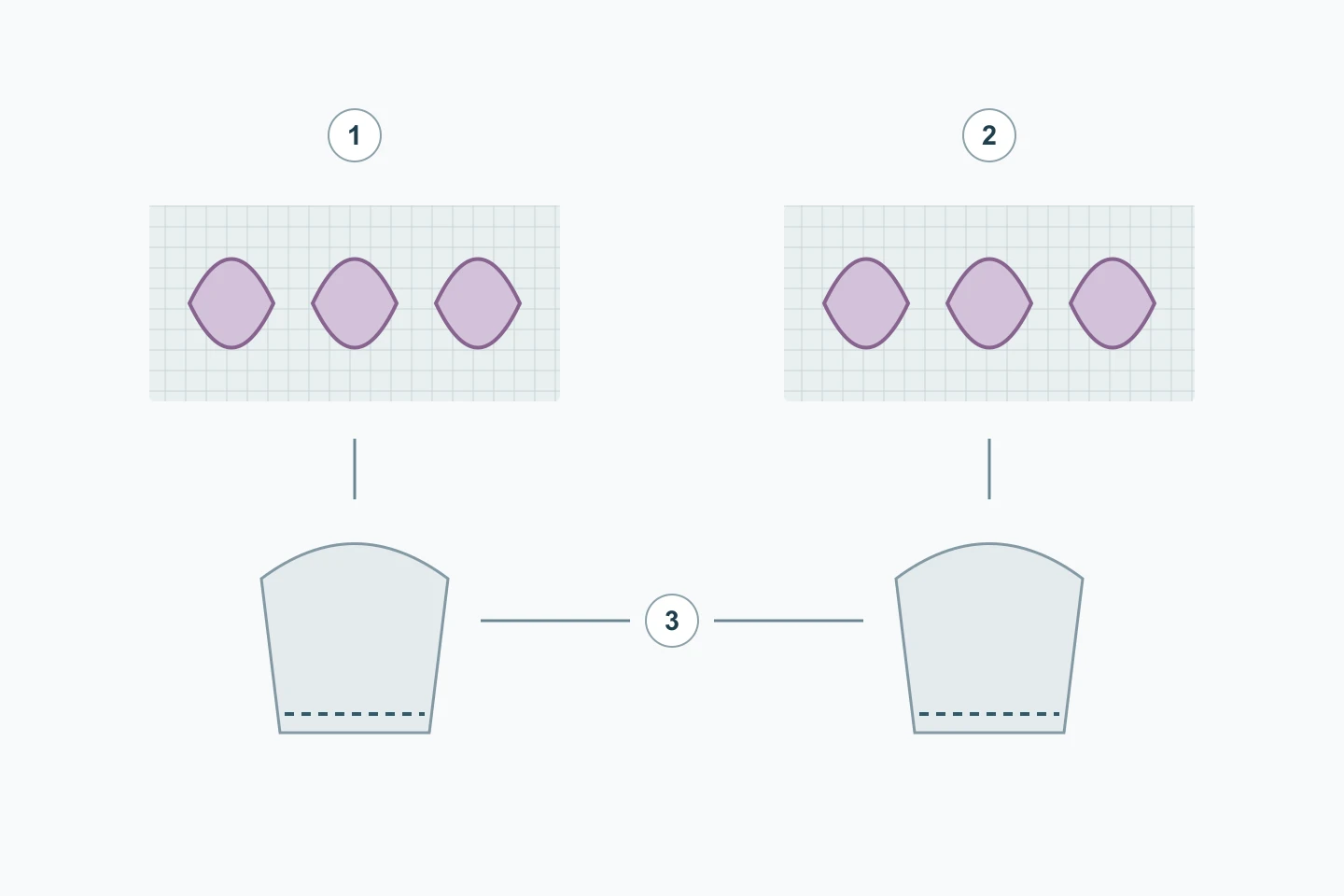
Nylon belongs to the polyamide family; polyester is a different synthetic fibre family. Nylon generally has higher reference moisture regain than polyester. Neither name tells you how far a finished lace sleeve will extend, whether it recovers, or how its seam feels. Choose first samples by the required composition and sleeve structure, then check movement, contact and appearance on the same pattern. A soft loose swatch is a useful observation, not a finished-sleeve approval.
Which differences are useful before sampling?
Both fibre families can appear in different yarn forms and lace constructions. Use the following distinctions to ask better questions, rather than assuming that nylon always drapes better or polyester always looks stiffer.
| Question | Nylon | Polyester | Buying implication |
|---|---|---|---|
| Fibre family | Polyamide | Polyester | Declare the actual component, blend and fibre scope |
| Reference moisture regain | Higher than polyester at the same reference conditions | Lower than nylon at those conditions | Does not by itself rank wicking, drying or comfort |
| Sleeve stretch and return | Not established by the name | Not established by the name | Check ground, elastic component, motif and direction |
| Feel, lustre and drape | Inspect the offered yarn and structure | Inspect the offered yarn and structure | Compare the actual layers and joined reverse |
| Care behaviour | Agree a process for the whole assembly | Agree a process for the whole assembly | Do not translate fibre thermal data into an ironing recipe |
Technical references
A composition declaration needs a component map
In a composite lace, the ground and embroidery may use different fibres. An illustrative declaration could read: sample N-A; ground 85% nylon/15% elastane; embroidery 100% polyester; no other textile decoration declared. These are fictional specification entries, not an All4Lace offer. “85% nylon” without its ground-only scope would describe a different thing.
Ask whether a whole-material percentage is also required, and how it is established from the component masses. Do not calculate it by averaging the two declarations. Link the composition sheet, ground description, motif reference and quotation to one sample revision. The presence of elastane is relevant to the inquiry, but neither its stated percentage nor the fibre family supplies an extension-and-recovery result.
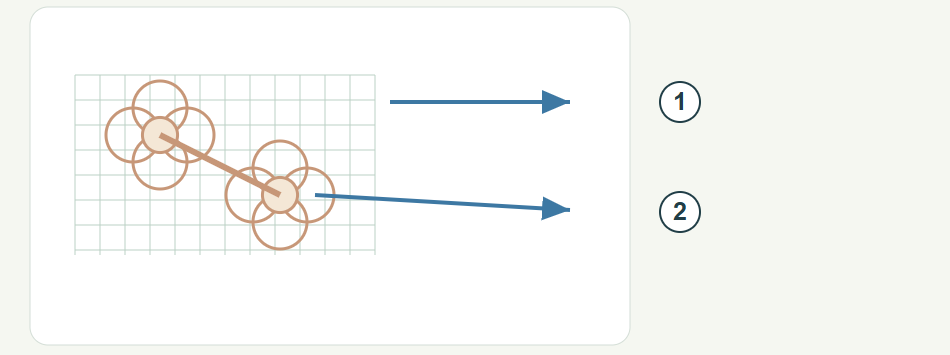
What higher moisture uptake does—and does not—tell you
Coats reports higher nylon than polyester moisture regain at 70°F and 65% relative humidity. That compares moisture held by reference fibres under stated conditions. It does not measure a lace panel’s liquid transport or drying time. Air passing through a fabric is a separate question; construction and finishing matter, as the public ASTM guidance explains.
There is a molecular reason to expect nylon to interact with water: Toray explains that nylon contains hydrophilic amide groups. Its cited technical page concerns nylon resin, so only that chemistry point is used here—not its moulded-part uptake figures, time curves or dimensional results. The fibre comparison above comes from the separate textile reference. Neither source gives a finished lace’s comfort or drying ranking.
Movement is also a structural question. A sleeve can have an extensible ground but a dense motif across the elbow or a restrictive cuff join. Observe the ground, decorated area and seam separately. Decide the needed movement with the garment team, mark the material direction, and compare the same action on the same pattern. Do not substitute a fibre-level elasticity description for the actual sleeve’s required extension, recovery or fit.
Why the surface can change without changing the fibre family
Filament shape, yarn construction and texturing give manufacturers ways to alter the surface and bulk; Coats illustrates those routes in its thread-production material. Ask what is present in the proposed lace, and examine its face and reverse. A lustrous embroidery yarn on one ground can dominate the visible effect while the ground is what touches the skin.
Keep finishing and care in the sample discussion. If a proposed finish changes, reopen the affected handle, colour and assembly checks instead of carrying the earlier approval forward. Review the planned process for ground, embroidery, elastic component and decorations together. A thermal value for an isolated reference fibre is not permission to press an embellished assembly at that temperature.
Technical references
Shortlist by the sleeve problem you need to solve
For a fitted sleeve that must bend and reach, first request candidates with an appropriate declared ground, direction and movement proposal. Consider permitted nylon and polyester options that approach those requirements, rather than eliminating one family before seeing the construction. For a looser decorative sleeve, motif scale, hanging outline and the cuff join may lead the first shortlist instead.
For skin contact, request enough material to form the relevant seam and cuff junction. Compare the reverse at the contact points, using the intended underlayer if present. For a low-sheen appearance, request that visible effect explicitly; “nylon” does not specify a finish. A price comparison comes later, when width, decorative coverage, repeat and assembly work refer to accepted solutions.
A hypothetical sleeve failure and a controlled revision
This is an invented project record, not a product or wearer test. The garment is sleeve S3, pattern revision 1, the same size and direction for both candidates, with cuff K1 closed. The garment team chooses an elbow bend and forward reach as the required fitting actions. Mark a corresponding 40 mm reference segment over the movement area on each relaxed panel; the marks locate the observation and are not a pass threshold. Keep the pattern, cuff, seam proposal and assessor consistent.
Before seeing the result, this fictional team agrees its project criteria: no movement restriction during those actions, no visible residual distortion at the project’s agreed observation point after return to rest, and the intended motif placement preserved. In the example, N-A has the preferred loose-swatch feel but restricts the bend where a dense motif crosses the elbow. P-A permits the agreed action in the trial and returns without the visible distortion defined in this project. The example does not assign a universal waiting time: record the project’s chosen interval after the action, the relaxed observation state and the observation time for both samples. A single observation cannot establish whether distortion is permanent. No extension percentage or laboratory recovery result has been measured.
If both compositions are permitted and other requirements pass, shortlist P-A for this sleeve. Keep N-A unapproved for movement, mark the restriction on the pattern and ask the maker to test a revised motif position or ground-and-motif combination. Check the cuff and seam before blaming the fibre. For a fictional N-A revision 2, the motif is repositioned and the same actions and the agreed post-action observation interval are repeated; only a satisfactory repeat can close the movement item. If a required nylon composition rules out P-A, continue with a revised nylon option rather than silently changing the brief.
What to retain when the sleeve is accepted
Store sample references and revisions, component declarations, pattern version, direction, seam and cuff proposal, agreed actions, before-and-after observations with the post-action waiting interval and observation state and the person making the project decision. Keep appearance preference, observed movement and any formal test result in separate fields. An acceptable fitting observation does not certify durability, colourfastness or long-term recovery.
When a supplier proposes a substitution, compare the changed component with this record and reopen the affected checks. If neither sleeve meets the brief, request the specific change revealed by the trial. That is more useful than asking for a better grade of nylon or a softer grade of polyester without naming the failure.
Discuss your embroidery project
Send All4Lace the sleeve drawing, component composition requirement, preferred visible effect and the movement or contact area to resolve. Add candidate references and the cuff or lining details to discuss suitable current sampling options.
Contact Zhijin