Materials & Applications
Pearl-Effect Beads vs Other Decorative Beads in Embroidery
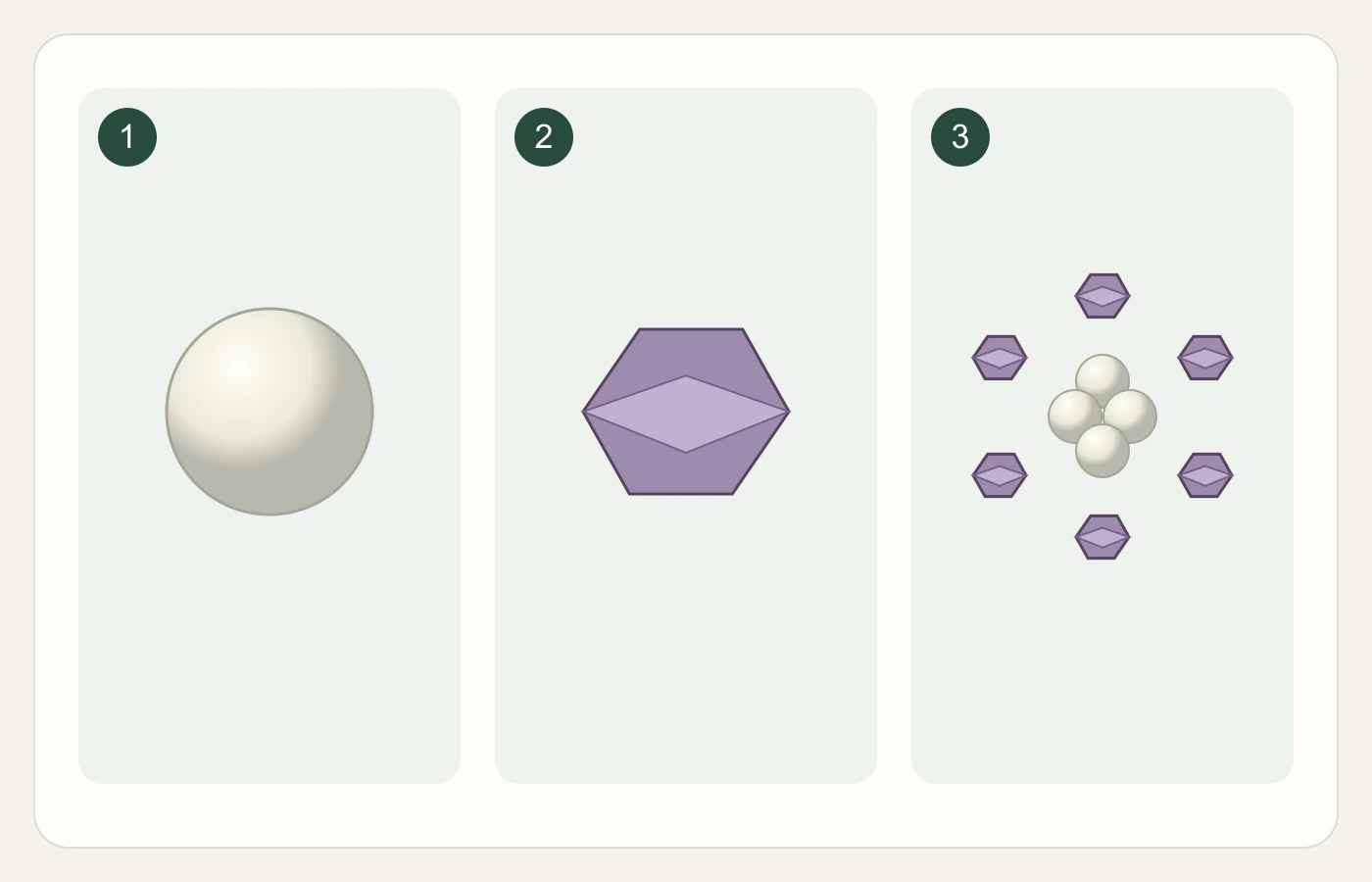
Pearl-effect embroidery uses decorative elements with a pearl-like appearance; those elements can themselves be beads. The useful comparison is therefore pearl-effect beads versus other decorative beads, rather than pearls versus beads as mutually exclusive materials. Decide which visual role you want, then specify the actual component. A rounded pearl-like accent and a faceted or tubular accent may support different parts of the same motif without requiring a choice of only one family.
Separate appearance, material and shape
GIA distinguishes imitation pearls from actual natural or cultured pearls. Here pearl-effect describes an appearance target for decorative components. In the sample brief, give appearance, stated core material, surface treatment and shape separate fields. This lets the team discuss a pearl-like look while keeping the offered component specification explicit.
Other decorative beads is also a broad description: narrow it to the shape being considered, such as a rounded point, an elongated tube or a faceted element. In the cover diagram, 1 and 2 identify two appearance references and 3 a mixed arrangement. Use those roles to discuss the drawing before selecting the actual supplied components.
Compare a defined alternative rather than a whole category
For a fair sample review, name the alternative bead and keep the ground, motif position and intended palette comparable. A large pearl-effect element against a tiny transparent bead changes several variables together. That can be a useful whole-design comparison, but the record should say which variables changed.
| Question | Pearl-effect reference | Named alternative bead |
|---|---|---|
| Visual role | Rounded pearl-like accent or grouping | Specify point, line or faceted accent |
| Shape | Record the selected outline and profile | Record the selected outline and profile |
| Colour relationship | Review beside thread and ground | Review beside the same thread and ground |
| Material record | Identify core and surface treatment | Identify material and surface treatment |
Choose which element should lead the eye
Look at the motif as a whole before inspecting individual components. For a flower, decide whether the centre, petal outline or scattered surrounding accents should be most prominent. Compare the samples under the same light and turn them together. Mark where each element becomes noticeable instead of judging the entire design from one bright close-up.
A mixed design needs a clear hierarchy. If a pearl-effect cluster defines the centre, the other beads can be placed to support the outline rather than compete with it. Alternatively, the centre can stay quiet while another bead carries the main line. These are design options to compare on a sample, not fixed rules about bridal, evening or everyday clothing.
Develop one neckline motif in distinct versions
Imagine an embroidered neckline with a central flower and smaller side motifs. Version A uses pearl-effect elements in the flower centre and a named round bead along the sides. Version B keeps the drawing and colour target but uses the alternative in the centre as well. View both at the intended neckline position to decide whether the central focus remains balanced.
For a mixed version, mark the boundary between the two bead groups and the transition into plain stitching. Then inspect the physical sample with the intended lining and adjoining garment parts. Observe the reverse and the areas that meet the wearer or another layer. Retain those observations with the chosen layout so the design decision includes the assembled combination.
Keep the component declaration with the visual approval
Give each component its own identifier, stated material, surface description, selected shape and reference image. Keep the supplier’s designation with the physical sample rather than replacing it with a colour word such as white or ivory. If a substitute is offered, identify which component changes and compare it in its actual motif position.
Agree handling and care evaluation for the selected garment construction and record what was examined. Neither a pearl-like appearance nor another bead shape determines the complete care procedure. A useful approval combines the component record, an annotated motif and the reviewed physical sample, allowing later discussions to retain the intended contrast and focus.
Discuss your embroidery project
Send All4Lace your pearl-effect and alternative-bead references, a labelled motif, garment position, colour requirements and quantity, so we can clarify the visual roles and component descriptions for a sample discussion.
Contact Zhijin