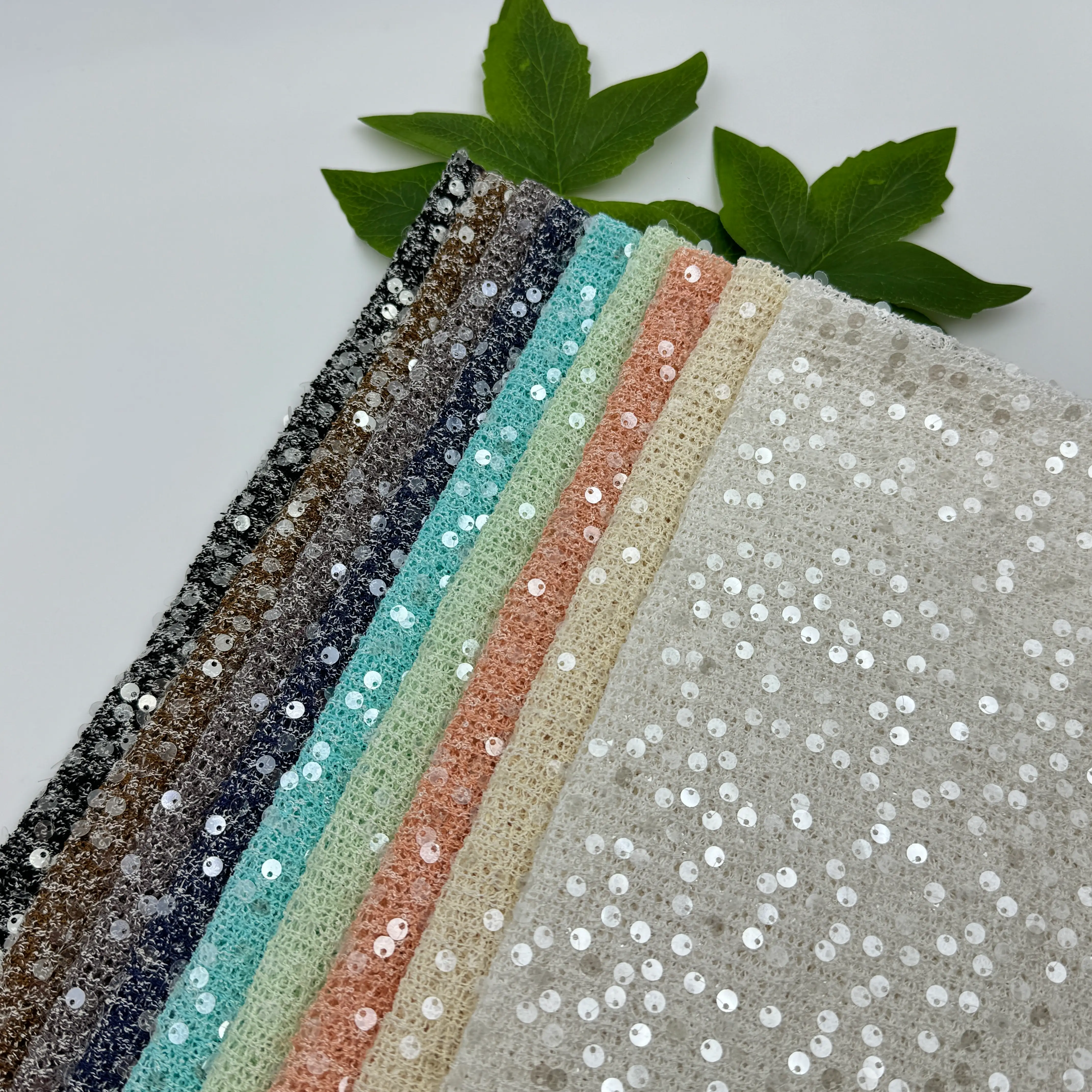
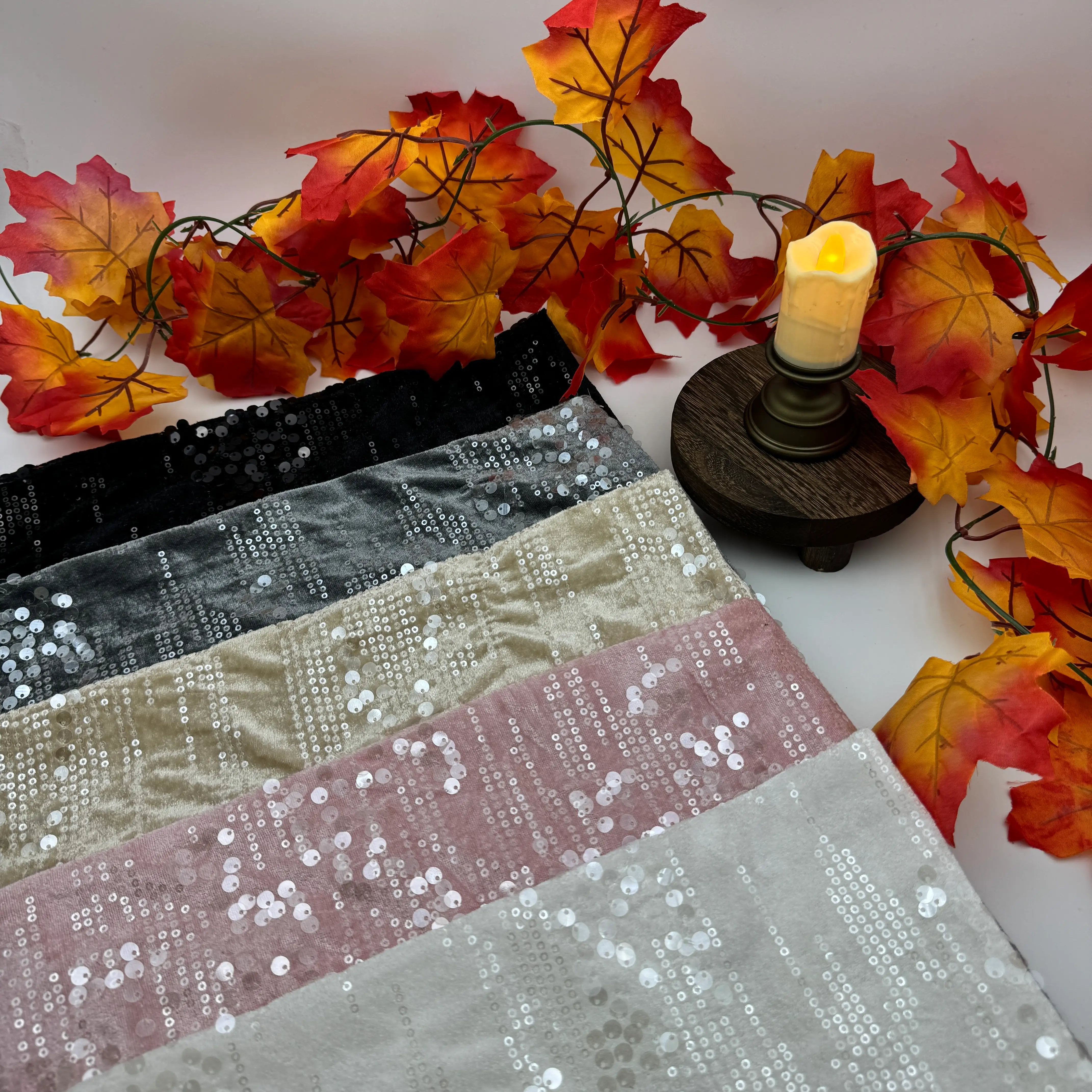
Materials & Applications
Sequin Mesh vs Sequin Velvet: Choosing the Ground for Your Design
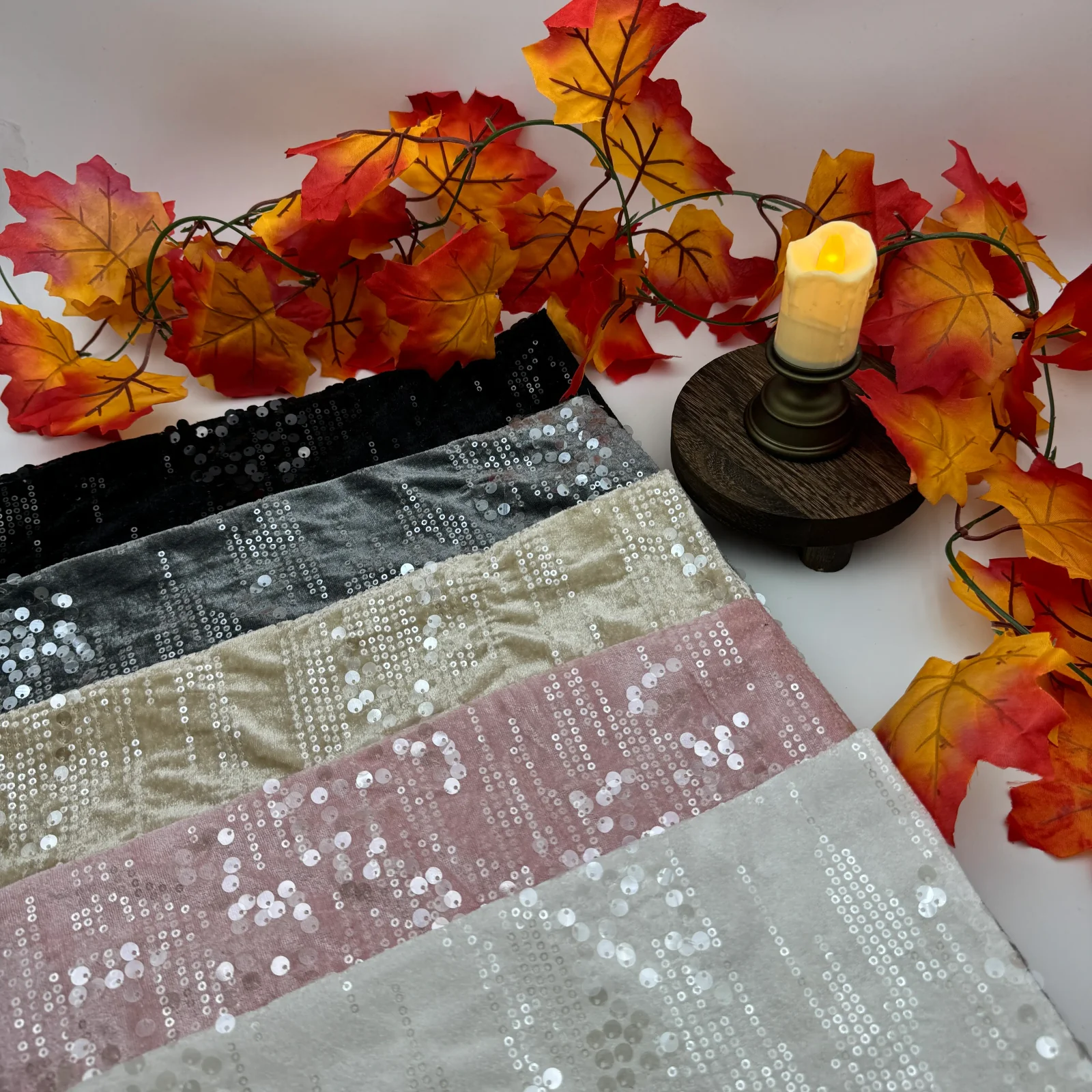
Choose sequin mesh when the visible net and the layer beneath it belong to the design. Consider a velvet-based option when you want the pile surface to remain part of the look between the sequins. That is a visual starting point, not a rule about stretch, weight or price. The most useful comparison puts both finished fabrics over the same proposed lining and at the same garment position.
The difference starts below the sequins
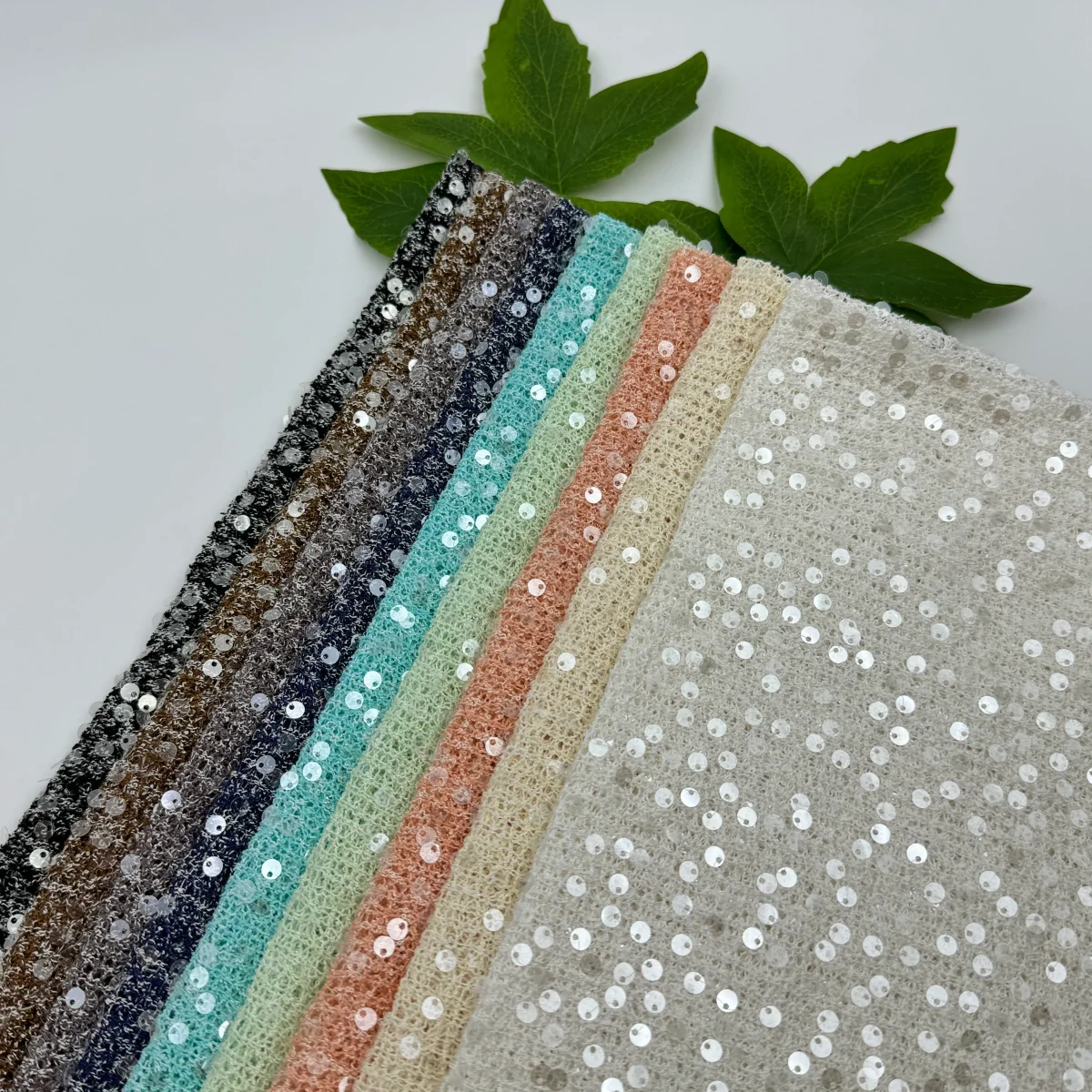
On a mesh construction, the openings and threads of the net can remain visible where decoration is spaced apart. On a velvet-style surface, the pile contributes another texture around the reflective pieces. CottonWorks defines woven velvet as a cut-pile fabric. Commercial names can cover different constructions, however, so a product sold as sequin velvet still needs its own ground description.
Request the fibre composition and construction of the ground separately from the sequin material. A catalogue entry that lists only PET sequins describes the decoration, not every component of the fabric. Equally, mesh does not establish whether the ground is polyester, nylon or another material.
Technical references
Compare transparency and visual depth
Lay each sample on the intended lining, then move it away from that lining to see how the appearance changes. For mesh, note whether the openings, ground colour and lining contrast are intended design features. For the velvet option, look at how much of the underlying surface remains visible among the sequins. Dense decoration can make the ground less obvious in a product photograph.
Use a close view for texture and a more distant view for the whole garment effect. A fabric selected only because its individual sequins look attractive may produce a much busier surface across a large skirt. Conversely, a quiet-looking swatch can become more visible when the wearer moves or the light changes.
Turn the sample before planning the cut
Turn each finished sample through a half rotation under the same light. Observe the pile surface, the sequin finish and the direction in which overlapping pieces sit. If the appearance changes, mark the intended direction on the approved reference and show how mirrored garment pieces should be arranged. The direction that matters is the one agreed for this design, not a universal rule taken from the fabric name.
A direction-sensitive layout can change how much material is needed for cutting. Ask for a cutting comparison based on the actual width and repeat before comparing price per yard. Otherwise, a lower unit price may be offset by a layout that uses more material.
Match the comparison to the garment
Use these questions to organise a sample review. They are not claims that every fabric in one category will pass or fail a particular use.
| Design task | Mesh-based option | Velvet-based option |
|---|---|---|
| Sheer sleeve or overlay | Ground visibility and effect over skin or lining | Whether the proposed surface provides the intended look |
| Fitted garment section | Movement of the decorated net and lining together | Movement of the complete ground, pile and decoration |
| Large panel | Repeat, reflection and cutting direction | Pile appearance, repeat and cutting direction |
| Close contact or seams | Reverse, seam area and chosen finish | Reverse, seam bulk and chosen finish |
Do not choose stretch by the category name
Both the ground construction and the embroidery arrangement influence movement. Some mesh fabrics have limited give, and a velvet-style fabric may be woven or knitted. The lining and attachment can restrict the finished section further. Where fit depends on stretch, ask for the agreed direction, measurement method and representative decorated sample; a statement about the blank ground is not enough.
Questions about mesh and velvet sequin fabrics
Which one is heavier? Compare equal areas of the actual finished fabrics using the same unit; decoration coverage can change the result. Which one needs lining? Consider transparency, reverse-side feel and garment construction rather than the name alone. Can a velvet-based fabric be used for a sleeve? The shape, desired appearance, movement and assembly decide that choice. Are the two catalogue photos a laboratory comparison? No. They are separate appearance references.
Discuss your embroidery project
Send All4Lace the intended garment section and the visual effect you want between the sequins. Include a lining reference and any fit requirement so mesh and velvet-style samples can be reviewed on the same basis.
Contact Zhijin