Materials & Applications
Short or Long Fringe Trim? Choose by Garment Clearance
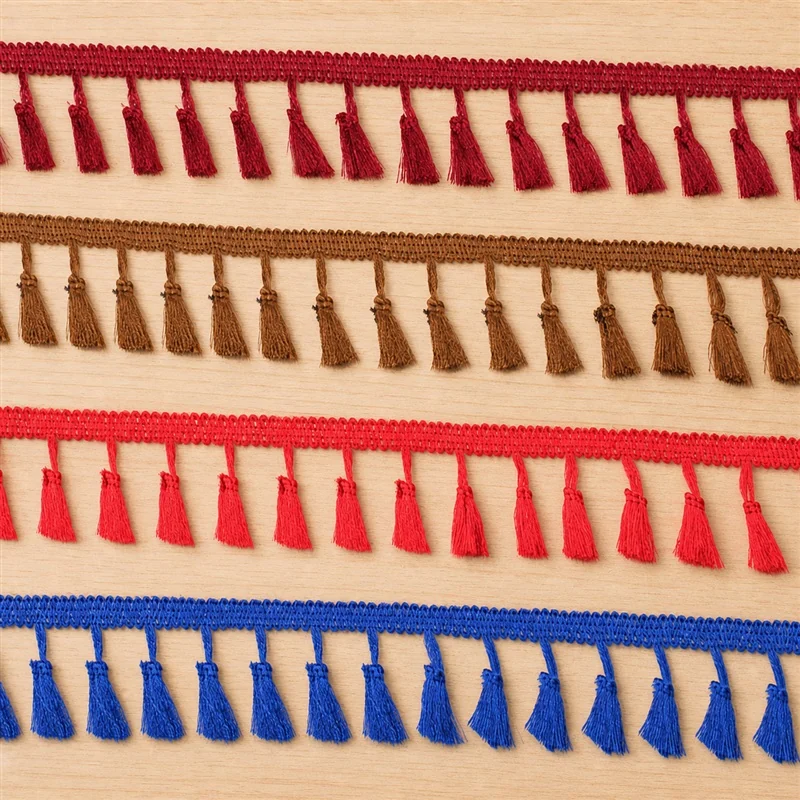
Fringe length is a design choice with practical consequences. A short fringe may frame a cuff; a long fringe may change motion and reach nearby hardware. Compare finished clearance from the stitch line, not lengths measured from different band edges.
Read the construction
Mark each candidate’s header and free-hanging drop on a relaxed sample. Photograph both against the same scale and base colour. Check where strands begin, how densely they hang and whether the free ends appear level.
Test the intended placement
Sew equal sections to the target cuff, hem or bag flap. Move them through expected use and note contact with hands, footwear, handles and closures. Confirm that the shorter option still provides the visual movement sought; neither length is automatically more durable.
Write the approval record
Approve a finished drop range, location, strand appearance and end treatment for the selected reference. If several sizes or garment types are planned, retain a separate placement photo for each instead of using one generic allowance.
Discuss your embroidery project
Tell All4Lace the garment part and available clearance, then request both lengths for comparison.
Contact Zhijin