Materials & Applications
3mm vs 5mm Sequins: Size, Coverage and Fabric Appearance
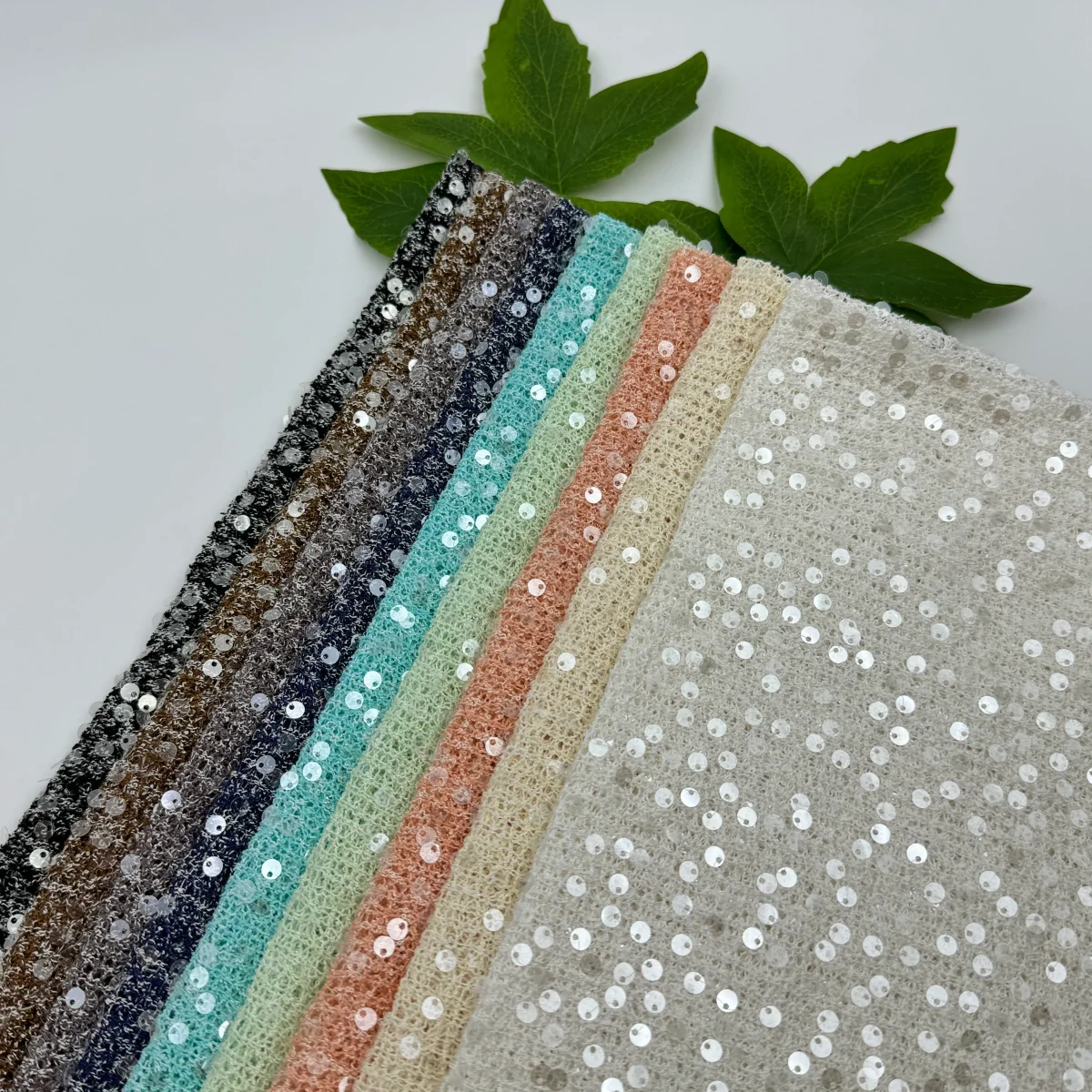
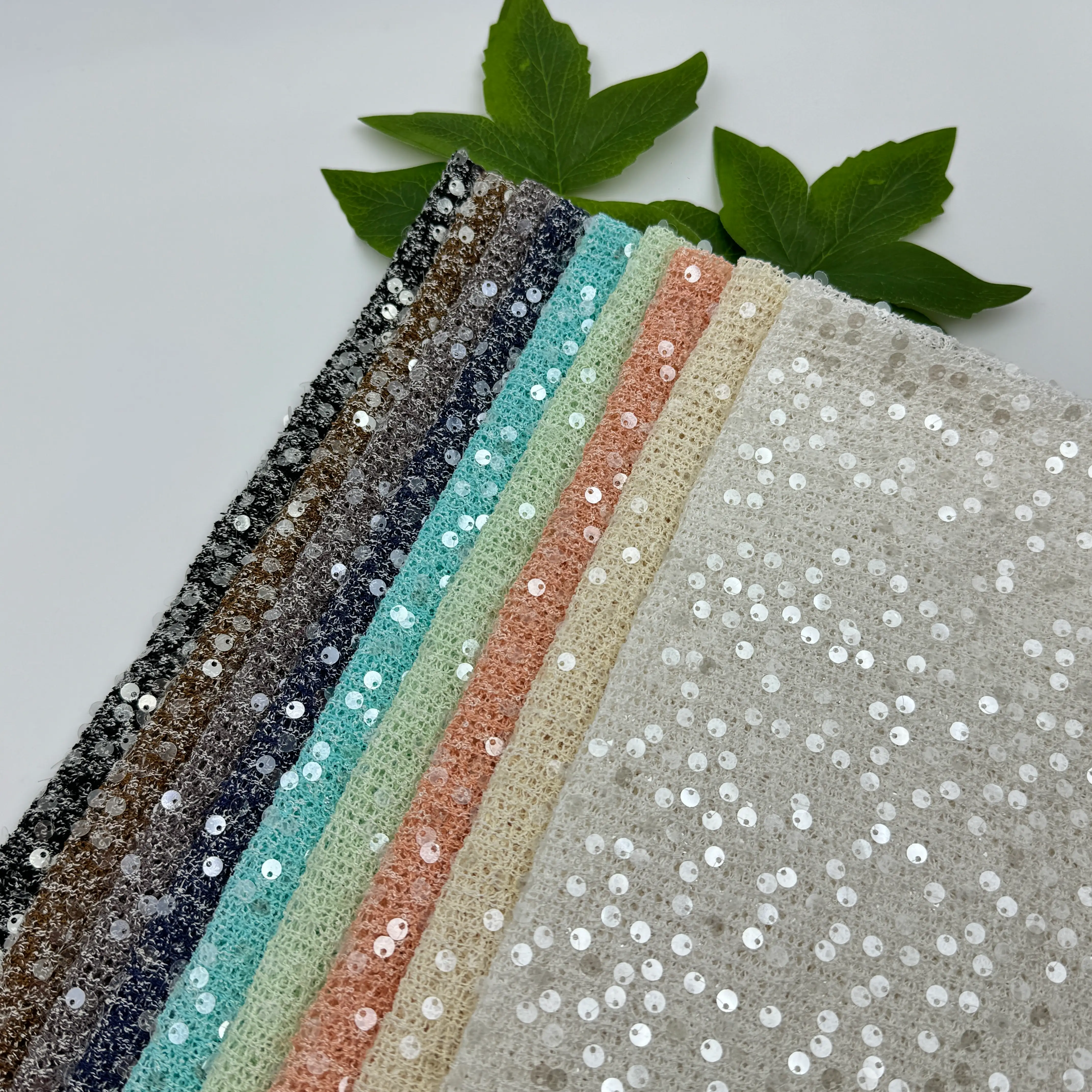
The difference between 3mm and 5mm sequins is the nominal size of each decorative piece. It does not tell you how closely the pieces are arranged, how many layers overlap or which ground supports them. If you are choosing between two sequin fabrics, compare the individual pieces and the complete surface separately. That is how a size preference becomes a usable fabric specification.
What does the number describe?
For a round sequin, the size normally refers to its diameter. For a flower, oval or another shaped piece, ask which dimension the stated size represents. Also identify the finish and profile: a flat transparent piece and a cupped metallic one can produce different reflections even when the nominal size matches. A product reference is more useful than the number on its own.
The 2mm difference can look larger than the number suggests. In a simple geometric model, a flat 5mm circle has about 2.78 times the area of a flat 3mm circle, before accounting for the hole. This is only a circle-area comparison. It does not predict fabric coverage, mass, durability or price, because the number and arrangement of sequins are not fixed.
Size and coverage are separate decisions
A design can use small pieces close together, large pieces far apart, or several sizes within one motif. Closely spaced 3mm pieces may create a more continuous-looking field than widely spaced 5mm pieces. The opposite can also be true. Describe both the piece size and the intended amount of visible ground, rather than using small or large as shorthand for sparse or dense.
For a fair comparison, start with the same ground, colour family, finish and approximate layout. Change the piece size while keeping those other variables as close as the design allows. If a supplier offers two existing fabrics with different grounds and motifs, treat them as design alternatives, not evidence of what changing 3mm to 5mm alone will do.
Look at the fabric from the intended distance
Inspect a close view to understand the arrangement, then hang the samples where you can see the full panel. For a neckline detail, the relationship between each sequin and the motif may be prominent. Across a large skirt or stage garment, the combined reflection and pattern can matter more. Record the viewing conditions so the preferred effect can be reproduced during sample review.
This does not create a rule that smaller pieces are always subtle or larger pieces always dramatic. Transparent, matte, metallic and iridescent finishes can change the impression. So can the ground colour. Use size as one design variable alongside these choices.
A useful 3mm-versus-5mm comparison record
Use the same questions for both candidates. Leave a field open when it has not been measured, rather than filling it from a photograph.
| Record | Candidate A | Candidate B |
|---|---|---|
| Nominal piece size | 3mm, with shape and dimension identified | 5mm, with shape and dimension identified |
| Ground and decoration finish | Record the actual materials and finish | Use the same basis where possible |
| Arrangement | Spacing, overlap and motif repeat | Spacing, overlap and motif repeat |
| Finished fabric | Review drape, reverse and garment assembly | Review drape, reverse and garment assembly |
| Cost basis | Same order scope and usable width | Same order scope and usable width |
Consider the edges of the design
Where a motif meets a narrow seam allowance or a small curved detail, the position of each decorative piece matters. Mark the intended line on the sample and discuss the design with the garment team. Do not assume a particular size can simply be substituted into an existing embroidery file without checking the attachment and spacing.
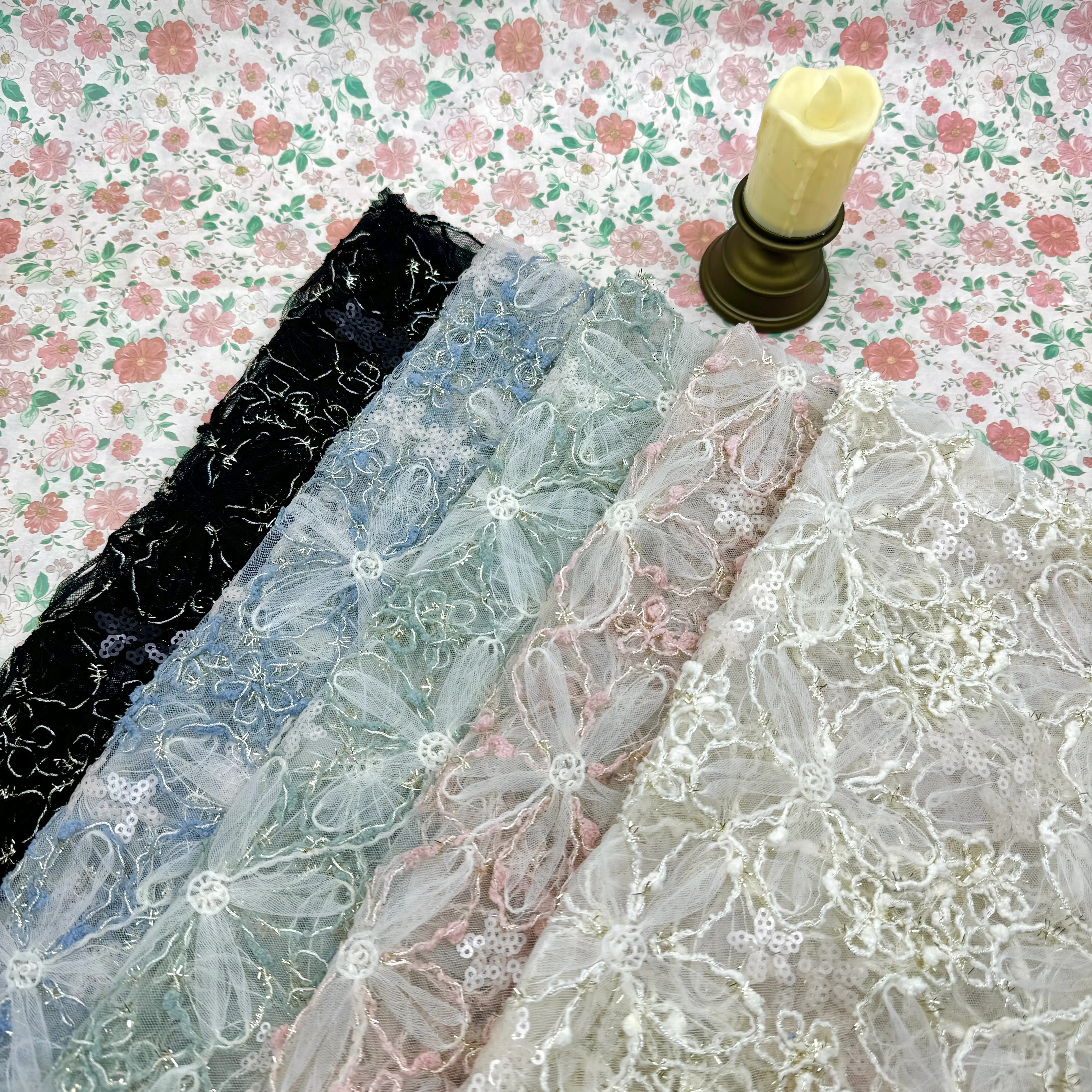
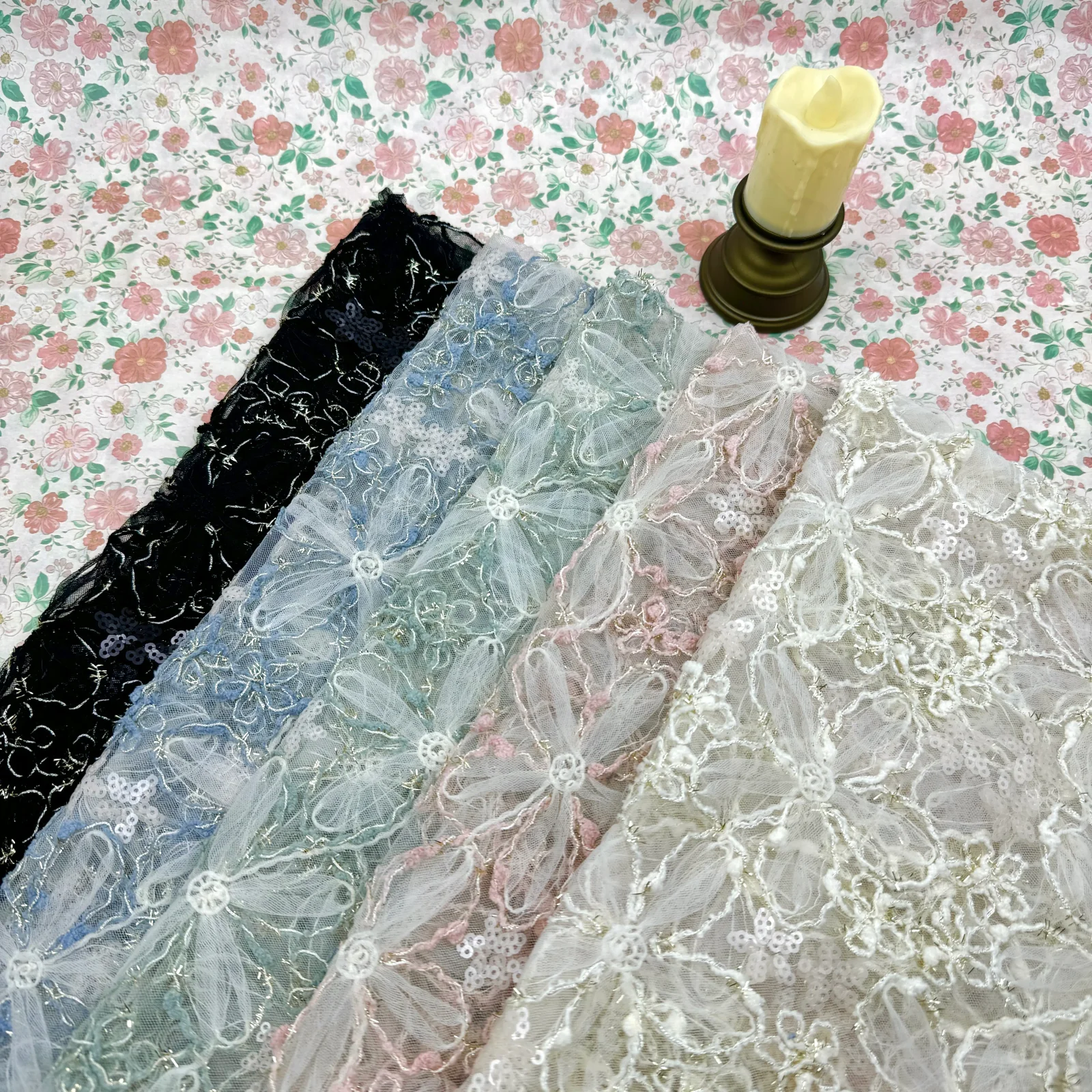
A mixed-size fabric is also a separate design choice. The All4Lace mixed cord, tape and sequin reference shown here contains several visual elements. It helps illustrate a mixed surface, but it is not a matched counterpart to the clear-sequin reference and cannot establish a size-only result.
Questions about sequin sizes
Are 3mm sequins always lighter? Not as a finished fabric rule; piece count, thickness, material and ground also matter. Are 5mm sequins always cheaper? No; compare the complete design and order. Can the same dress use two sizes? A mixed layout may be possible, but the approved sample should show how they are combined. Can a photograph verify the diameter? Use a dimensioned reference or a measured sample instead of visual estimation.
Discuss your embroidery project
Send All4Lace the piece size, shape and finish you prefer, plus a reference for coverage and ground fabric. If the size is undecided, ask for alternatives that keep the other design variables comparable.
Contact Zhijin