Sourcing & Orders
Reversible Sequin Fabric: Approving Both Looks Before You Order
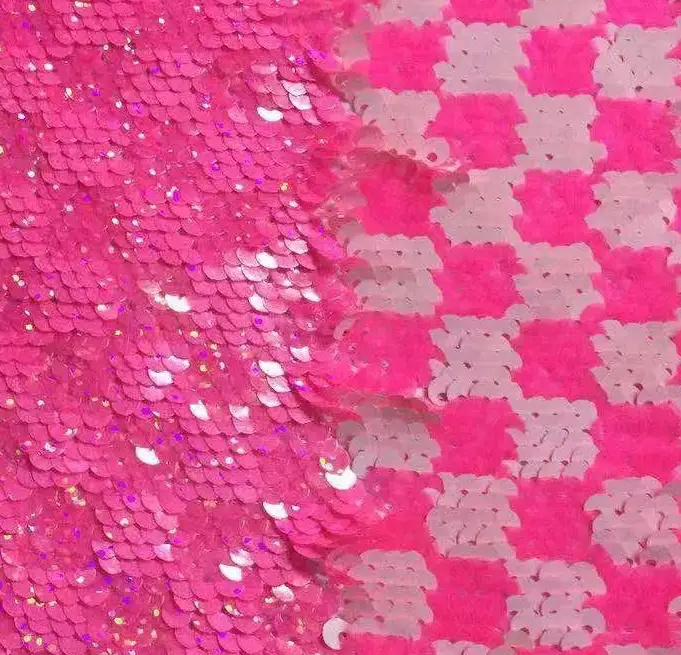
Flip sequins offer a changing surface effect, but a photograph of one colour is an incomplete order reference. For a reversible-sequin project, approve the two intended surface states and how the decorated area behaves on the actual garment. This guide concerns the sequins turning over, not a promise that the whole fabric is reversible.
Name and approve both surface states
Label the starting appearance as state A and the turned appearance as state B. Photograph the same sample in both states with its top edge and scale visible. Record each colour and finish separately; two sides described as gold, for example, may still need different physical references.
If the brief includes a picture or lettering, mark which state should show it and whether the other state should hide it or show a second design. Do not assume that a catalogue colour effect includes a custom image. Confirm feasibility, artwork scope and the exact sampled version before quotation approval.
Put the change direction on the pattern
Ask the supplier to mark the intended turning direction on the sample. Transfer that arrow to the garment pattern and identify top, bottom and left/right panels. Compare adjacent pieces in both states before approving cutting; turning one piece around to save material may conflict with the intended effect.
For continuous fabric, record the decorated width and repeat, then map the garment pieces onto that repeat. For a placed panel, specify its finished outline and location. Keep the cutting plan with the approved sample so a visual match is not lost during assembly.
Evaluate the transition on a sewn sample
Agree which area will be turned, how it will be handled and what appearance is expected afterwards. Review a representative sewn panel including an edge, seam or fastening. Look for areas that do not turn as intended, unwanted exposed base and interference near the stitching line.
Record observations in both directions and retain a short video of the agreed operation. If a repeat-cycle or durability requirement matters, define a test procedure and acceptance criteria with the supplier before testing. A brief demonstration establishes the demonstrated effect, not an unmeasured service life.
Confirm the approval package and care scope
Store the sample ID, A/B photographs, direction arrow, pattern revision and agreed seam zones together. Confirm whether supply is fabric, cut panels or individual pieces, and specify quantities in the same unit used for the quotation. Ask how the supplied pieces should be identified and packed.
Evaluate cleaning and finishing with the real base, sequins, backing and lining. Agree handling instructions based on the selected construction and any actual evaluation. Do not infer safe ironing temperatures, washing conditions or suitability for every end use from the flip effect itself.
- A/B colours, finishes and any artwork confirmed
- Direction arrows and cutting layout approved
- Sewn panel and agreed turning demonstration reviewed
- Supply unit, care scope and dated sample recorded
Discuss your embroidery project
Send Zhijin the flip-sequin reference, both desired colours and the garment drawing. Include any image-change requirement so the sampling scope can be confirmed before you order.
Contact Zhijin