Materials & Applications
What Is Beaded Lace? Decoration, Ground and Finished Shape
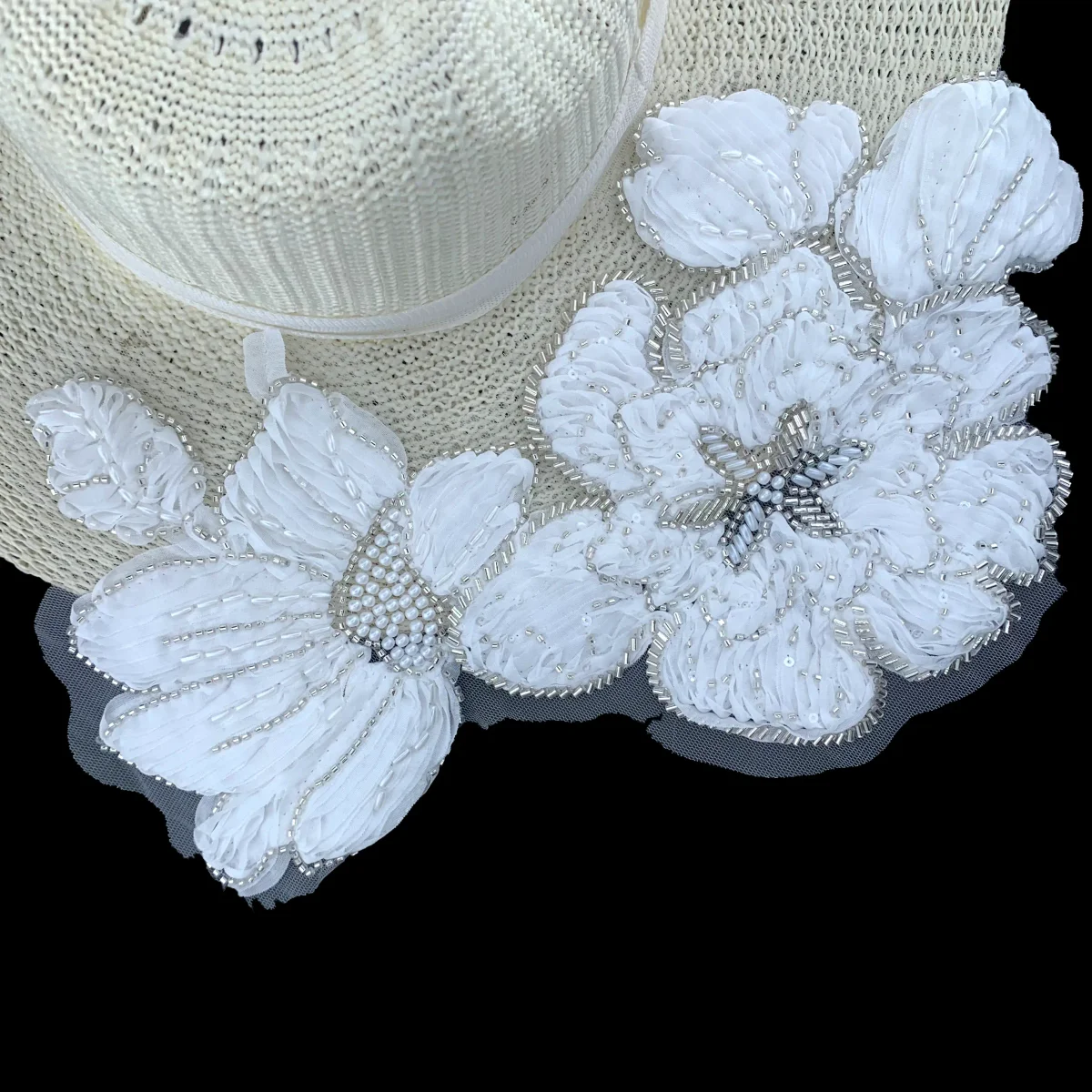
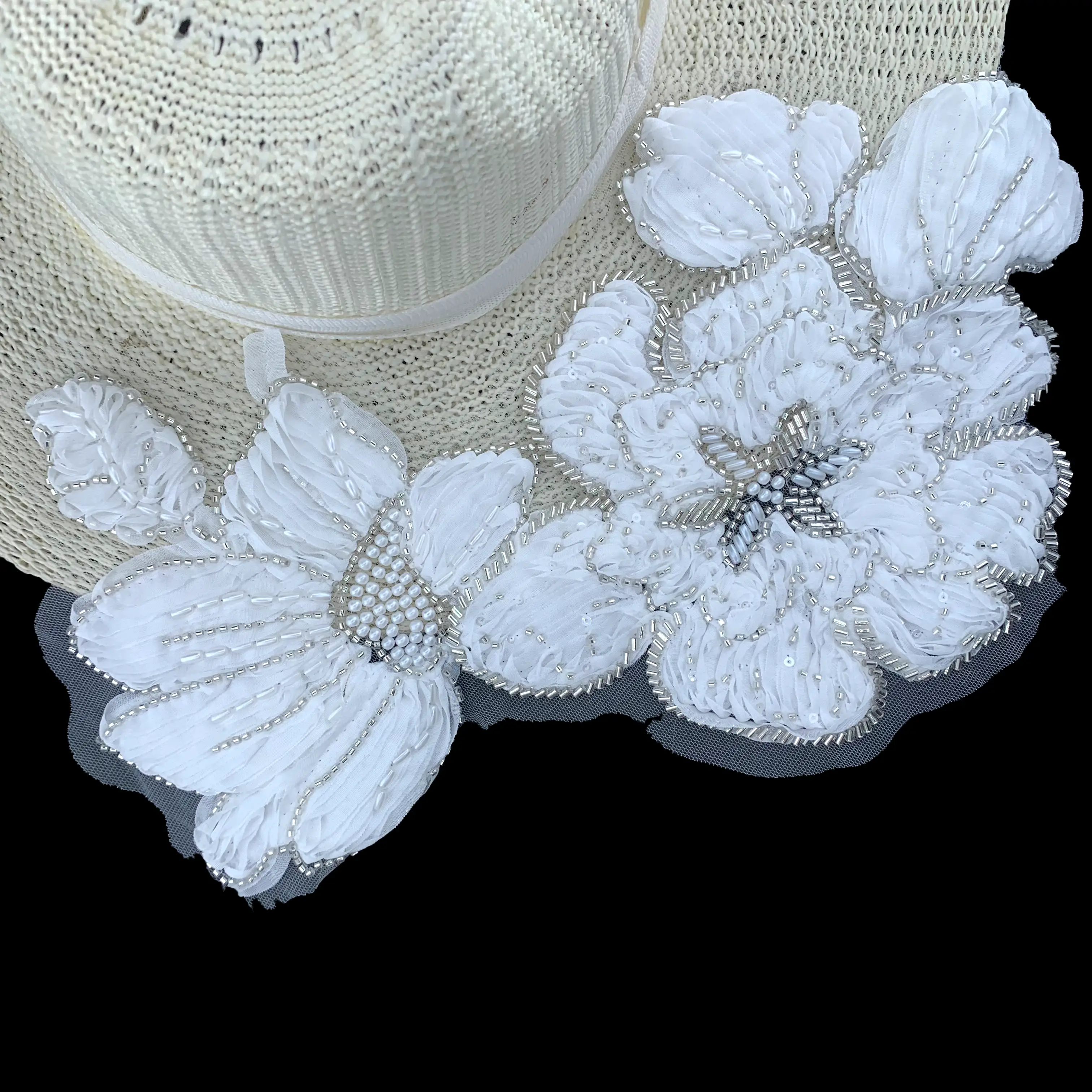
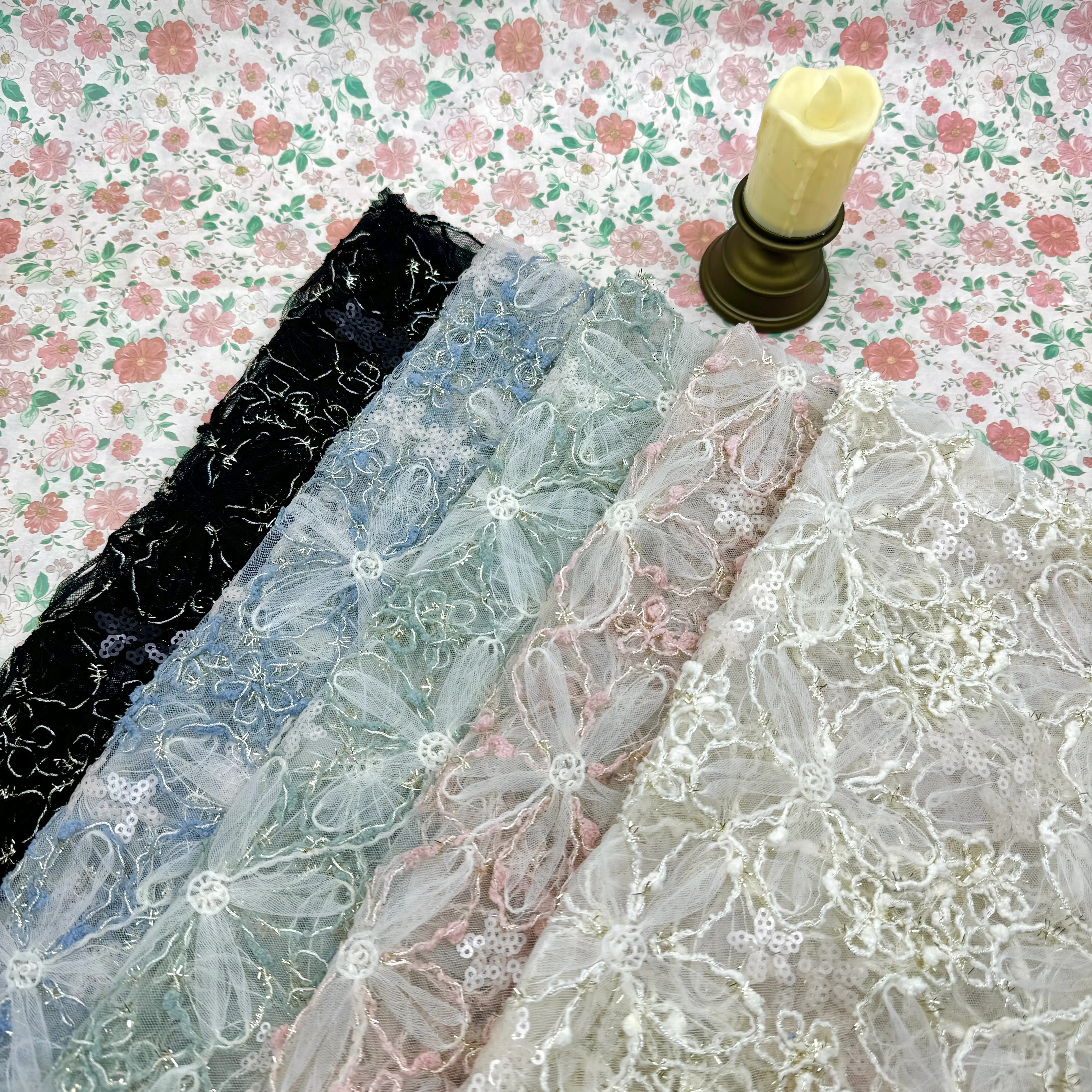
Beaded lace is a sourcing description for lace or lace-like material decorated with beads. It may also contain sequins, embroidery thread, layered fabric pieces or other elements. Beaded tells you something about the surface, but not the complete ground, manufacturing method or supply format. Start by identifying those parts, then decide whether the garment needs a continuous material or a shaped decoration.
Describe the bead and the ground separately
A round bead, a tube-shaped bugle and a pearl-effect element create different shapes on the surface. Their appearance also depends on material, finish, size and arrangement. Ask for the actual components used in the reference. Terms such as pearl-effect, crystal-style or beaded do not by themselves establish natural origin or a particular substance.
The supporting material is a separate decision. Where a net remains, its colour and visibility influence the design between the decorated areas. Where a shaped motif uses another carrier or connection, inspect that construction. A component list should distinguish the ground, embroidery thread, beads and any additional decoration.
Beaded does not mean one production method
A design can involve machine attachment, hand work or a combination of steps. Industrial equipment makers describe options for attaching certain beads and sequins, but that does not establish the method used for a particular fabric. Ask the supplier about the offered reference and the parts that can be changed during development.
Production method matters when a requested change alters the layout or attachment. Substituting a different component is not always a simple colour change. Its shape, size and fixing may affect the design, so the revised combination needs its own sample approval.
Technical references
Choose the finished shape around the beaded design
Full-width fabric lets a garment team cut panels from a repeated design. A trim follows a continuous border. An appliqué or neckline piece provides a shaped arrangement that can be positioned as one unit. For beaded work, also establish where the decoration stops and where the sewing team has room to attach or join the material.
For example, a decorative neckline can be built from a shaped motif rather than cut from an allover fabric. The choice changes where the beads fall around the opening and whether paired pieces need to mirror one another. This is a placement and decoration question; it is not just a choice of ordering by the yard or by the piece.
| Format | Bead-specific detail | Useful sample |
|---|---|---|
| Allover fabric | Decoration relative to repeat and cutting lines | A full repeat with width information |
| Continuous trim | Beads near the attachment edge and joins | A length showing the repeat and edge |
| Shaped appliqué | Contour, reverse and planned attachment zones | A complete piece at the intended placement |
Look at the decoration in the assembled garment
A small concentrated motif and a lightly decorated large panel put different demands on the garment. Review the intended support, drape and contact with the wearer. If the material crosses a shoulder or a soft neckline, see how that area hangs when assembled rather than judging weight or comfort from a close-up image.
The reverse is particularly useful here. It shows the visible attachment threads, remaining carrier and areas that may sit against lining or skin. A reverse-side photograph is a selection aid, not proof that an attachment meets a strength requirement. Any required evaluation should be agreed for the actual garment and use.
Keep quotation comparisons on the same basis
Specify the bead arrangement and the finished format before comparing prices. Include the usable width or piece contour, the amount of decoration and which finishing steps are included. A small motif with a dense centre is not directly comparable with a large open panel simply because both are called beaded lace.
If a reference is still flexible, ask suppliers to identify the changes behind each alternative quotation. A lower price may reflect a different ground, component, coverage or finishing scope. That can be a useful design option, but the change should be visible in the specification.
Questions about beaded lace
Is beaded lace always heavy? No single weight follows from the name. Does it always contain glass beads? Confirm the components of the selected item. Can it include sequins? Yes; identify the combination instead of treating the label as an exclusive category. Can it be washed the same way as the lining? Not automatically. The ground, decoration, threads, finishing and assembly need to be considered together.
Discuss your embroidery project
Send All4Lace the bead appearance you want and the garment outline. Tell us whether you need fabric, trim or a shaped piece, and which areas must remain clear for sewing, so we can discuss suitable references.
Contact Zhijin