Materials & Applications
Cotton vs Polyester Lace: Differences, First Samples and Care Decisions
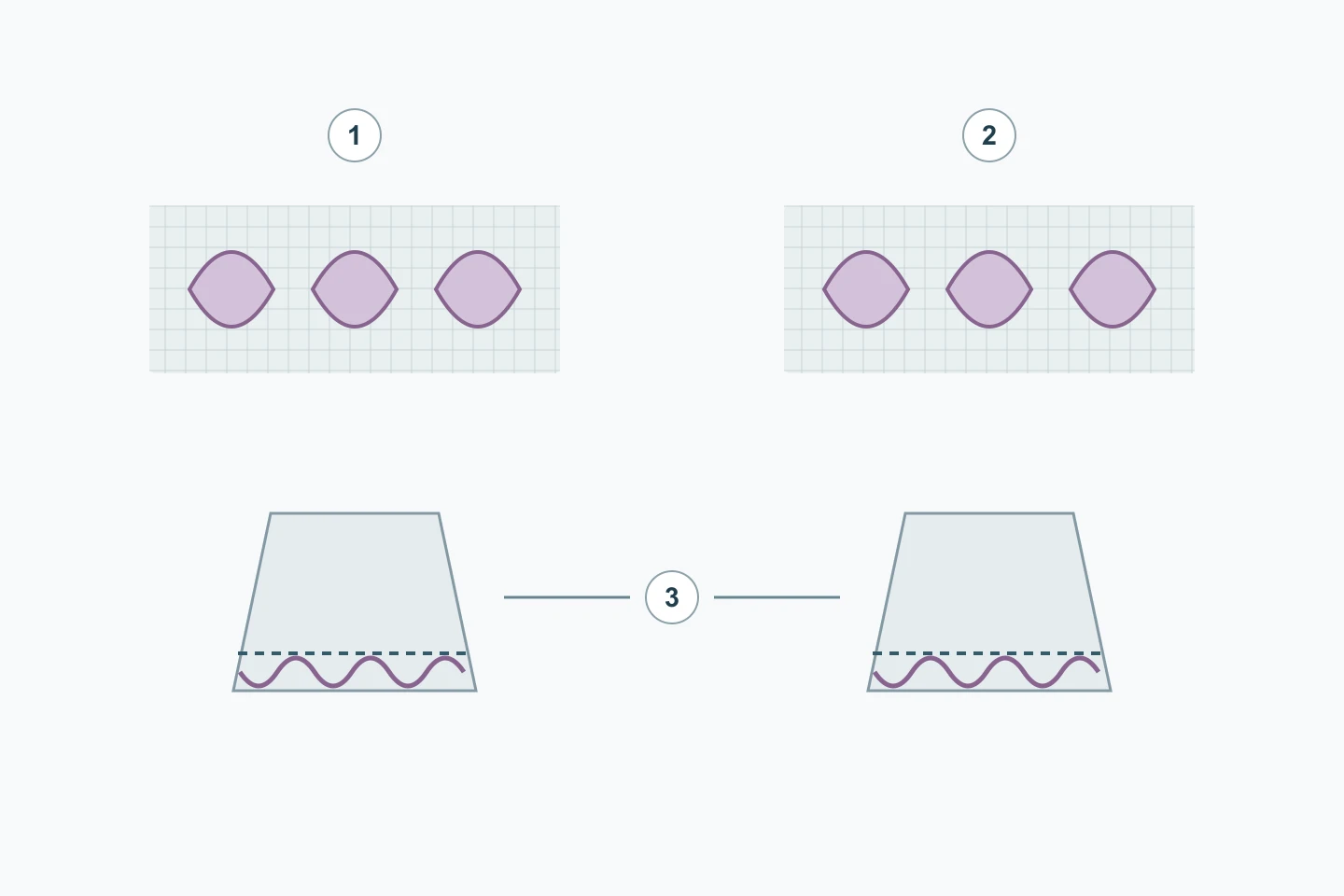
Cotton is a plant-based cellulose fibre; polyester is a synthetic fibre family. Cotton generally takes up more moisture from humid air under the same reference conditions. That useful difference does not establish which finished lace is softer, airier, quicker to dry or more suitable for your garment. Start with the required composition, then compare yarn surface, open areas, lining and care behaviour. A cotton requirement narrows the material shortlist; a desired matt look alone does not.
The differences that help you shortlist
Use the fibre comparison below to form questions for sampling. It is not a performance certificate for a particular cotton or polyester lace. Two products with different motif density or finishing remain two purchasing options, rather than an experiment that isolates fibre chemistry.
| Question | Cotton | Polyester | What settles a lace order |
|---|---|---|---|
| Material identity | Cellulose from the cotton plant | A synthetic polymer fibre family | A declaration covering the required components |
| Moisture from humid air | Higher reference moisture regain | Lower reference moisture regain | The property needed in this garment, not an assumed comfort score |
| Surface appearance | Specify the actual yarn and finish | Specify the actual yarn and finish | The candidate beside the body fabric; matt is not a fibre identification |
| Dimensions after care | Moisture swelling, drying and processing history matter | Thermoplastic processing and fabric relaxation still matter | The approved material and joined assembly under the agreed care |
Say which part is cotton or polyester
An embroidered trim can contain a ground, embroidery yarn and additional decorations. Cotton embroidery on a polyester ground is not the same specification as an all-cotton textile structure. Ask for percentages with the named component, and for the scope of any whole-material composition statement.
For example, a request may say: “Cotton required for both retained ground and embroidery; any other textile component must be declared.” That is a proposed buying requirement, not a statement about a catalogue item. Where component percentages differ, do not average them into a whole-fabric percentage without their relative masses. Keep the declaration with the sample reference and quotation.
Absorbing moisture is different from moving liquid or passing air
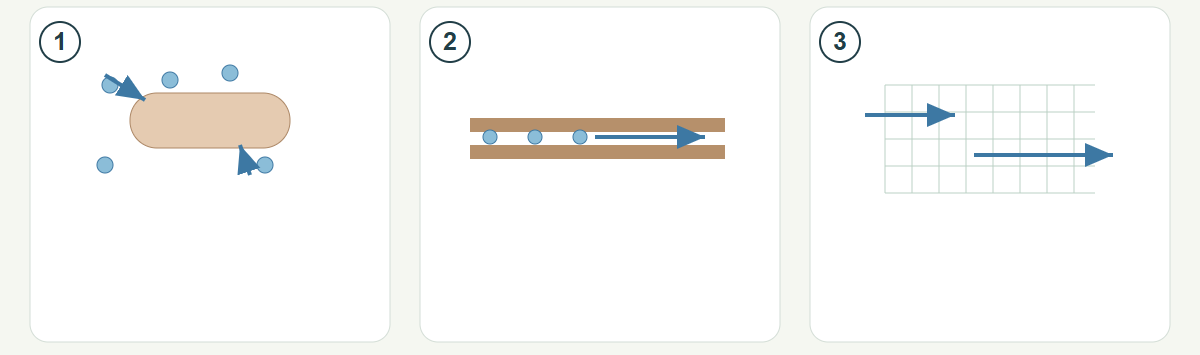
Coats’ fibre reference puts cotton above polyester for moisture regain at 70°F and 65% relative humidity. Regain describes moisture held relative to dry fibre mass under stated conditions. It does not measure how a drop spreads along yarns, how long a layered sleeve takes to dry, or how much air crosses the fabric.
Air travels through the assembled textile structure. ASTM’s public air-permeability guidance identifies construction and finishing as relevant factors. An open polyester trim can therefore remain a sensible sample for a sheer design; a dense cotton motif over a lining is not approved for airflow merely because it is cotton. Ask separately whether the design needs moisture uptake, liquid transport or airflow evidence, and evaluate the actual layers for that requirement.
Why two trims with the same fibre can feel different
Short fibres spun into yarn and continuous filaments create different surfaces. Coats’ manufacturing explanation also shows how filament shape and texturing can change lustre or bulk. These are reasons to ask about yarn construction, rather than to label all polyester shiny or every cotton trim soft. A photograph may show the desired effect; it cannot confirm the fibre.
On a blouse, the contact point may be the reverse embroidery, the attachment ridge or a cut motif end. Compare those areas as well as the face. If the front is attractive but the joined reverse catches the intended underlayer, the useful next request concerns that surface or assembly. Changing only the fibre name may leave the problem in place.
Technical references
Choose the first samples from the garment brief
If cotton composition is compulsory, shortlist only candidates whose declaration covers the specified parts. If the main requirement is a soft-looking matt border, request candidates that approach that surface in either permitted fibre. For a transparent sleeve, shortlist by motif coverage, ground openness and required movement before judging the same lining and seams.
For a washable blouse hem, ask for enough trim to join to the actual body fabric and retain a separate piece. Include a full relevant motif and a representative join. Keep pattern direction, attachment proposal, body fabric and observation conditions comparable. Record visible width and decorative width separately so a wider candidate is not mistaken for a fibre advantage.
Why a hem can change after care
CottonWorks explains that wetting and drying can alter a cotton fibre–yarn–fabric assembly as it swells, deswells and relaxes. Processing tension, yarn structure and finishing also matter. Polyester follows a different material route: thermoplastic fibres can be heat-set, but that does not make every polyester lace dimensionally unchanged under every subsequent treatment. The cotton reference explains mechanisms, mostly with cotton fabrics; it supplies no shrinkage allowance for these lace candidates.
A changing trim can pull against a different-changing body fabric. Join distortion alone does not prove which component caused it: sewing tension or feeding may also contribute. Compare relaxed separate pieces and joined pieces before and after the intended care, with the same marked directions. Where a formal result is required, agree the relevant method with the testing party; this purchasing comparison is not automatically an AATCC test.
A hypothetical sample-selection decision
The following invented example demonstrates a decision, not All4Lace product measurements. The project is blouse B3, pattern revision 2, body fabric F1 and attachment J1. Candidate C1 is declared cotton throughout; P1 is declared polyester throughout. The buyer permits either. The garment team has agreed the care specification C-01 before sampling, and the designer’s acceptance requirement is no persistent wave at the join and the motif staying inside the marked placement outline. Those are this example’s project criteria, not industry tolerances.
Record C-01 with its actual process, drying, number of cycles and comparison state; a care name alone is not reproducible. Those detailed care conditions are not supplied here, so this is a decision example rather than a reproducible care procedure. In this fictional scenario, each marked length starts at 200 mm in the same trim direction. After the agreed process and return to the same relaxed measurement state, F1 reads 199 mm, C1 196 mm and P1 199 mm. The C1 assembly shows a persistent wave; the P1 assembly meets the stated appearance criteria. These invented dimensions illustrate different component movement; the appearance observation, not a universal percentage limit, drives this project decision.
Select P1 provisionally if its other requirements and composition permission remain satisfied. Keep C1 unapproved and ask the garment team to distinguish trim relaxation from assembly effects using the separate and joined pieces. If the brief instead requires cotton, revise C1’s construction, finishing or attachment proposal, obtain a new identified sample and repeat the affected checks. Do not silently replace cotton. A later flat sample closes only the stated trial; any required durability or formal dimensional result stays a separate approval item.
Compare the cost of the accepted solution
Align declared components, colour, usable width, border shape and supply unit before comparing prices. Then include the placement allowance and joining work required by the accepted pattern. A cheaper metre can need more material if the repeat cannot place the required flower; a higher metre price is not proof of better quality.
Keep the chosen material, care record, layout and sample revision together. A change to yarn, ground, finishing or decorative width reopens the checks it can affect. The result should be a reasoned choice for this blouse, or a specific next sample request, rather than a permanent ranking of cotton against polyester.
Discuss your embroidery project
For an All4Lace sample enquiry, send the garment area, required component composition, preferred surface, body or lining reference and intended care requirement. Add candidate references where available so current suitable sample options can be discussed.
Contact Zhijin