Materials & Applications
Embroidered Satin Fabric: Specify the Ground and the Decoration
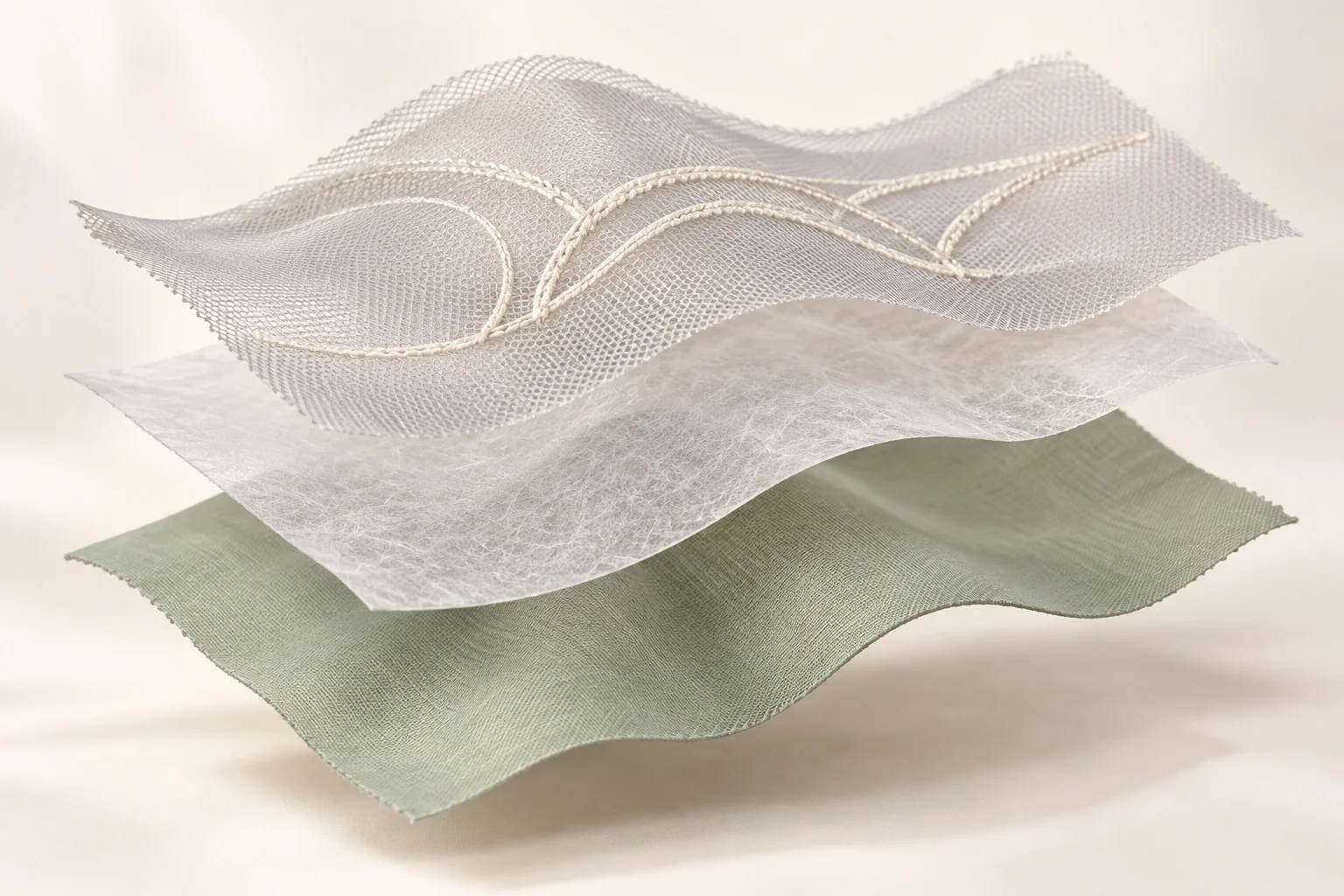
Embroidered satin fabric means that a satin ground carries embroidery. Satin describes a weave construction, while the fibre composition must be stated separately; the name alone does not establish silk content. It also differs from satin stitch, which describes embroidery stitches rather than the ground. A useful request therefore identifies three things independently: the ground, its declared composition and the decoration placed on it.
Distinguish satin fabric from satin stitch
CottonWorks explains that satin weaves have long warp or filling floats that create a flat, shiny surface. Those floats belong to the woven ground. Wilcom describes satin stitch as closely arranged zigzag embroidery stitches laid across a shape. The two terms describe different constructions, even when both surfaces look smooth or glossy.
Specify embroidered satin when the intended ground is satin. If the intention is a particular stitch appearance, identify that separately in the artwork brief. Do not infer ground composition from either term. Likewise, a glossy flower photographed on net is not evidence of a satin ground just because its stitches appear shiny.
Read the clear ground beside the embroidery
Start with a clear area next to a motif and a view of the reverse. Establish what part is woven ground and what part is added embroidery. Keep a full-panel view as well as a close-up; the small detail helps identify components, while the wider view shows how much ground remains visible around the decoration.
Ask for a photograph of the sample after the intended support treatment, with the reverse visible. Record any support that remains as part of that sample. If the reference combines a satin garment panel with a separately applied motif, describe the attachment and assembly instead of recording it as direct embroidery on satin.
Compare the surface at a consistent orientation
Choose the intended face and garment direction before comparing alternatives. Lay the samples in the same direction under the same light, first flat and then in the planned shape. Record the appearance of the clear ground, the embroidered areas and their boundary. This gives a more useful comparison than selecting the photograph with the brightest highlight.
For example, compare two sleeve candidates with the same motif placement and cuff position. If the ground, embroidery coverage and panel direction all change, identify each change. The comparison should reveal which combination you prefer rather than assigning a universal ranking to satin, net or another ground.
| Term in a request | What it describes | What still needs confirmation |
|---|---|---|
| Satin ground | The woven fabric carrying decoration | Declared fibre composition and exact reference |
| Satin stitch | An embroidery stitch structure | Ground and intended stitched appearance |
| Applied motif on satin | Separate decoration joined to a panel | Attachment and finished assembly |
Review support and garment assembly together
Madeira’s stabiliser guidance calls for matching support to both fabric and embroidery. That principle does not prescribe one backing for every satin. Ask what support is proposed and what remains after finishing, then review the sample in that finished state. Keep a separate lining description so a different underlayer is not mistaken for a change in ground.
Mark seams, folds, openings and any area facing the wearer on the garment drawing. Review those locations in an assembled sample. If a concern appears, identify the exact area and compare it with the approved reference before discussing a revision. A request for smoother satin is less actionable than a marked photograph of the area needing review.
Technical references
Write a specification that survives a material change
Keep the ground reference, declared fibre composition, selected face, garment direction, motif scale and sample identifier together. Record whether decoration is stitched onto the ground or applied as a separate component. Photograph a clear area, one complete motif and the reverse, then include the planned assembly view so later reviewers can understand the original decision.
Agree any relevant evaluation of surface snagging, seam behaviour and care on the actual finished combination; neither a weave name nor this guide establishes a result. Avoid assigning washing or pressing instructions from the word satin. If the ground or support changes, compare a new finished sample against the retained reference before carrying forward the earlier approval.
Discuss your embroidery project
Send All4Lace the ground reference, declared composition if known, motif artwork and intended garment position. Ask us to review the sample request and confirm any suitable available reference before treating satin embroidery as an agreed supply specification.
Contact Zhijin