Materials & Applications
Sampling Embroidered Shoe Uppers: Pairs, Seam Areas and Assembly Checks
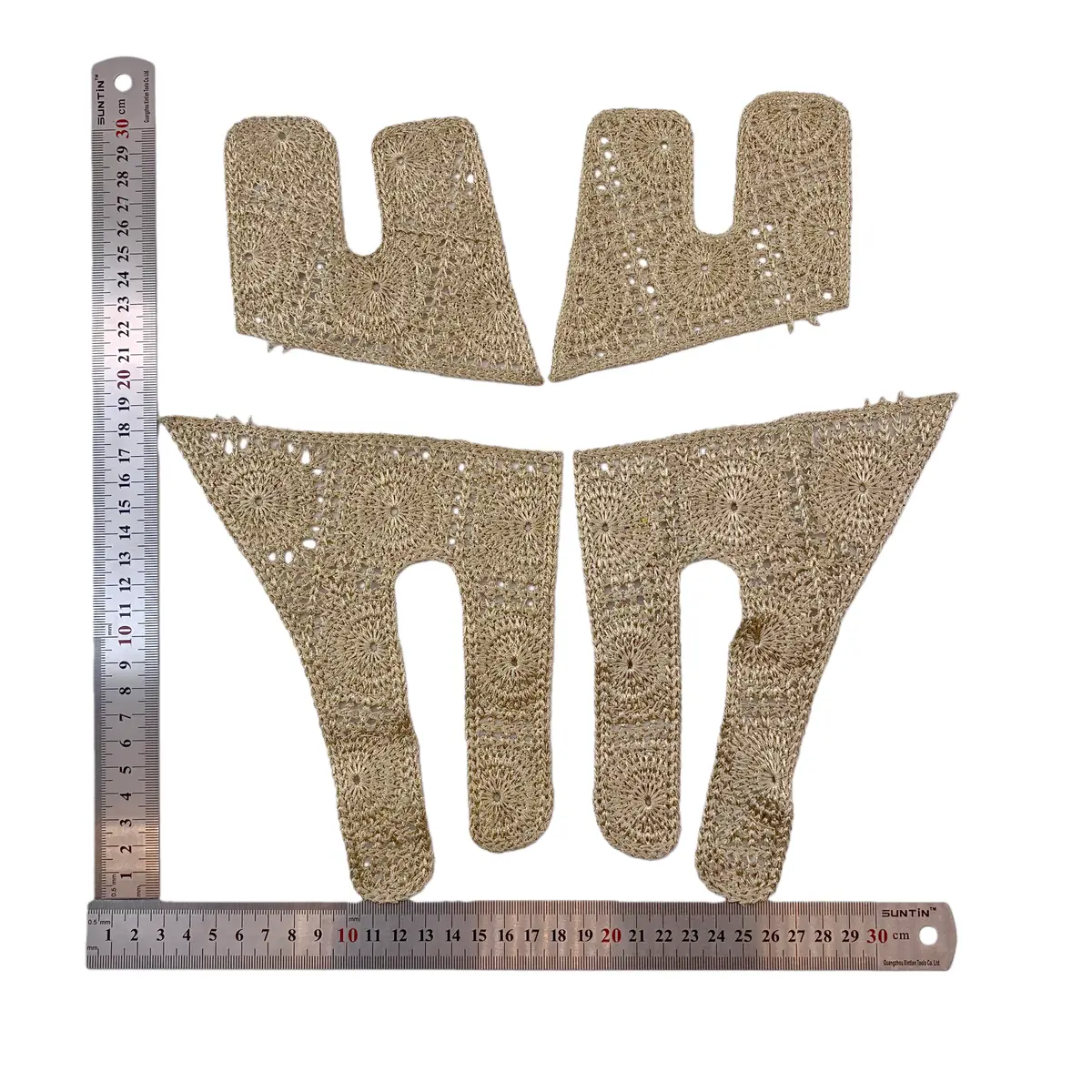
An embroidery that looks suitable flat has not yet established its position, outline or paired appearance on a shoe. The footwear factory, brand and embroidery supplier should work from the same pattern, with decoration and assembly requirements defined together.
Identify side, size and direction for every part
Provide versioned left and right patterns showing the face, toe direction and corresponding size. State whether the motifs are mirrored, face the same way or intentionally differ. Number the components if more than one decorative piece makes up a pair.
Make the quantity definition match the design: what does a piece, set or pair include in the quotation? Two identical flat samples do not necessarily represent a complete pair. List the size patterns required rather than assuming one illustration establishes motif positions for every size.
Mark decoration and assembly areas separately
Show cut lines, stitching positions, folds and areas to leave undecorated. Have the footwear factory explain requirements near eyelets, the topline or component joins for its construction. Use dimensions and annotations rather than a general request to leave some space around the edge.
Mark the base, lining and assembly process as unresolved if they are undecided. Review decoration boundaries again when materials or construction change. For All4Lace references, clarify whether the proposed supply is continuous material, separate decorative pieces or another agreed form.
Review a representative assembled sample
Use a flat sample to compare motif and colour, then have the footwear factory assemble the agreed construction. Examine placement when the material curves over the upper, alignment between parts and the left/right appearance. Photograph front, side and relevant details.
Record the size, component and process stage associated with an assembly concern. Ask the relevant team whether the pattern, decoration placement or assembly conditions need adjustment. A specific observation is more useful for revision than a statement that it looks different from a photograph.
Match evaluation scope to the sample
SATRA provides repeated flexing and stretching methods for particular footwear assemblies; the scope must match the construction. Have the footwear team and suitable testing provider define the required evaluation rather than using a decorative swatch as evidence of whole-shoe performance.
Retain the pattern version, pair definition, material combination, decoration sample and assembly photographs together. If testing is separate, identify who supplies samples and reviews results. This guide does not claim that a Zhijin upper has passed a specified test.
- Left/right patterns and size range
- Cut, seam and decoration boundaries
- Contents of a set or pair
- Assembly sample and required evaluation
Technical references
Discuss your embroidery project
Send Zhijin left/right patterns, the size range, quantity and All4Lace references. We can discuss embroidery development and sampling against your footwear factory’s assembly requirements.
Contact Zhijin