Materials & Applications
Embroidery Ground, Backing and Lining: Three Different Roles
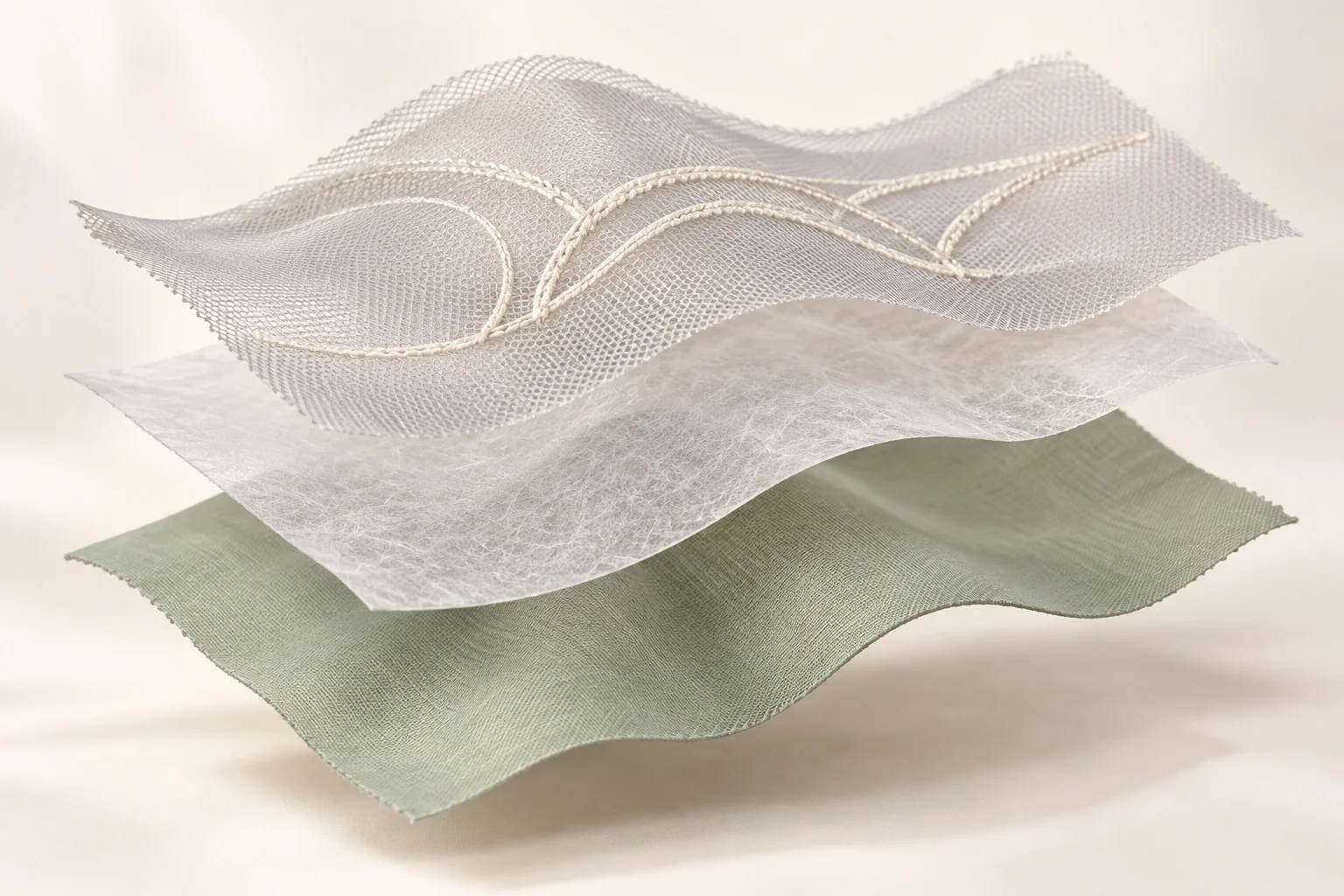
Ground fabric carries the embroidery. A stabilizer or backing helps support work during embroidery and may be retained or removed, depending on the selected material and process. A garment lining is a separate layer in the assembled clothing. These roles can be confused when every layer is called backing. The simplest way to clear up a quotation or sample discussion is to name each role and state what remains in the finished item.
Ground fabric: the material being embroidered
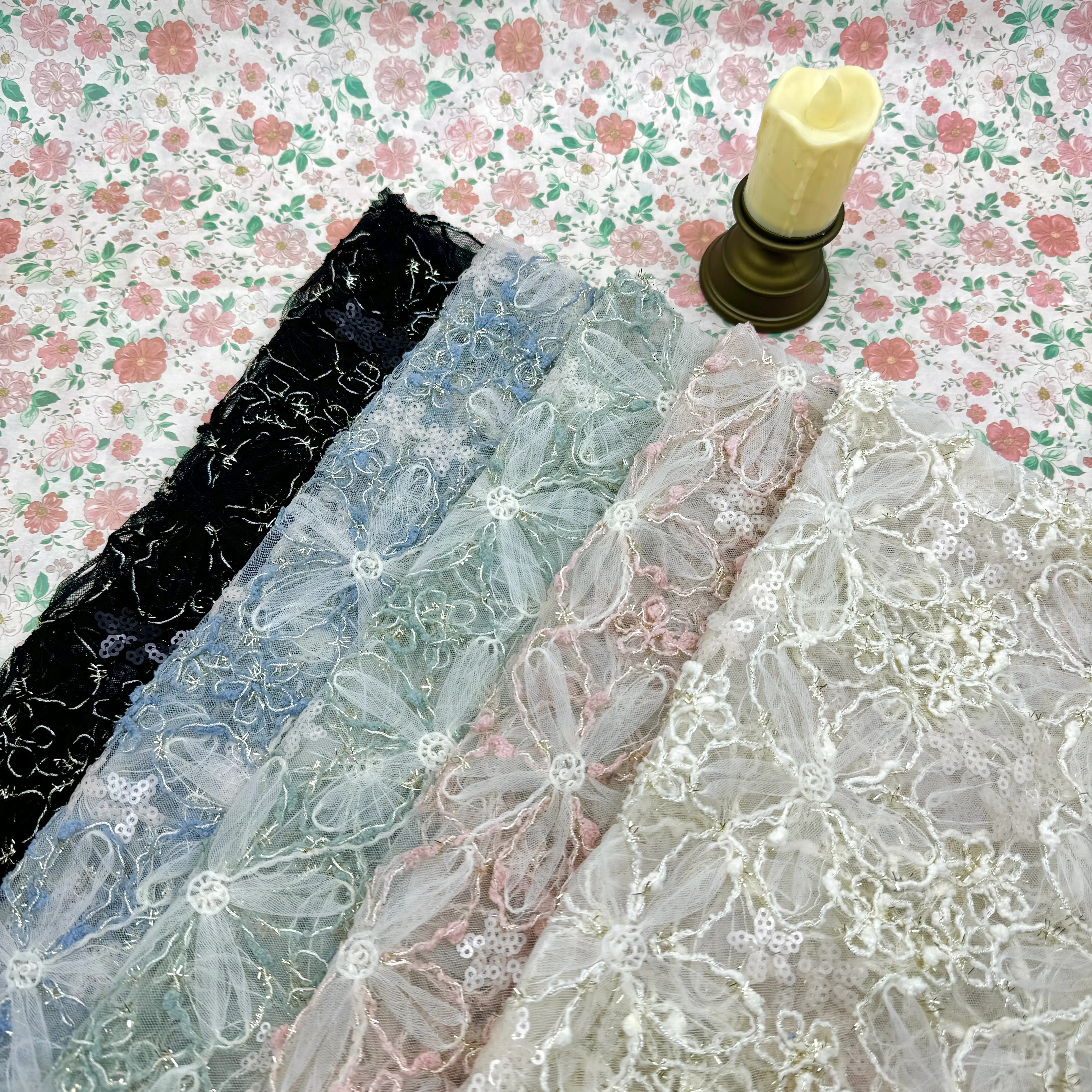
In a retained-net design, the mesh is the ground and remains visible between motifs. In another design, a woven or knitted fabric may provide the ground. Its colour, structure and movement are part of the finished embroidered material. Describing only the embroidery thread or decoration leaves this component unspecified.
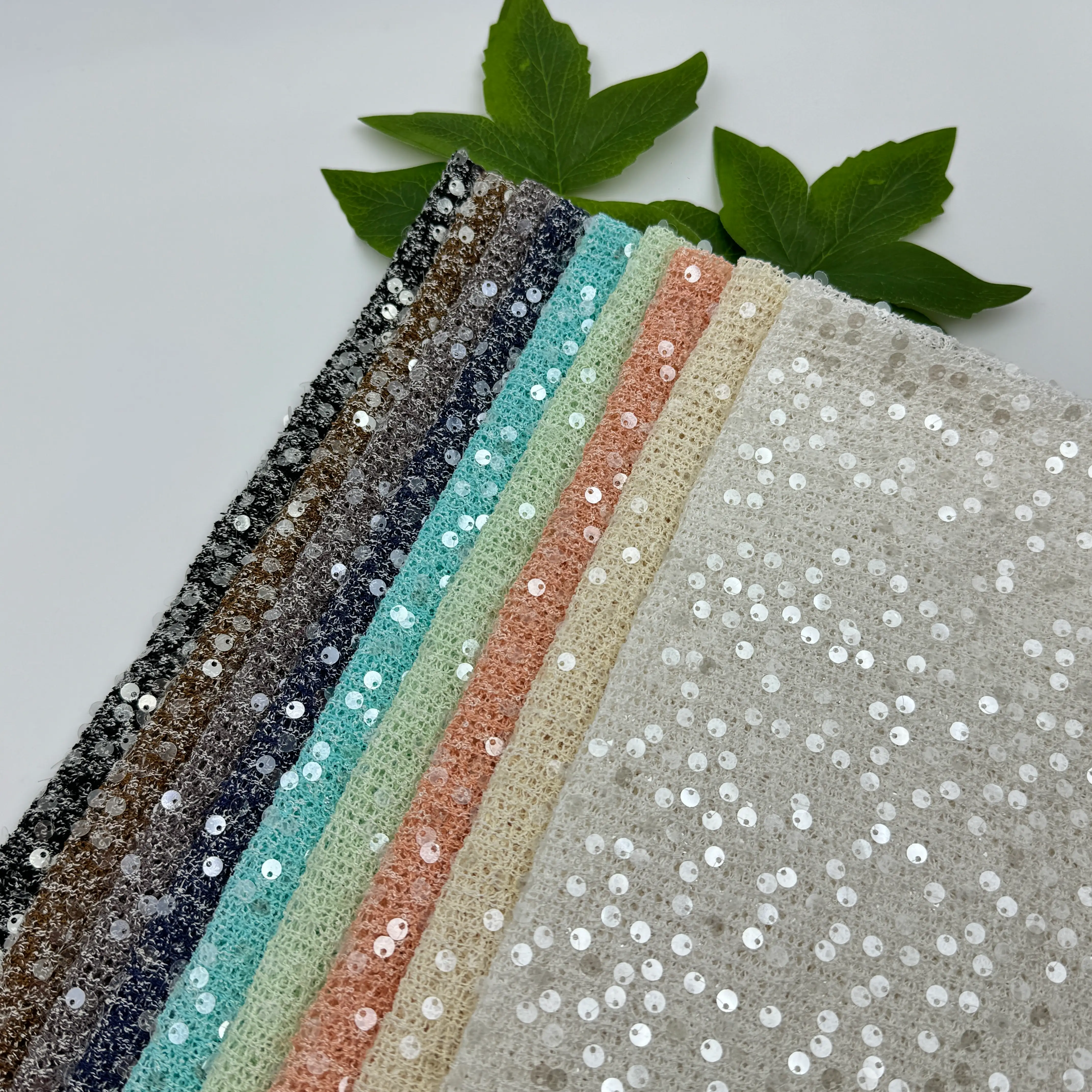
Look at a clear area and the reverse to establish the ground being offered. For the All4Lace clear-sequin mesh reference, the catalogue name points to a mesh-based material; it does not supply every composition or performance detail. Use the current sample specification for those details.
Stabilizer: support used during embroidery
Embroidery supply makers describe cut-away, tear-away and removable supports, among other options. The selected fabric and embroidery affect the choice. A cut-away material can remain behind the design after excess is trimmed, while an appropriate water-soluble support is intended to be removed using its specified process. These are examples of different roles after stitching, not a recipe for every textile.
A design made on a removable support needs to be suitable for the material left after removal. The support’s disappearance does not automatically make every set of disconnected stitches into a usable lace. That is why water-soluble describes a processing material or method and should not be read as a care instruction for the finished garment.
Lining: part of the garment assembly
A lining may change the visible background beneath a sheer embroidered material and the surface facing the wearer. It is selected and assembled for the garment, not automatically supplied with every decorative fabric. Establish whether the quotation covers the embroidered outer material alone, a separate lining or an assembled combination.
The lining and outer material also need to work together in the planned shape. A lining can change the movement of a fitted panel or the way a loose overlay hangs. Review the combination rather than choosing a lining solely because its colour looks correct in a photograph.
A three-role description is clearer than backing
The illustration separates the roles to help discussion. It does not mean that every product contains three layers or that these materials must be stacked together during manufacturing.
| Role | Question to ask | Where to record it |
|---|---|---|
| Ground | What carries the stitches and remains in this design? | Embroidered-material specification |
| Stabilizing support | What supports stitching, and what happens to it afterward? | Development and finishing record |
| Garment lining | What is separately combined with the outer material? | Garment bill of materials and assembly |
Write the sample record around what remains
For a retained-net design, a useful note identifies the net ground and any additional support remaining on the reverse, then lists the lining separately. For a freestanding motif developed on removable support, record the finished motif and its connections after removal. The garment team can then see whether it is receiving a fabric, a motif or an already assembled component.
If a reference changes during sampling, update the relevant component instead of replacing the whole description with softer backing or better lining. For example, a colour change to the retained net and a change to a separate lining are two distinct revisions. Keeping those revisions separate helps later samples remain comparable.
Questions about backing and lining
Does backing always stay in the product? No; establish the particular support and finishing process. Is mesh behind the motif necessarily temporary stabilizer? No; it may be the retained ground. Can the lining solve every reverse-side issue? The assembled construction still needs review. Does water-soluble support determine how the finished garment should be washed? No. Care concerns the complete finished combination, including its decoration and assembly.
Discuss your embroidery project
When contacting All4Lace, list the embroidery ground, any retained backing and the intended lining as separate items. If you are unsure which layer appears in a reference, send both face and reverse views so we can clarify the sample discussion.
Contact Zhijin