Quality & Delivery
Four-Point Inspection for Lace: Scores, Units and Defect Maps
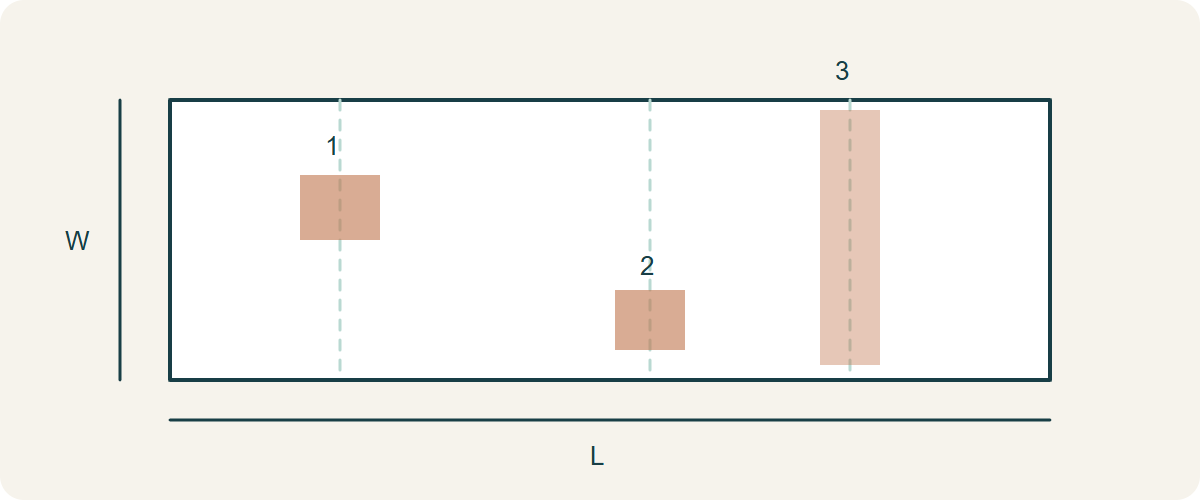
A four-point system records visual defects with penalty points under an agreed scoring rule, then normalises the total to the stated reporting basis. For lace, the roll score must sit beside a defect map and product-specific rejection rules. There is no single international pass threshold for every lace construction. Agree scoring, area units, inspection coverage and critical defects before the roll is assessed.
1. Four points is a method family, not a universal contract
ASTM D5430’s public scope covers visual inspection and grading, including use by agreement between purchaser and seller. Its public significance section warns that different point-assignment options can give different totals. Therefore identify the agreed option and edition; the label four-point alone does not settle defect-length bands, holes, repeated defects, caps or how a disputed defect will be treated. This article does not reproduce the licensed scoring tables.
Write an order-specific defect atlas with photographs or physical references: missing embroidery, broken connecting bars, damaged scallops, missing decoration and ground holes are not visually equivalent. Define which defects are scored, which cause direct rejection of an affected section, and which need buyer review. An attractive average score must never overrule a critical defect rule agreed in the same contract.
Technical references
2. Put the area unit in the formula and the result
Let P be total penalty points, L inspected length in metres and W the agreed inspected width in metres. For a consistent-width inspected area, points per 100 m² = P × 100 ÷ (L × W). If width is measured in centimetres, the same formula becomes P × 10,000 ÷ (L × Wcm). Record whether width means full, usable or another contractual basis; changing it silently changes the result.
For yards and inches, points per 100 yd² = P × 3,600 ÷ (Lyd × Win), because a yard is 36 inches. This is an area-normalised result, not points per 100 linear yards. The numerical values for 100 m² and 100 yd² are different: 1 yd² = 0.83612736 m². Convert the area basis and the acceptance limit together; never reuse the same bare threshold after changing the unit.
Technical references
3. Recalculate a hypothetical roll
Assume an inspected 50 m roll, constant agreed width 1.40 m and 21 penalty points. Its inspected area is 50 × 1.40 = 70 m²; the score is 21 × 100 ÷ 70 = 30 points/100 m². The same physical result is approximately 25.08 points/100 yd², calculated as 30 × 0.83612736. Neither figure tells you whether the roll passes until a contract limit with the same unit and scoring option is supplied.
If the parties hypothetically agree a maximum of 32 points/100 m² and no disqualifying critical defect, this roll satisfies that numerical condition. If the map also shows a critical broken scallop in a required border, its disposition still follows the separate agreed rule. The example is arithmetic, not an All4Lace inspection result or a recommendation that 32 is an industry acceptance threshold.
| Hypothetical record | Value | Meaning |
|---|---|---|
| Inspected area | 50 m × 1.40 m = 70 m² | Same width basis throughout |
| Metric score | 21 × 100 ÷ 70 = 30 | Points per 100 m² |
| Equivalent yard-area score | 30 × 0.83612736 ≈ 25.08 | Points per 100 yd², not linear yd |
| Hypothetical limit | 32 points/100 m² | Only the assumed contract, not universal |
4. Keep location and cuttable sections visible
For each defect record its lengthwise position, cross-width location, affected area, category, assigned score and photograph reference. Add the usable border or motif affected rather than just the roll metre. A defect outside one panel may lie inside a mirrored partner. Two rolls with identical area-normalised scores can yield very different garment output when one has defects clustered in the centre of every usable motif.
Map joints, missing lengths and excluded sections separately from visual scores. A defect deduction is a commercial quantity decision, not permission to subtract the same length twice. Preserve gross measured length, physically missing length, contract deductions and estimated cuttable continuous runs as separate fields. Use actual patterns to judge whether a short remaining segment can be useful, rather than describing all metres outside defects as interchangeable first-quality material.
5. Agree viewing and measuring conditions
State inspected face or faces, lighting, backing, travel direction and pace, and whether raised decoration requires a stopped close-up. An inspection machine can help present the cloth and log position, but its presence does not establish that every motif was seen or that the scoring rule was followed. Transparent lace may need a consistent contrasting backing; reflective sequins may need an additional view to distinguish glare from a missing piece.
Keep tension appropriate to the agreed length and width method. Pulling open a net can change apparent dimensions, hide relaxed distortion and affect area normalisation. Equipment makers identify adjustable tension as a function, not a guarantee of correct inspection. Record setup and calibration checks appropriate to the chosen apparatus, and reconcile anomalies on a retained section rather than changing the roll score without a traceable correction.
Technical references
6. Resolve disagreement before relabelling the roll
When two inspectors differ, first compare the same roll, scoring option, inspected area and defect examples. A dispute may arise from different width bases or one party classifying a broken motif as a harmless yarn irregularity. Reinspect identified locations together or use an agreed independent inspector. Preserve the original findings and the reason for any amended score so a later cutter can still understand the material.
Does a low roll score prove colourfastness or attachment strength? No, visual grading is separate from performance testing. Does checking a small sample approve an entire roll? Only the inspection coverage actually performed is known. The release record should say inspected extent, score unit, critical-defect disposition and accepted quantity; do not turn partial coverage into a claim that the whole shipment was inspected.
Discuss your embroidery project
Send All4Lace your buyer’s scoring option, reporting unit, critical-defect photographs and the panels or borders that must remain cuttable. Agree the inspection record before quantity acceptance.
Contact Zhijin