Sourcing & Orders
Lace Swatches or a Cut Length: Which Sample Do You Actually Need?
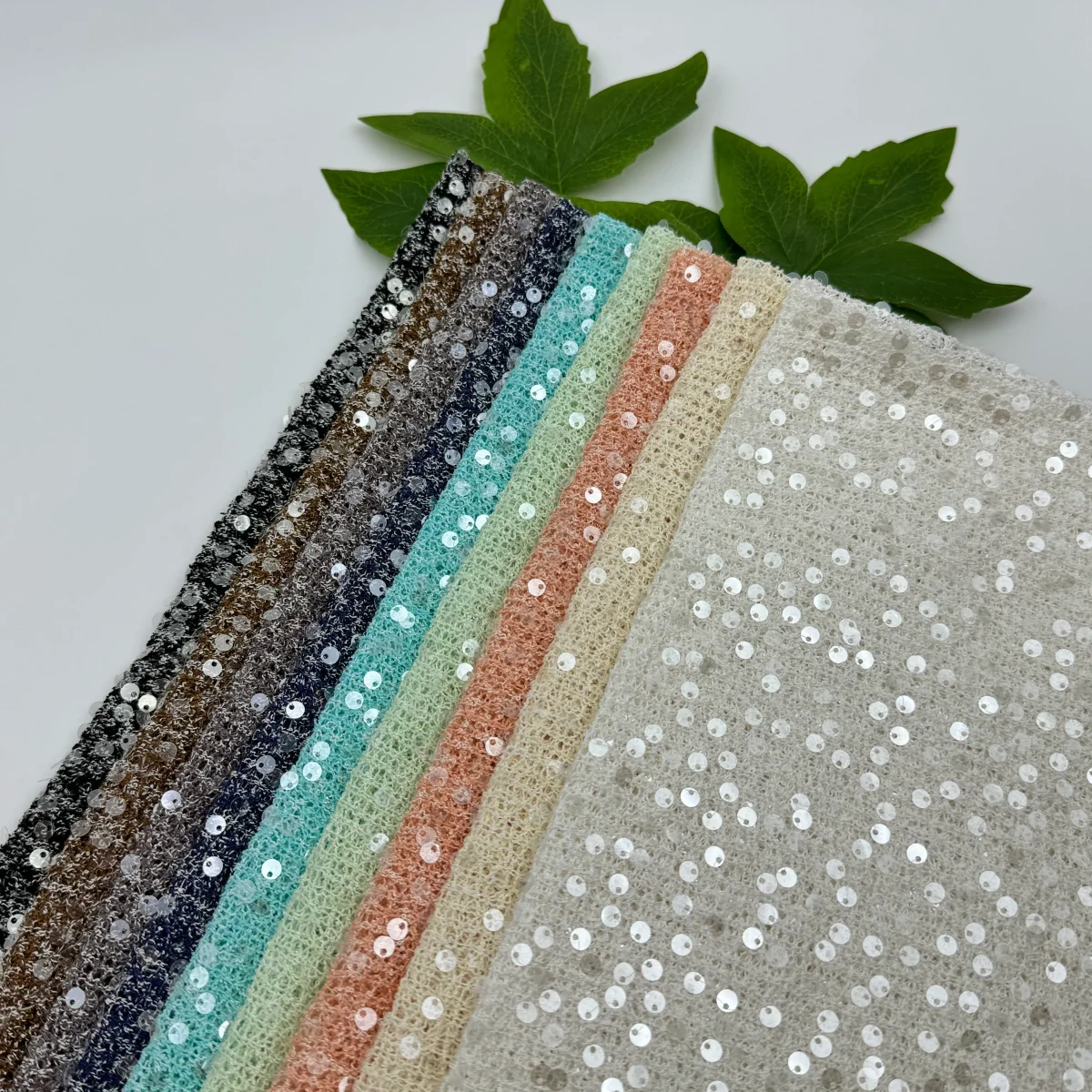
A colour card helps narrow a palette; a small swatch lets you handle the material; a larger cut can show a repeat or accommodate a garment panel. These are different jobs. Before asking for “a sample”, name the decision you need to make and the area that decision requires.
Use a colour card to choose a shortlist
A colour card is useful when several shades need to be considered together. Record the material reference and the supplier’s shade reference, rather than relying on a colour name such as ivory. Ask whether the attached piece is the finished decorated material or only a yarn, ground or sequin reference; they answer different questions.
A tiny mounted piece cannot show how a large flower is distributed across a bodice or how the cloth hangs. A photograph of the card is useful for identifying the option under discussion, but final colour decisions still need the agreed physical reference and viewing conditions. Keep rejected shades separate from the chosen one.
Request a handling swatch for local details
An unmounted swatch allows a buyer to examine visible structure, surface and reverse, then compare it with the intended garment material. Say which observations matter: a raised decoration at a cuff, the look of the mesh over a lining, or the feel at a neckline. A supplier can then propose a relevant piece instead of an arbitrary clipping.
A swatch may come from a highly decorated area while the rest of the fabric is more open. Ask where it was taken and whether it includes a typical decorated and undecorated area. Do not use one small corner to approve whole-width placement, lot consistency or garment performance. Those questions need additional material and their own agreement.
Ask for a complete repeat when placement matters
If flowers must meet at a centre front or a scalloped edge must remain intact, ask for enough material to see the complete relevant motif and its surroundings. A narrow strip containing half a flower can make a design look suitable while hiding where the next flower begins. Request the direction and visible boundary of the sample in a simple sketch.
There is no single sample size that works for every pattern. Instead of requesting an unexplained square, send the panel outline or describe the repeat you need to see. Clarify whether one or both decorated edges are required. This is a request for evidence of layout, not yet a production cutting allowance.
Reserve a cut length for a real garment trial
A seam, sleeve or skirt trial requires enough length and width for the actual panel, orientation and intended construction. Give the garment maker’s pattern information before ordering the cut. Extra length alone will not help if a particular border or motif falls outside the panel. Keep material for a reference piece as well as anything that will be cut or sewn.
Confirm how the sample will be supplied: usable width, uninterrupted length, edges included, quantity and any charge or dispatch arrangement. Do not assume that requesting a cut creates a free-sample policy or reserves matching bulk stock. Once the piece is altered, label what was changed so it is not mistaken for an untouched reference.
Write the request around the next decision
For example: “We are choosing lace for a sleeve. First we need an unmounted swatch to compare the reverse against the lining. If suitable, our pattern maker will specify a cut containing the complete flower and sleeve outline.” This separates initial selection from the later cutting trial without ordering unnecessary material.
- State the intended garment area and next decision.
- Identify the design, shade and sample reference.
- Mark the motif or edge that must be included.
- Confirm size, supply conditions and what remains unapproved.
| Decision | Material to discuss | What it cannot settle alone |
|---|---|---|
| Shortlist shades | Labelled colour references | Garment drape |
| Check local surface and reverse | Unmounted swatch | Whole-panel placement |
| Check motif layout | Complete relevant repeat | Finished garment fit |
| Try construction | Pattern-sized cut length | Approval of all production lots |
Discuss your embroidery project
Send All4Lace the garment area you are developing and the question your sample needs to answer, so we can discuss an appropriate sample format.
Contact Zhijin