Materials & Applications
Lace Yoke Panels: Plan Transparency, Joins and Motif Placement
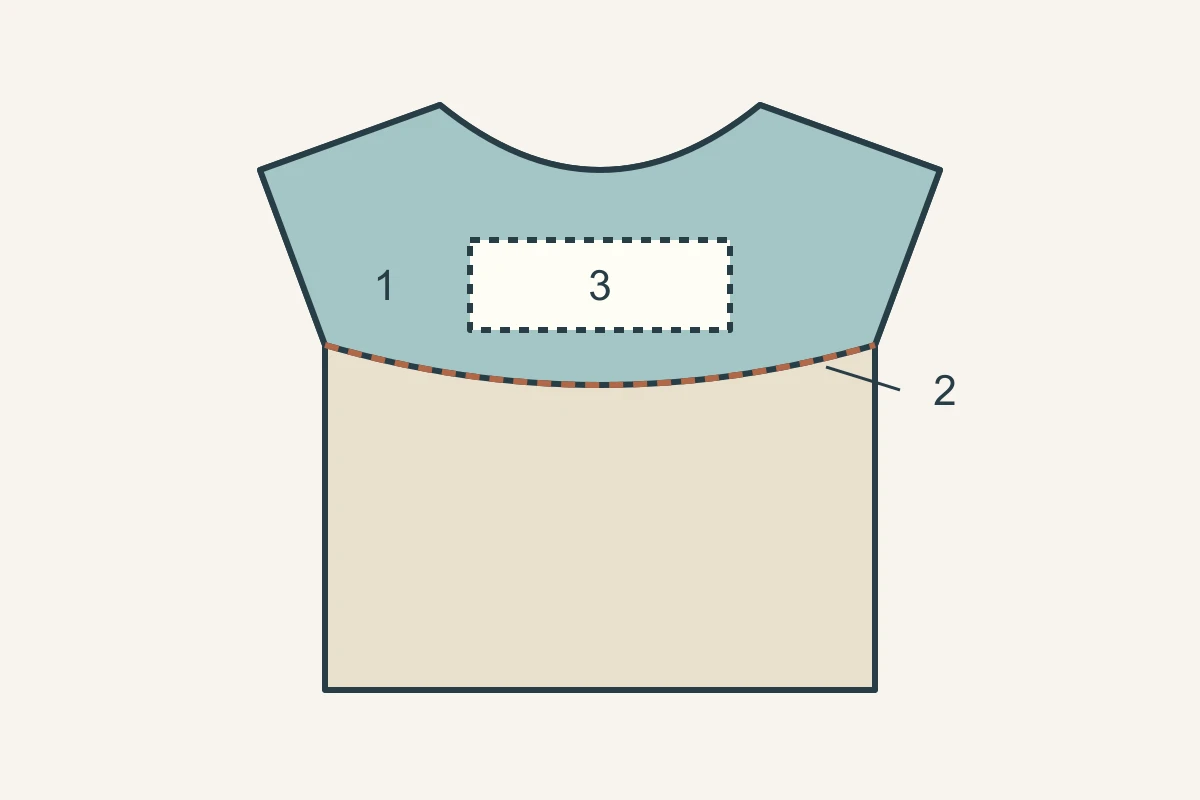
Choose lace for a yoke from the actual upper garment pattern, with its joining lines and intended layers marked. A swatch that looks attractive on a table cannot show how the shoulder, neckline and lower yoke seam will appear together. The useful buying decision is whether the proposed lace and assembly create the intended panel on the body, including what can be seen through it.
Define the yoke boundary before selecting a motif
Mark the neckline, shoulder, armhole and lower joining line on the supplied pattern. Identify whether the lace forms the panel itself or sits over another fabric. Keep the cutting edge and finished seamline distinct. Otherwise a decorative flower placed against a paper edge may disappear into the join when the sample is assembled.
A lined yoke can have separate outer and inner pieces; Seamwork demonstrates one way to enclose their joins. That example does not make the same construction suitable for every lace yoke. Decide which layers your design requires and let the garment maker propose an assembly for the actual fabric.
Technical references
Review transparency with the intended layers
Place the candidate lace over the proposed layer and view both against a neutral background and on a fitting form. Record the layer colour and where it ends. An underlying layer that stops at the lower seam may create a visible change across the chest or back; judge that change deliberately instead of treating it as a surprise defect.
For a sheer yoke, examine seam allowances, labels and facing edges from outside. For a covered yoke, check whether the underlying material hides or flattens the intended open areas visually. Photographs should keep light and exposure comparable. Neither a bright photograph nor a hand held behind the lace establishes acceptable coverage for the wearer.
Set a motif priority and an acceptable compromise
Use the finished seamline to position a full motif near the centre front or back, then inspect both shoulders and the armhole edges. A placement that centres the main flower may cut smaller motifs at a shoulder. Mark which relationship is essential and which can vary; do not promise perfect matching at every curved boundary.
Confirm the viewing direction of the embroidery and the face of the fabric before duplicating a piece. A mirrored paper pattern does not prove that turning the fabric over gives the same surface. Review left and right pieces together, with the actual neckline opening and fastening position shown.
Compare the joins that will remain visible
Use one junction record for each candidate rather than selecting from isolated close-ups. The following checks describe review locations, not universal sewing settings.
| Location | What to show | Decision to record |
|---|---|---|
| Neckline | Lace, facing or binding and any lower layer | Which edges may remain visible |
| Shoulder | Both adjoining panel pieces | Motif priority and visible join |
| Armhole | Yoke meeting the chosen sleeve or finish | Bulk and outline on the assembled sample |
| Lower yoke seam | Lace above and body fabric below | Join visibility and intended colour break |
| Opening | Closure and adjacent decoration | Clear working area and wearer contact |
A hypothetical blouse: resolve one change at a time
Consider a blouse with a sheer back yoke and an opaque lower back. The first mock-up places a large flower centrally, but its lower petals cross the joining line. The designer can move the motif, change the panel boundary or accept the cropped petals. These are different revisions; approving only a larger fabric swatch would leave the design question unresolved.
Suppose the next sample adds a matching inner layer only below the shoulder. Photograph its termination from the outside before approving it. This fictional example illustrates a review sequence, not a completed All4Lace order or evidence that a particular lace has passed a coverage or wear test.
Keep fabric approval separate from panel approval
Archive the chosen fabric reference, motif direction, marked pattern version and layer references with front, back and close views of the sewn panel. Record which sample is authoritative for colour and which for placement. If the panel shape changes during grading, review the new boundary against the motif instead of assuming the original placement still works.
The purchasing brief should state the order basis, candidate fabric, usable area needed for the panel and unresolved assembly questions. A price for a fabric length does not automatically include placement cutting or garment construction. Confirm those scopes separately so the supplier and garment maker are reviewing the same deliverable.
Discuss your embroidery project
Send All4Lace your marked yoke pattern, preferred lace reference and intended layer arrangement for a focused fabric sampling discussion.
Contact Zhijin