Materials & Applications
Sequin Fabric vs Beaded Fabric: Which Suits Your Garment?
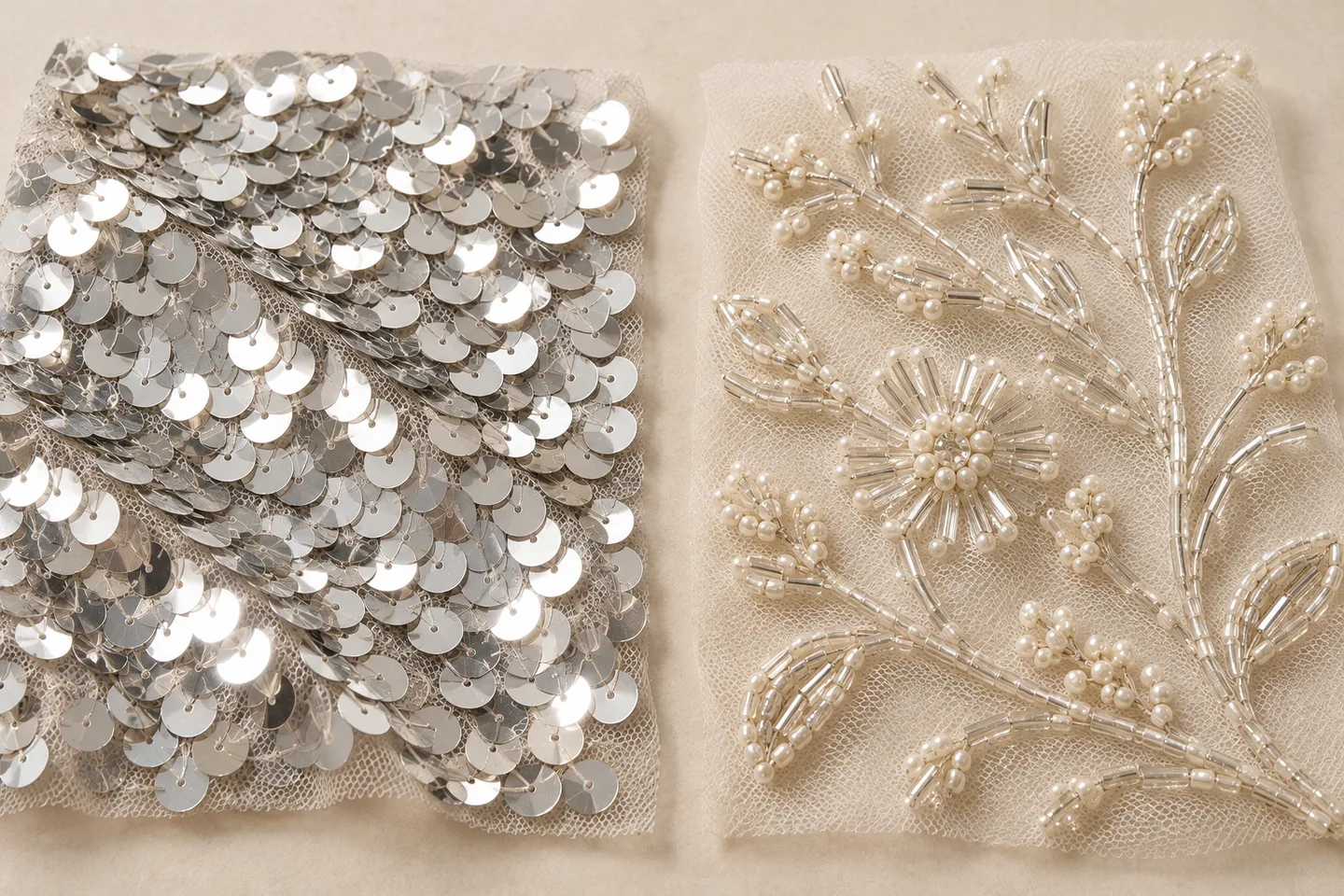
Choose sequin embroidery when the design calls for a reflective surface; consider beaded embroidery when raised detail is central to the look. That is only the starting point. The backing, decoration density and position on the garment can matter more than the category name. Here is how to compare the two without assuming that one is always lighter, softer or more expensive.
What changes between sequins and beads?
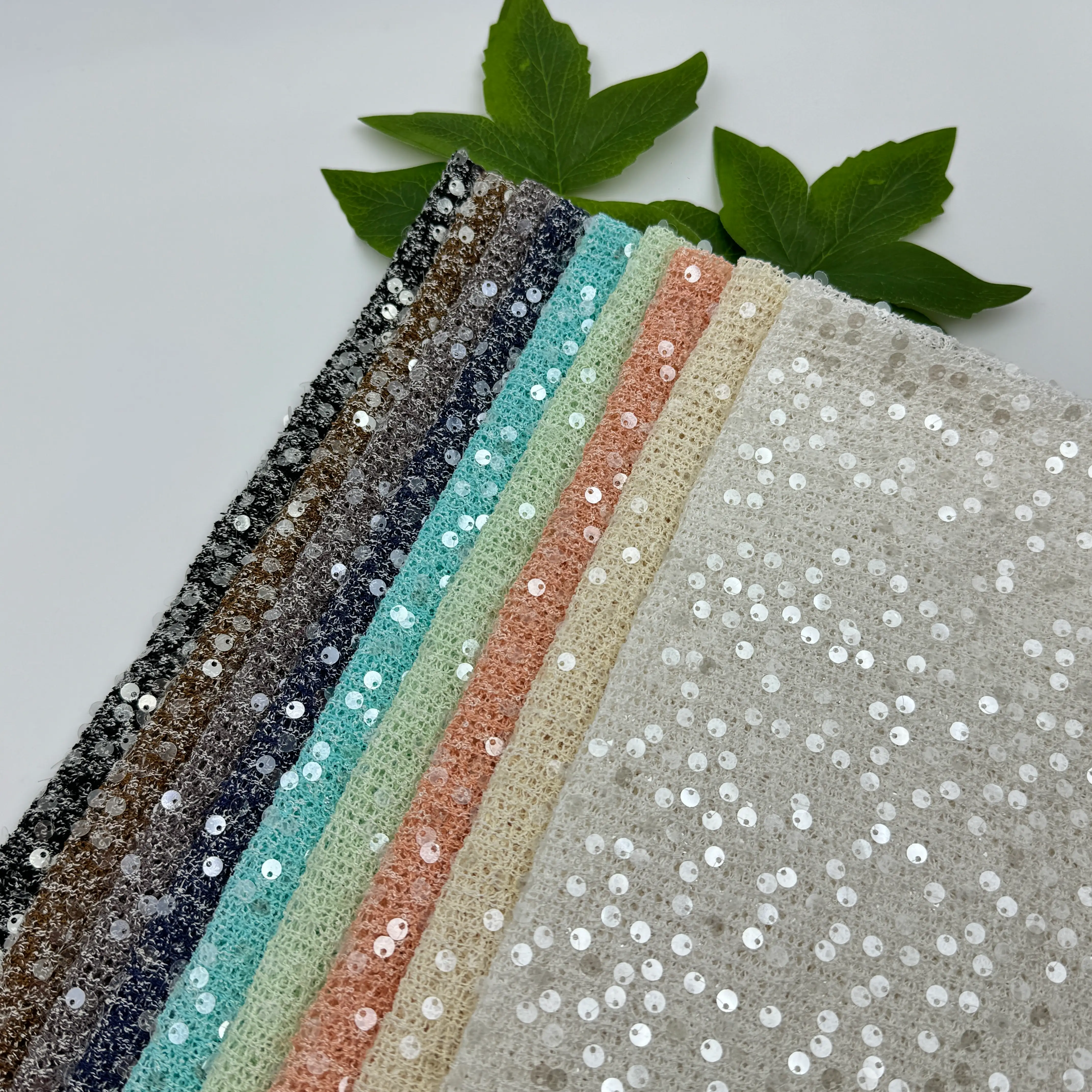
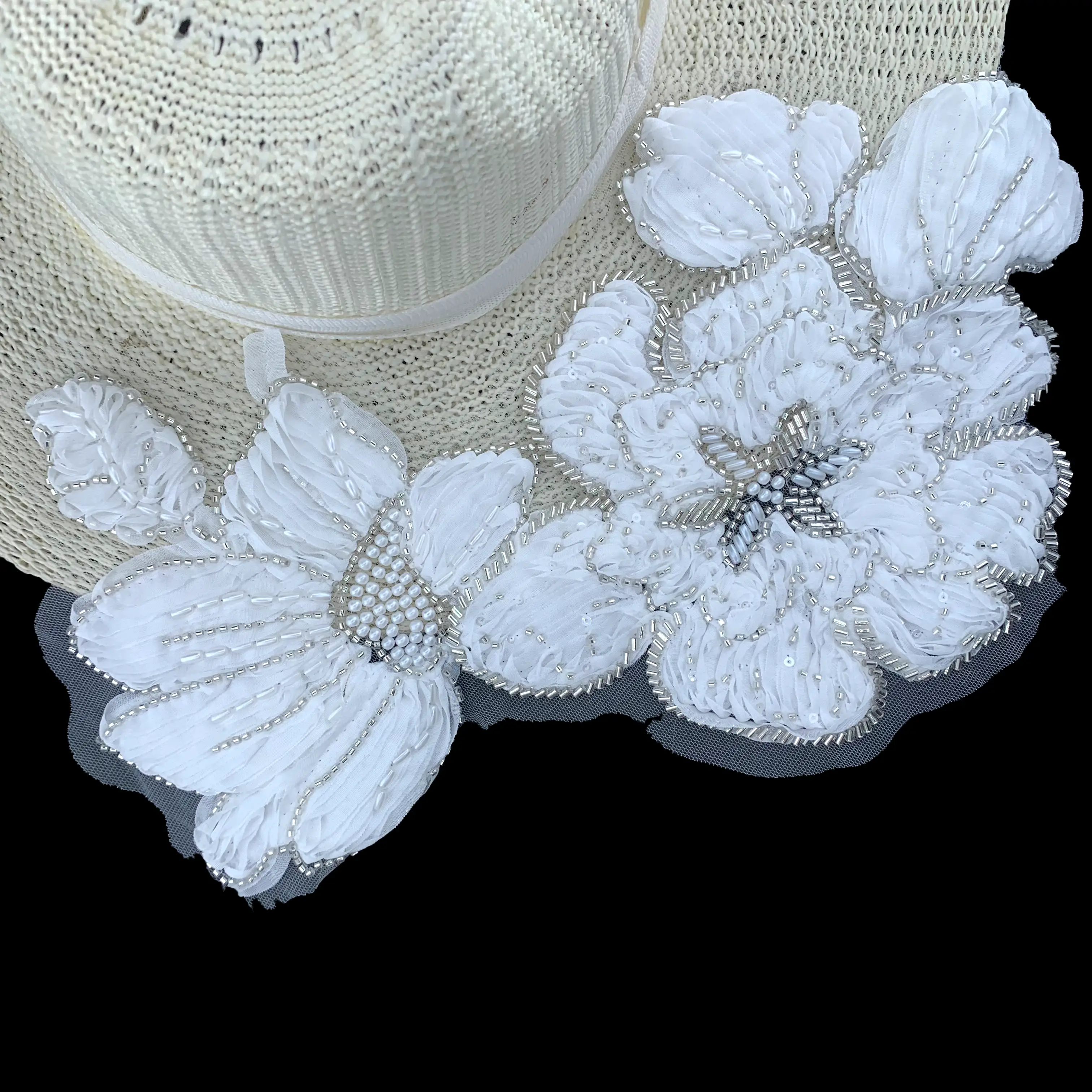
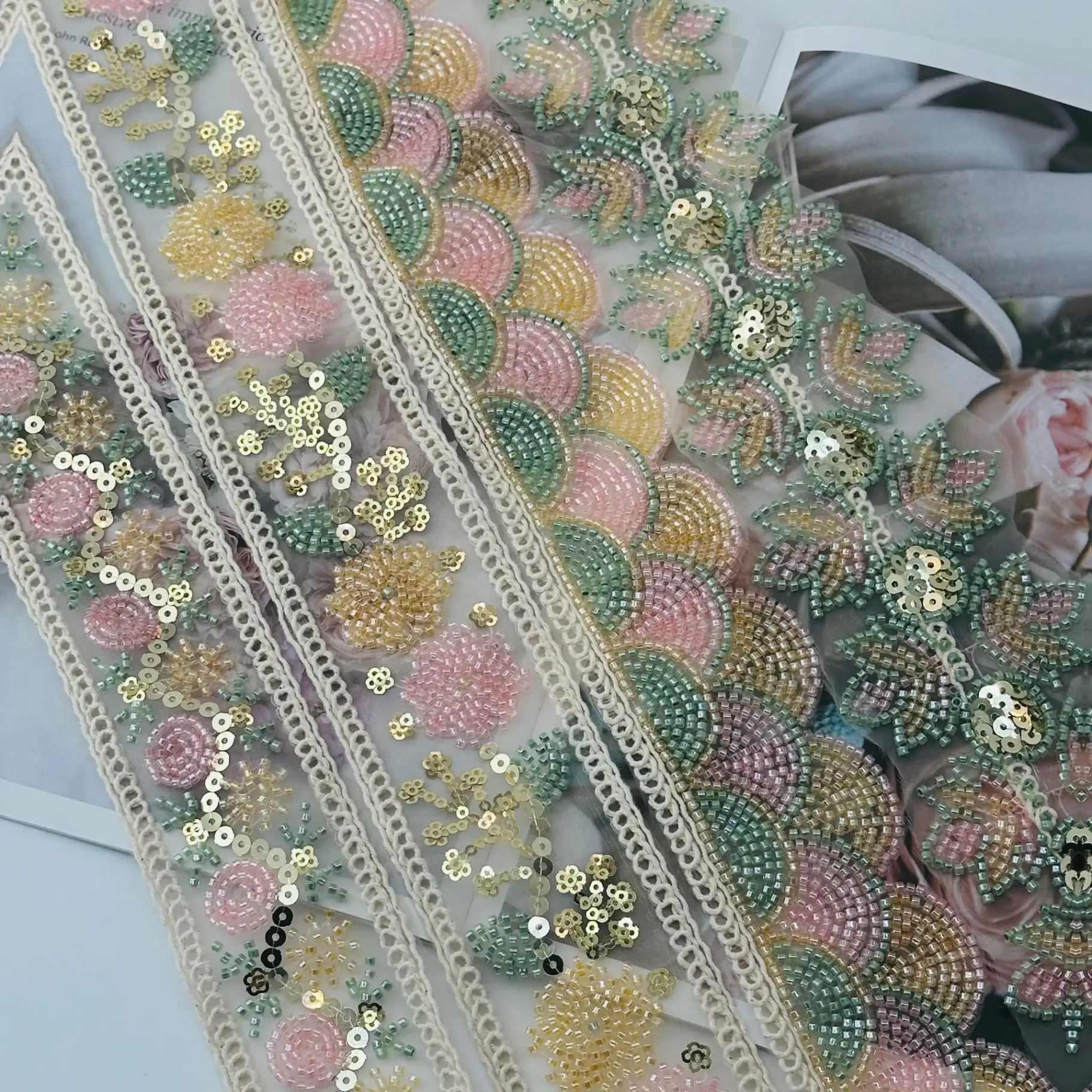
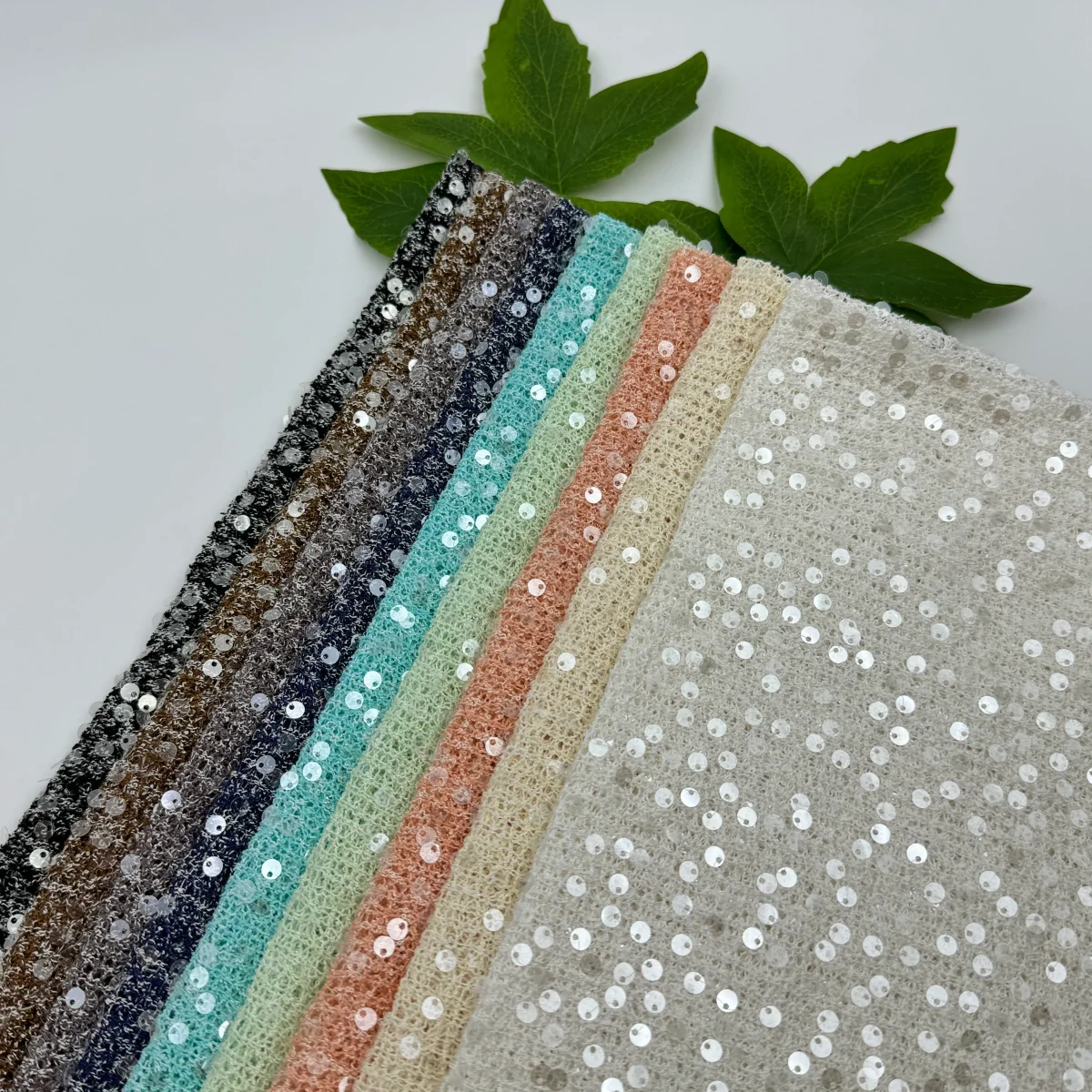
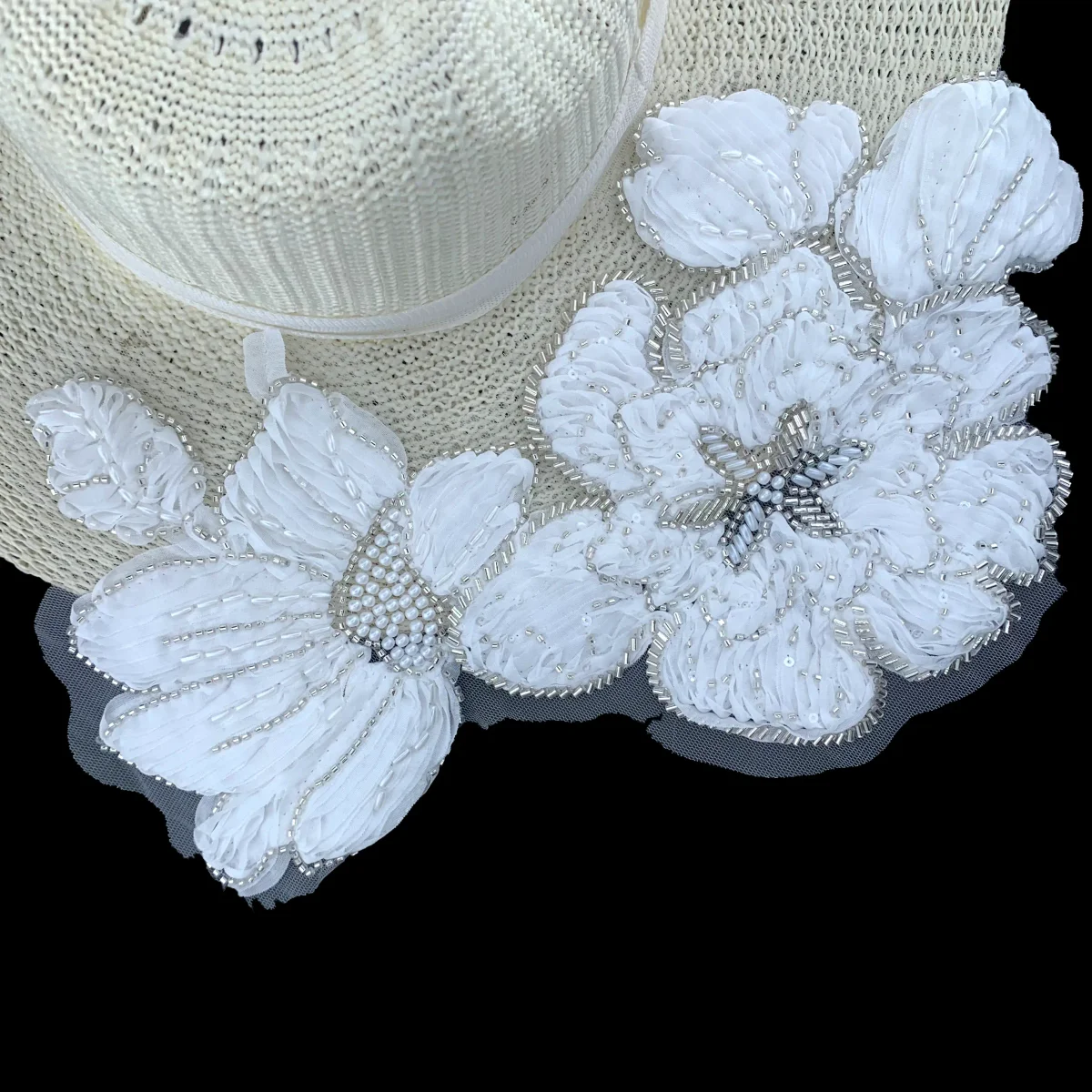
Sequins are decorative discs or shaped pieces attached to a ground. Depending on their finish and orientation, they create broad reflections or small flashes of light. Beads and bugles are three-dimensional elements that add height and texture. Neither category tells you the complete material composition: ask separately about the decoration, embroidery thread and ground fabric.
Beaded does not automatically mean handmade. Industrial equipment can attach sequins and certain beads, while some designs also need manual work or finishing. Ask how the proposed reference is made instead of treating the technique name as a production guarantee.
Technical references
A practical comparison for fabric buyers
Compare samples with similar dimensions and intended uses. A sparse beaded motif and a densely sequined panel are different products, so their weights or prices do not reveal a general rule about the two techniques.
| Decision | Sequin embroidery | Beaded embroidery |
|---|---|---|
| Visual effect | Reflections shaped by finish and arrangement | Raised points, lines or motifs |
| Ground fabric | Check mesh or fabric structure and stretch | Check support for the chosen decoration |
| Weight and drape | Assess the actual decorated sample | Assess bead material, amount and placement |
| Seam planning | Identify decoration near the cutting line | Leave space for seams and bulky elements |
| Cost comparison | Same usable width, coverage and quantity | Same specification and approval scope |
| Care | Evaluate the complete material combination | Evaluate the complete material combination |
Start with the backing and lining
A close-up of decoration can hide the ground. Lay the sample over the lining colour planned for the garment, then hold it against the intended area. Check transparency, how clearly the mesh remains visible and whether the decoration changes the stretch of the base. If the fabric will be gathered or fitted, review the finished decorated sample rather than relying on the stretch of undecorated mesh.
Judge weight and drape at the intended placement
A heavily beaded neckline can work as a small focal detail even when the same construction would be unsuitable across a large skirt panel. Likewise, dense sequins can change how a lightweight base hangs. Compare equal-sized samples, drape them over the proposed lining and examine the reverse where it may touch skin. For a fitted section, review movement and the complete attachment to the garment.
Plan cutting lines and seams before ordering
Place the garment pattern over the sample and mark seam allowances, darts and openings. Note any decoration that crosses these areas and discuss how the sewing factory will handle it. Removing a bead or cutting a connecting thread can affect nearby decoration, depending on the stitch arrangement. Approve a representative sewn sample when the construction is new to the garment team.
Compare quotations using the same specification
Price depends on the ground, decoration material, coverage, pattern repeat, number of steps and order quantity. A simple beaded motif may need less work than a complex mixed-sequin design. Ask suppliers to quote the same usable decorated width or finished piece size, and state whether cutting, edge finishing or assembly is included. Keep sample-development charges separate from the bulk unit price.
What should the sample confirm?
Approve the complete combination of ground, decoration, thread and lining. The review should show the chosen visual effect and the practical details needed for production. Care instructions also belong to that complete combination; the words sequin or beaded do not establish a washing method. Keep the approved sample and its written specification together for later batch comparison.
- Actual decoration material, size, finish and colour reference
- Usable decorated width, repeat or finished motif dimensions
- Reverse-side appearance, attachment and seam areas
- Lining combination and agreed care evaluation
Questions buyers often ask
Can sequins and beads be combined? Yes. A mixed design can use sequins for light and beads for detail, but approve the combination as one product. Can a photo tell you the weight? No. Request a representative sample with the dimensions or unit used for comparison. Is beaded fabric always more expensive? No. Compare the complete specification and production work rather than the name.
Discuss your embroidery project
Send All4Lace the garment position, a reference image and the format you need: fabric, trim or appliqué. Include the intended lining and approximate quantity so we can discuss useful sample references.
Contact Zhijin