Sourcing & Orders
How to Order Spare Lace and Sequin Trim for Stage Costume Repairs
Once the wardrobe team has approved the stage costume sample, reserve repair materials by the part that might need replacing. Specify continuous lengths for lace or sequin trim, complete pieces for appliqués, and the positions and orientations they must match. List these alongside production and trial quantities in the quote, then hand over only the spares that pass a check against the approved sample.
Decide which costume parts need spares
Mark each part on a flat sketch of the approved garment and describe the likely repair. A removable cuff may need a complete replacement. An applied hem trim may need a continuous stretch with the motif in the right place. A bodice may call for a cut of decorated fabric large enough for the required panel. Record the finished face and the direction the motif runs.
Plan with the people who will handle the costumes between performances. The Royal Shakespeare Company describes both pre-production fittings and ongoing repairs by its running wardrobe team. Your own list can group parts by how easily they can be serviced and when a replacement would be needed.
Sources & further reading
List production, trial and repair quantities separately
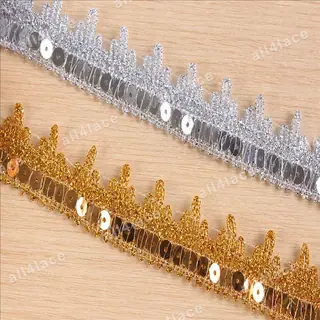
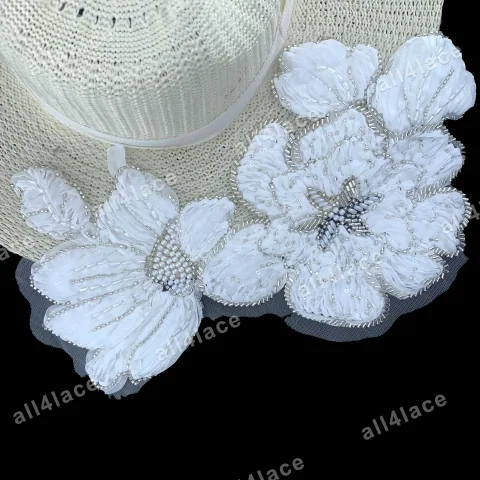
A quote should show how much material goes into the main cutting plan, how much is for assembly trials, and what must remain for repairs. Fabric needs a usable decorated width and length. Continuous trim needs a minimum uninterrupted length, a usable attachment band and any rule for where a motif begins. A separately supplied appliqué needs a piece count, a confirmed face and any left or right orientation.
Ask whether the production material and spares can come from the same available lot. Record the supplier's reply, the agreed sales unit and any expected joins. Keep the approved sample and a photograph of the attachment position so the receiving team can verify the delivered parts against a specific reference.
| Supply form | What to quote | What the wardrobe team needs |
|---|---|---|
| Decorated fabric | Usable width and length for a replacement panel | Lot and motif direction |
| Continuous lace or sequin trim | Minimum uninterrupted length and usable attachment band | First motif position and edge orientation |
| Separately supplied appliqué | Complete piece count and any left/right mix | Face, attachment area and approved placement |
Worked example: two reserve cuff lengths
Suppose the wardrobe team approves one spare for the left cuff and one for the right. The tested cutting layout requires 0.50 m for each cuff, including the agreed seam allowance. An attachment trial needs a separate 0.20 m. The reference length for these three allocations is 0.50 m + 0.50 m + 0.20 m = 1.20 m.
The 1.20 m assumes that both 0.50 m reference lengths can be cut continuously, start at an acceptable motif position and follow the approved direction. A join or motif alignment can increase the overall length needed. Ask the supplier what uninterrupted lengths they can provide and confirm how the cut lengths or total will be quoted in their sales unit.
Hand over usable parts and a running record
After cutting, count the complete spares and label the storage bag with the costume or role reference, position, product code, lot if available, right or left side, and face orientation. Store the reference for placement with the approved example. Keep the location and available quantity on the running wardrobe list, and deduct a part whenever it is used.
Dutch National Opera & Ballet describes keeping a detailed costume record and maintaining costumes between performances. Ithaca College gives a production example of dressing-room repair lists and inventories before and after performances. A spare record for your team can connect those checks to the person who approves replacement orders.
Review the reserve before placing a replacement order
Review the remaining complete parts against the performance schedule and the time needed to get and approve a new sample. If the original lot is unavailable, ask for a new sample with the relevant face and reverse, the actual dimensions and the available continuous length or piece count.
Compare the candidate with the approved sample in the intended position and under the viewing conditions your costume team uses. Record the accepted differences and who signed off. Keep an approved substitute separately identified so future repair or repeat orders can use the right reference.
Ask about materials for a costume repair reserve
Send All4Lace the costume area, material reference or approved sample, the size and quantity of each spare, and your delivery date. For continuous trim, add the minimum uninterrupted length and where the motif must start. Confirm each quoted unit and currently available lot on the response.