Materials & Applications
What Is Lace Fabric? Construction, Decoration and Common Uses
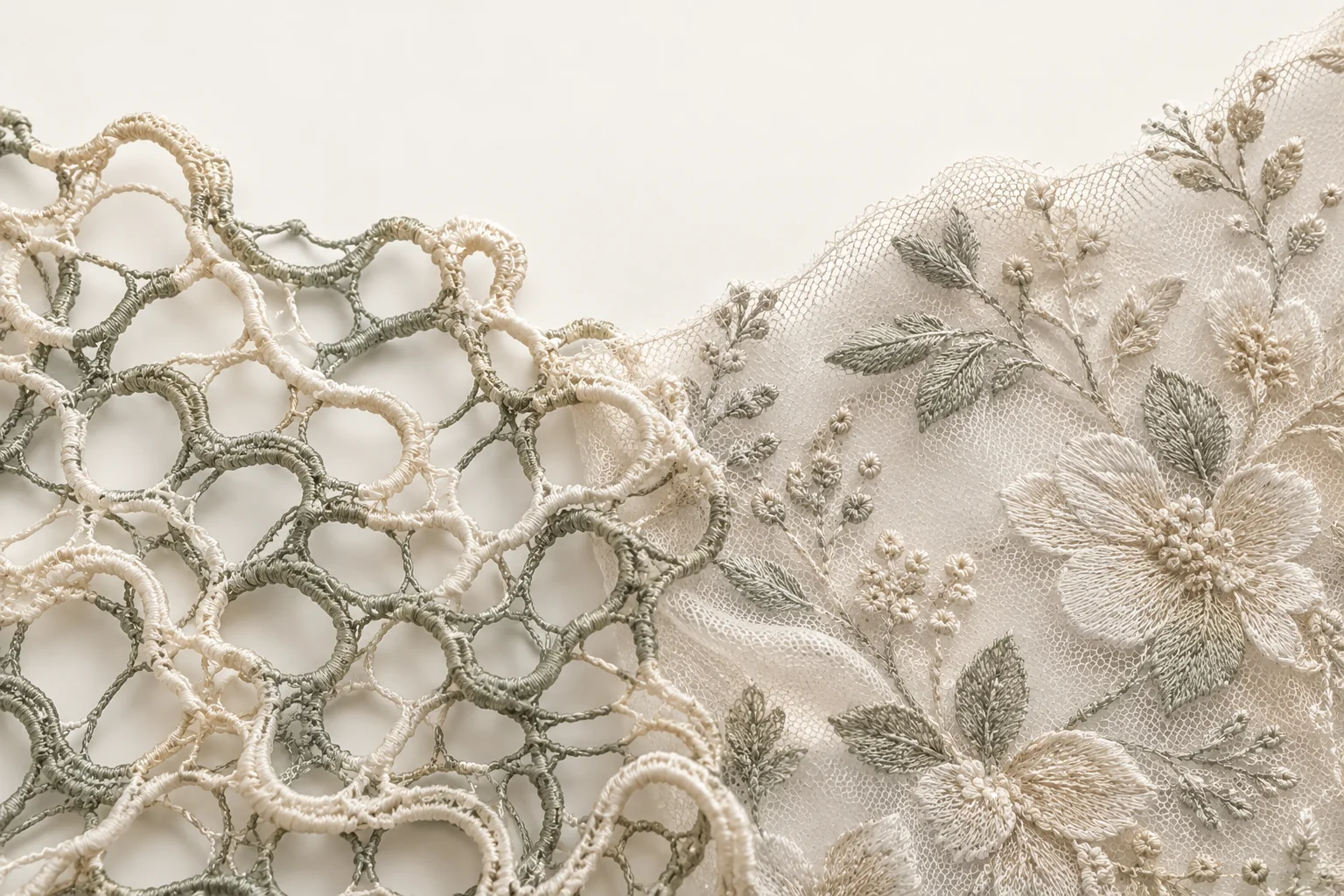
Lace fabric is a decorative textile with an open pattern. In fabric sourcing, the name also covers a broad range of embroidered nets and lace-like materials. A useful description therefore says more than lace: it identifies what carries the pattern, what has been added to the surface and how the material will be supplied. Those details explain why two fabrics with similar flowers can behave very differently in a garment.
Look between the motifs first
Hold the material against a plain background and look at the spaces between the flowers. You may see a fine net continuing across the open areas, or connections made from threads and small joining bars. That first observation tells you more about the construction than the floral style does. A light background, a dark background and a reverse-side view can reveal details that disappear in a single styled photograph.
Traditional lace includes different methods rather than one universal process. Needlelace can be built from stitches that connect to earlier stitches, while museum collections also identify bobbin-made guipure. Modern embroidery may be worked on a net that remains or on a support intended for removal. These are useful distinctions, not interchangeable names for the same factory operation.
Four descriptions that should stay separate
A supplier may describe a fabric as cotton, beaded, stretch and guipure in the same conversation. Those words do different jobs. Cotton concerns material composition; beaded concerns decoration; stretch concerns behaviour; guipure is a lace construction or style term whose usage needs clarification. One word cannot replace the others.
| Description | What it tells you | What to establish |
|---|---|---|
| Construction | How the pattern is supported | Retained net, thread connections or another ground |
| Composition | Materials in the item | Ground, embroidery thread and decoration separately |
| Decoration | Surface additions | Beads, sequins, cord or dimensional elements |
| Supply format | What you will receive | Full width, continuous trim, panel or individual motif |
Where lace appears in clothing
A full-width material can cover a skirt panel or form an overlay. A continuous trim follows an edge such as a cuff or hem. An individual motif is positioned where its outline can be matched to the garment. The same visual idea can be developed in more than one format, but the cutting, attachment and ordering units change.
For a scalloped hem, check which edge carries the scallops and how the motif repeats along it. For a shaped neckline, a straight border may need a different arrangement from a curved appliqué. A drawing of the intended placement makes that distinction clearer than a request for bridal lace alone.
Why similar lace patterns can hang differently
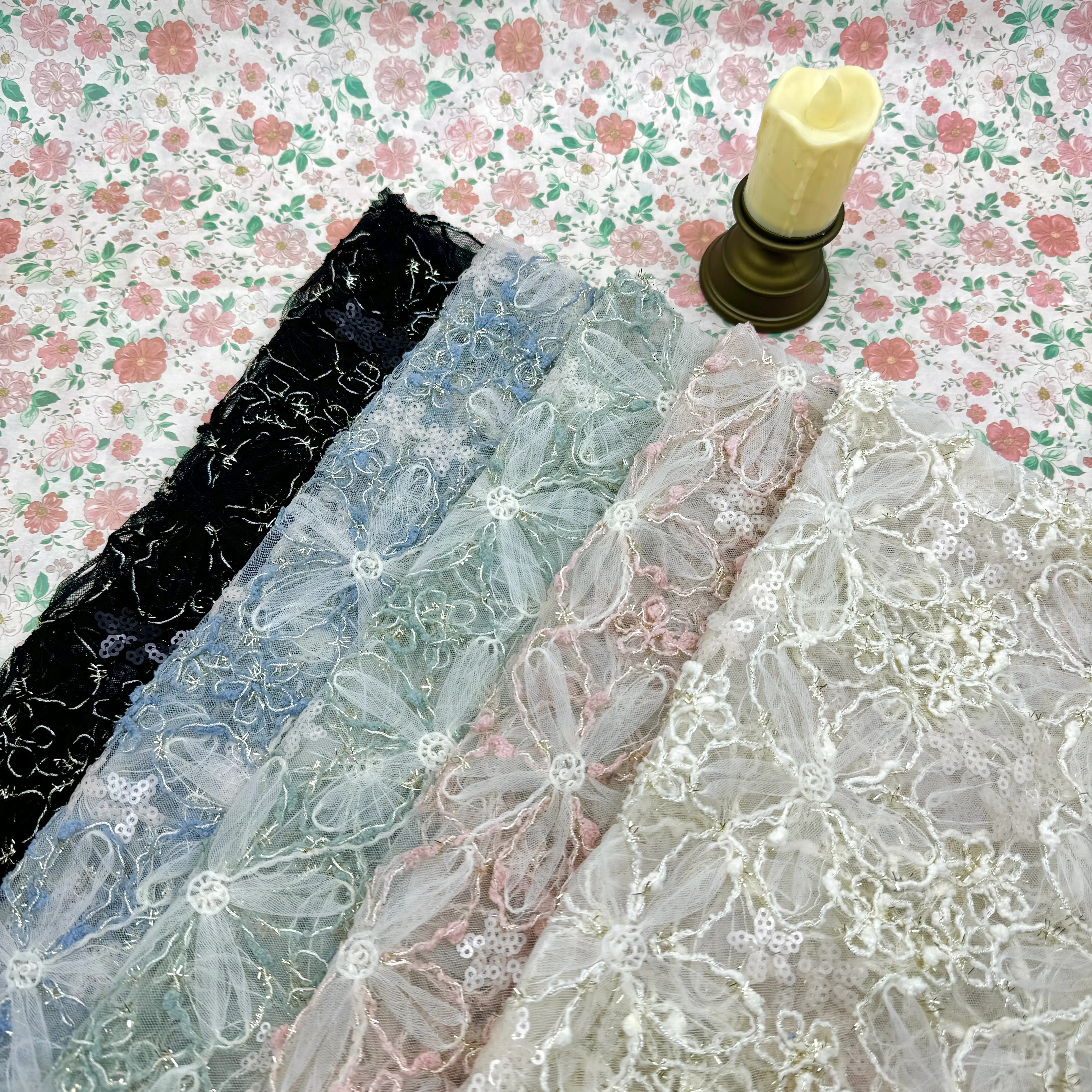
The ground, embroidery coverage, added decoration and finishing all contribute to the feel of the finished material. A densely decorated net can feel very different from an undecorated piece of the same ground. Large open areas also behave differently when supported by a lining or stretched across a fitted section. Compare the complete fabric combination where it will actually be used.
For example, when choosing material for an overlay, place each candidate over the intended lining rather than judging it over the supplier’s display background. If a small trim will sit at a neckline, assess that small assembled detail. Neither comparison requires assuming that all lace must be soft, stiff, fragile or stretchy.
Common questions about lace fabric
Is all lace handmade? No. Handmade and machine production are separate process questions. Is lace always cotton? No; composition must be stated for the particular item. Is an embroidered mesh also sold as lace? Often, yes, which is why the retained ground needs to be identified. Does a scalloped edge mean no sewing is needed? No. It may provide a decorative finished edge while the rest of the piece still needs suitable attachment.
Describe the lace you want in one clear brief
Start with a reference image, then add the garment position and supply format. State whether the open areas should show a visible net, whether the outline needs a finished decorative edge and which materials or colours are essential. If those details are not yet fixed, mark them as options. You can then compare the right samples instead of collecting quotations for several unrelated constructions.
Discuss your embroidery project
Send All4Lace a reference and tell us whether you need fabric, continuous trim or a shaped motif. We can discuss which catalogue examples are useful starting points for your project.
Contact Zhijin