Sourcing & Orders
Wholesale Lace Trim Trial Orders: Assortment, MOQ and Reorders
A wholesaler’s first order should answer a commercial question: which trim references deserve a reorder from the customers you actually serve? Buying many attractive styles without a record of colour, quantity and usable cut length makes that question harder to answer. This guide turns a small trial assortment into a measurable buying plan, using our real floral lace and decorative braid references. Any mixed-style order, minimum or replenishment arrangement still needs confirmation in the current quotation.
1. Build the assortment around a customer task
Choose the customer group before the trim: garment workshops buying cuff or neckline decoration, retailers selling short lengths, or makers requiring continuous borders. Ask what length and width they buy, whether they need pairs, and which colours they can approve. One assortment cannot be judged fairly if it mixes unrelated uses without separate records.
Give each candidate a reason to exist in the trial. For example, compare an open ivory floral border with a pastel floral accent and a metallic-looking braid, each against a named use. These are selection hypotheses, not evidence that any one is a bestseller in your market. Remove a candidate if you cannot identify the buyer or application you want to learn about.
2. Separate style, colour and requested quantity
A request for “a mixed batch” is not specific enough to quote. Create one line per style and colour with the desired unit and length. State whether you will accept a different roll length, split delivery or an alternative colour. Keep those alternatives visibly unapproved until you decide; a supplier suggestion should not silently change the trial.
Do not treat the order total as the minimum for every line. A quotation may have conditions by style, colour or production setup, and available sample lengths may follow different terms. Ask the supplier to mark which lines can be combined and which must be treated separately, rather than assuming that a large total unlocks every small colour quantity.
3. Use photographs to shortlist, then inspect the cut sample
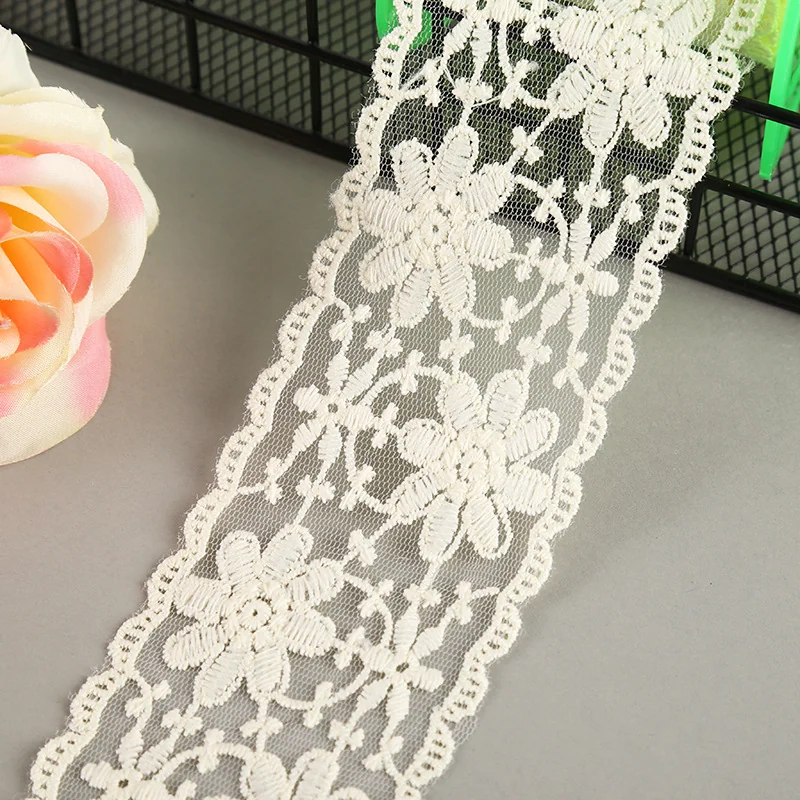
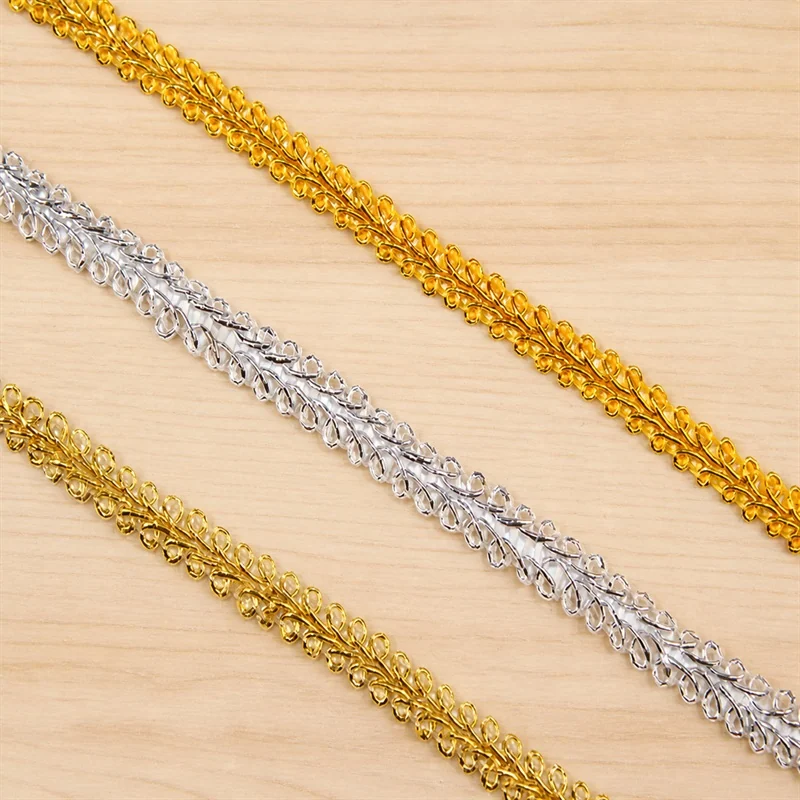
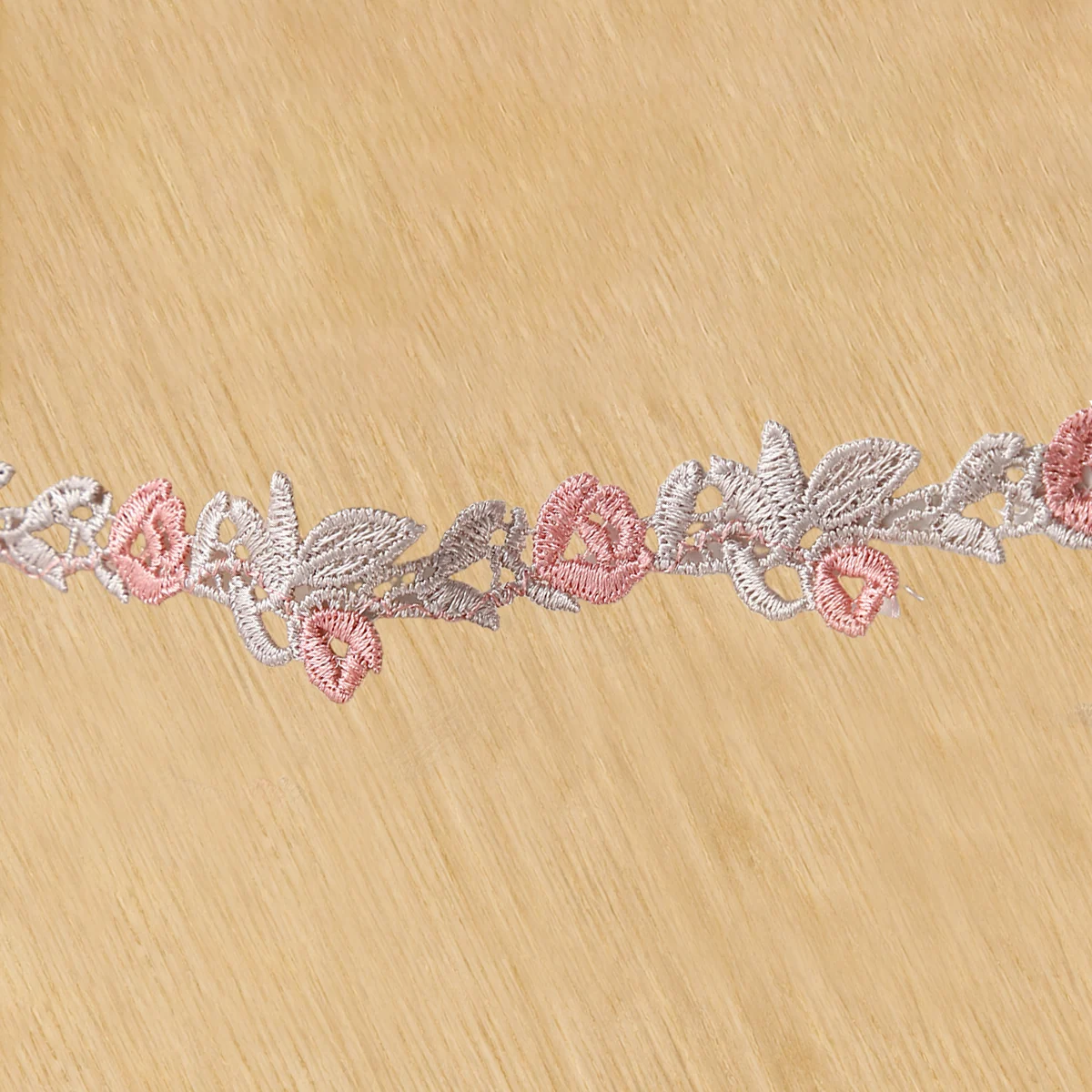
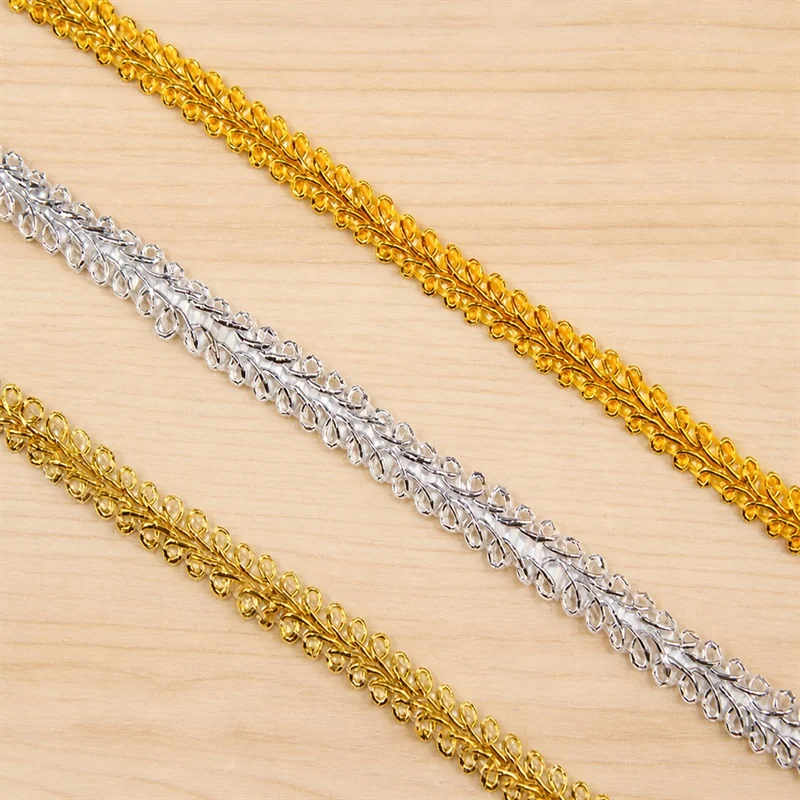
The ivory floral reference helps show an open floral outline; the pastel reference shows a softer multicolour effect. Our gold-and-silver leaf braid photograph offers a different, narrower-looking visual structure. Compare their actual samples separately. The photograph cannot establish equal width, fibre composition, metallic content, colourfastness or selling price.
Request a representative continuous length, not only a tiny motif, when customers will buy by the metre. Inspect the edge, repeat, cut ends and likely join. Keep a labelled retained sample for each candidate and record what remains unknown. If a required specification is missing from the product page, ask for confirmation instead of filling the gap from another reference.
4. Resolve MOQ before committing the trial budget
Ask whether the offer concerns an existing available lot, an ordinary production order or a new colour development. These routes may have different minimums and preparation costs. Confirm the quantity actually available, how long a quotation remains valid and whether reserving material requires a separate agreement. A catalogue colour card does not reserve stock.
If one colour minimum exceeds your trial budget, ask about a paid sample length, fewer references or an alternative that can actually be supplied. Confirm any revised terms in writing. Do not increase the assortment merely to reach a total, or advertise a “small MOQ” to your own customers before the exact style-and-colour conditions have been accepted.
5. Compare cost per usable selling length
Separate merchandise, samples, development, packing and freight in the quote. Record metres or yards explicitly and keep the conversion consistent. Then compare what your customers can use: a long roll with many unusable joins may yield fewer saleable cuts than its gross length suggests. Only count loss measured or agreed for the actual reference.
An illustrative comparison: if a 100 m roll contains only 90 m suitable for the planned cuts, divide its relevant cost by 90, not 100. This is not a claimed yield for our products. Inspect a real roll and define which joins, colour changes or short pieces are unacceptable before using the calculation to select a supplier.
6. Receive the trial with labels that survive resale
Assign an internal stock code to each style and colour, then keep the supplier reference and lot identification alongside it. Record received length, measured width, visible defects and the retained sample. If a roll is split for resale, transfer the identity to each smaller package rather than leaving the only label on an empty original core.
Use approval terms that match how the trim will be sold. Customers buying matched cuff pairs may reject a join in a place that is harmless for a craft offcut. Agree the inspection and complaint record with your supplier before distribution, including photographs, length affected and lot identity; a general request for “good quality” is too vague to resolve a later dispute.
7. Turn trial results into a precise reorder
Track requests, sold length, repeat enquiries and returns by reference, colour and use. Note reasons: attractive motif but too wide, acceptable price but insufficient continuous length, or a shade that needs a different base. Compare styles over a comparable selling period and availability. A photo receiving attention is not the same signal as a paid repeat purchase.
For a reorder, send the original supplier reference, approved sample revision, last lot label, new quantity by colour and the required delivery window. Ask whether materials, finish, repeat, price or minimum conditions have changed. Approve a new comparison sample when a relevant input changes; the same product name does not prove the same shade or batch behaviour.
8. Use this trial-order quotation checklist
Send the grid with your selected references rather than asking only for the cheapest price. A useful reply should identify confirmed information, alternatives and unresolved points. Keep the first order narrow enough that you can explain why you will reorder, revise or stop each line after the trial.
| Question | Required written answer |
|---|---|
| Can styles or colours be mixed? | List exactly which quantities can be combined; state per-style/per-colour minimums |
| What does the sample include? | Reference, colour, continuous length, charges and what still needs approval |
| What is deliverable? | Current availability or production route, packing, unit, schedule and destination terms |
| How will reorders match? | Retained sample, lot identity, change notification and renewed approval conditions |
Discuss your embroidery project
Send All4Lace a line-by-line trial assortment with your customer use, selected references, quantities by colour and destination. Ask us to identify current sample options, any mixable lines and the exact minimum conditions before you commit the buying budget.
Contact Zhijin