Materials & Applications
Beaded Neckline Appliqués: Shape, Opening and Placement
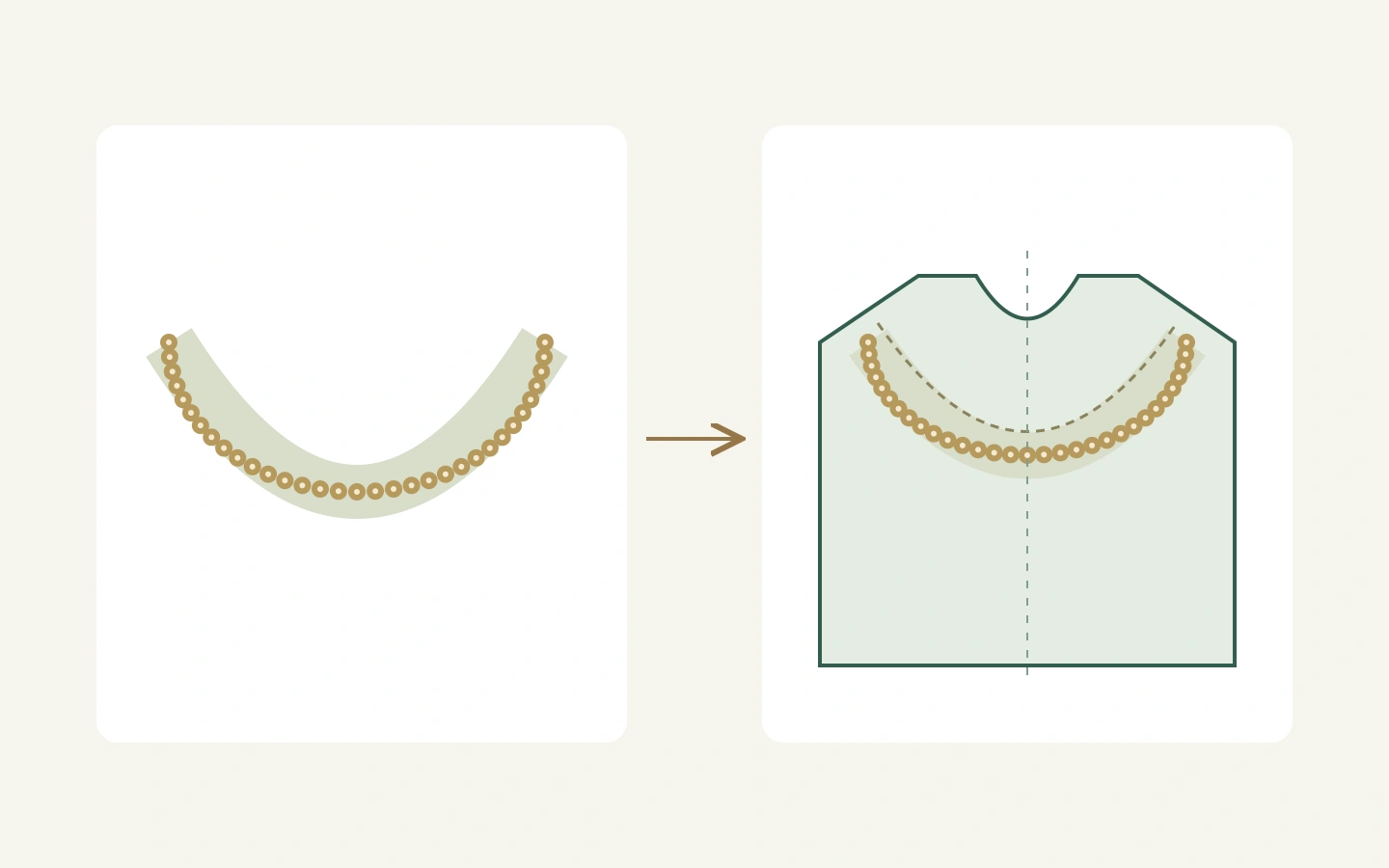
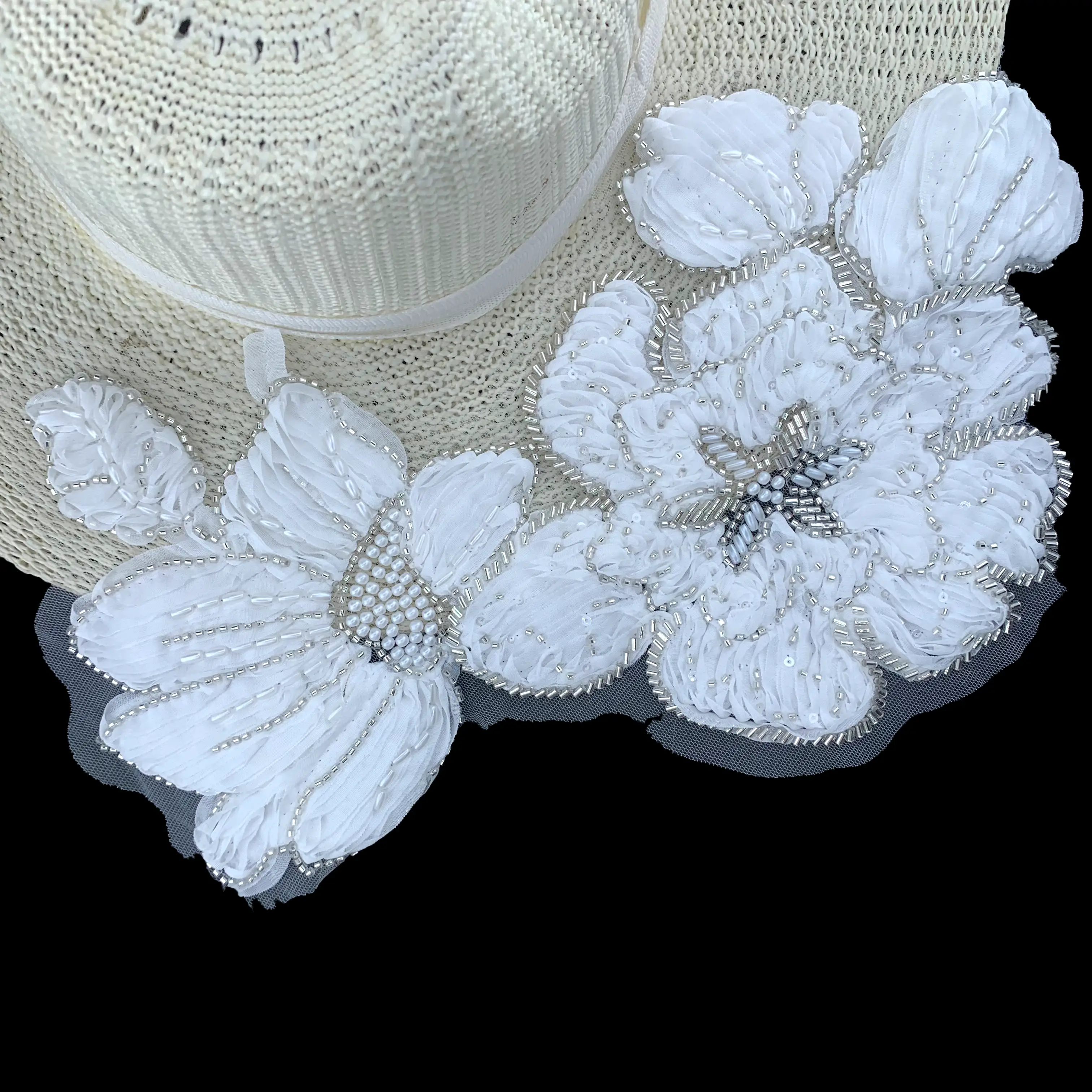
A beaded neckline appliqué is a separate decorative piece positioned around or near a garment neckline. It may be curved, V-shaped, divided into two motifs or built from several smaller elements. The flower or beadwork defines an ornament; the garment pattern defines an opening. A successful selection considers both shapes together instead of choosing from the front photograph alone.
What makes it an appliqué?
Appliqué broadly involves applying one material to another. A neckline appliqué is supplied as a separate component to be positioned and attached, rather than being a decoration already stitched directly onto that exact garment panel. It may contain embroidery, beads, sequins, cord or several of these together. The name does not establish that the component is entirely handmade or that the beads are glass.
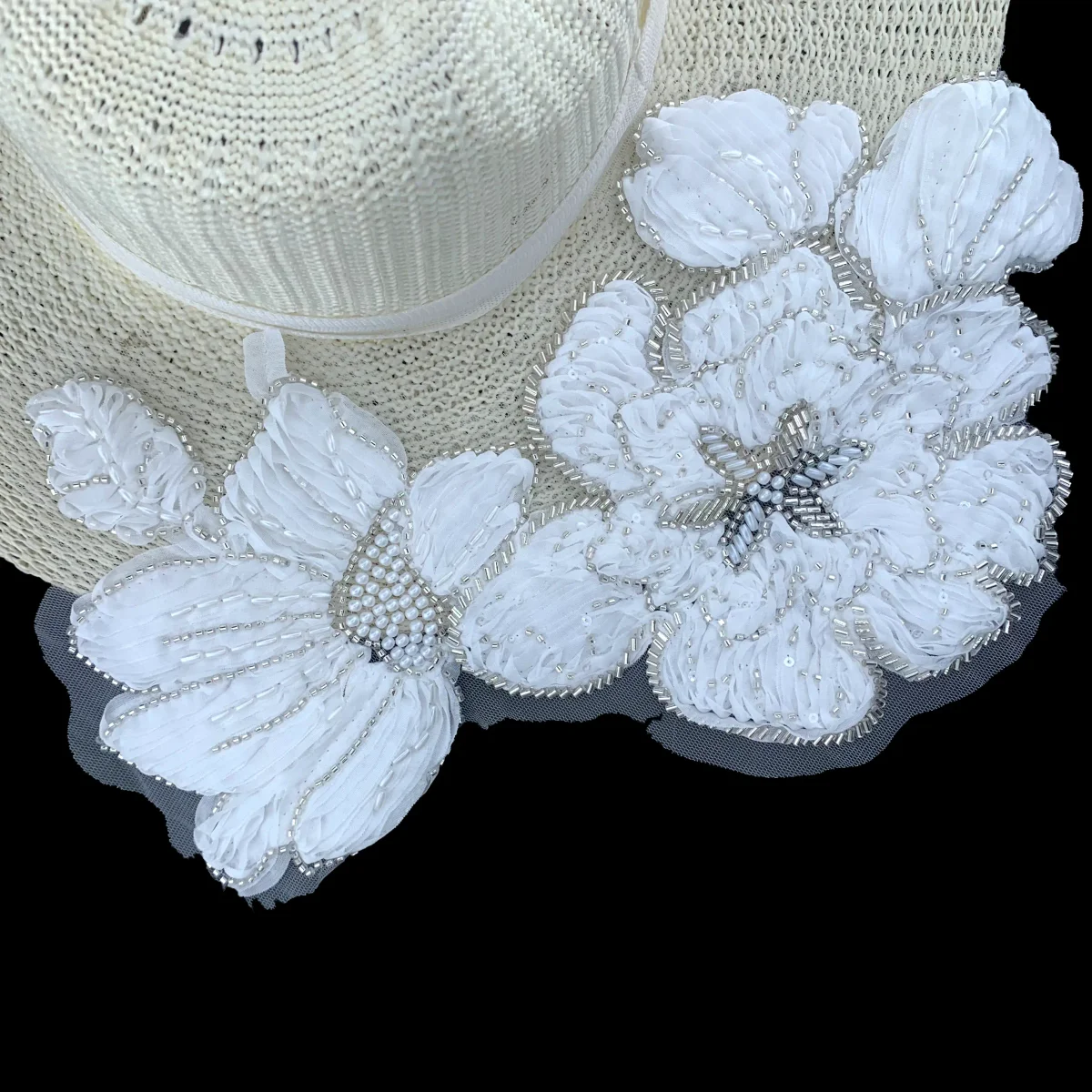
A single floral motif can be part of a neckline arrangement without being a pre-shaped neckline piece. A continuous beaded trim can also decorate an opening, but it presents a different fitting problem from an outline developed for one placement. Start by identifying which component is actually offered.
Technical references
Compare the motif outline with the garment opening
Lay a full-size outline of the component over the intended neckline pattern. Keep centre front, shoulder direction and the lowest decorative point visible. The flower tips may extend beyond the opening, lie on top of the bodice or frame a sheer insert. Those are different placements even when the appliqué has the same outside dimensions.
The largest width and height alone do not describe the inner curve. Two pieces can share those overall dimensions yet leave different space at the neck. For a shaped reference, a tracing or a clearly marked outline is more informative than asking for a standard neckline size.
Five different things a size note can mean
Keep the decorative component and the garment measurements on separate notes. This prevents an outer flower tip being mistaken for the neck opening, and helps both teams discuss the same revision. The following are measurement roles, not a universal size chart.
| Measurement or mark | What it describes | Useful reference |
|---|---|---|
| Overall motif size | The component’s furthest outer points | Full outline |
| Inner decorative curve | The outline facing the neck | Tracing of the inner contour |
| Garment opening | The opening in the garment pattern | Actual pattern with centre marks |
| Placement depth | How far the decoration sits below a reference point | Centre-front mark |
| Attachment area | Where the component will be secured | Marked sewing or joining area |
Plan pairs and closures before approving the layout
A symmetrical-looking photograph may show one connected component, two mirrored pieces or two similar pieces placed together. Confirm the supplied arrangement. For a front opening, decide whether decoration stops on either side, overlaps or bridges the opening. A continuous ornament should not be assumed suitable across a working closure without checking the assembly.
Where decoration crosses a shoulder, compare front and back placement together. Where it sits only on the front, mark that limit. If one side is revised during sampling, review the paired arrangement again rather than treating each part as an unrelated motif.
The reverse and attachment belong in the fitting review
Beadwork can create raised contact points, and the reverse may contain stitching or other retained materials. Assess the chosen piece with the intended garment layer or lining. A soft-looking face does not establish how its reverse will feel at the neck, and a lightweight ground does not by itself establish the weight of the decorated component.
A fitted trial should show the intended attachment, not only pins holding the piece for a photograph. Review the decoration near seam paths, openings and other parts that move in wear. Any comfort, attachment or care requirement belongs to the actual assembled sample; this guide provides no universal stitch, adhesive or care setting.
Questions about neckline appliqués
Can an appliqué be made smaller without changing its look? An outline change can affect motif spacing and decoration, so use the dedicated resizing guide. Does a pearl-like bead mean a natural pearl? No; ask for the actual material. Will a flat neckline photograph establish garment fit? No; use the intended pattern and assembled trial. Is a separate motif automatically ready to iron on? No; attachment must be stated for that product.
Discuss your embroidery project
Send All4Lace the neckline pattern or a full-size outline, the intended centre position and whether you need one connected piece or a pair. Include the garment fabric so the discussion covers the component and its placement together.
Contact Zhijin