Materials & Applications
Geometric vs Floral Embroidery: Choose a Pattern for the Garment Panel
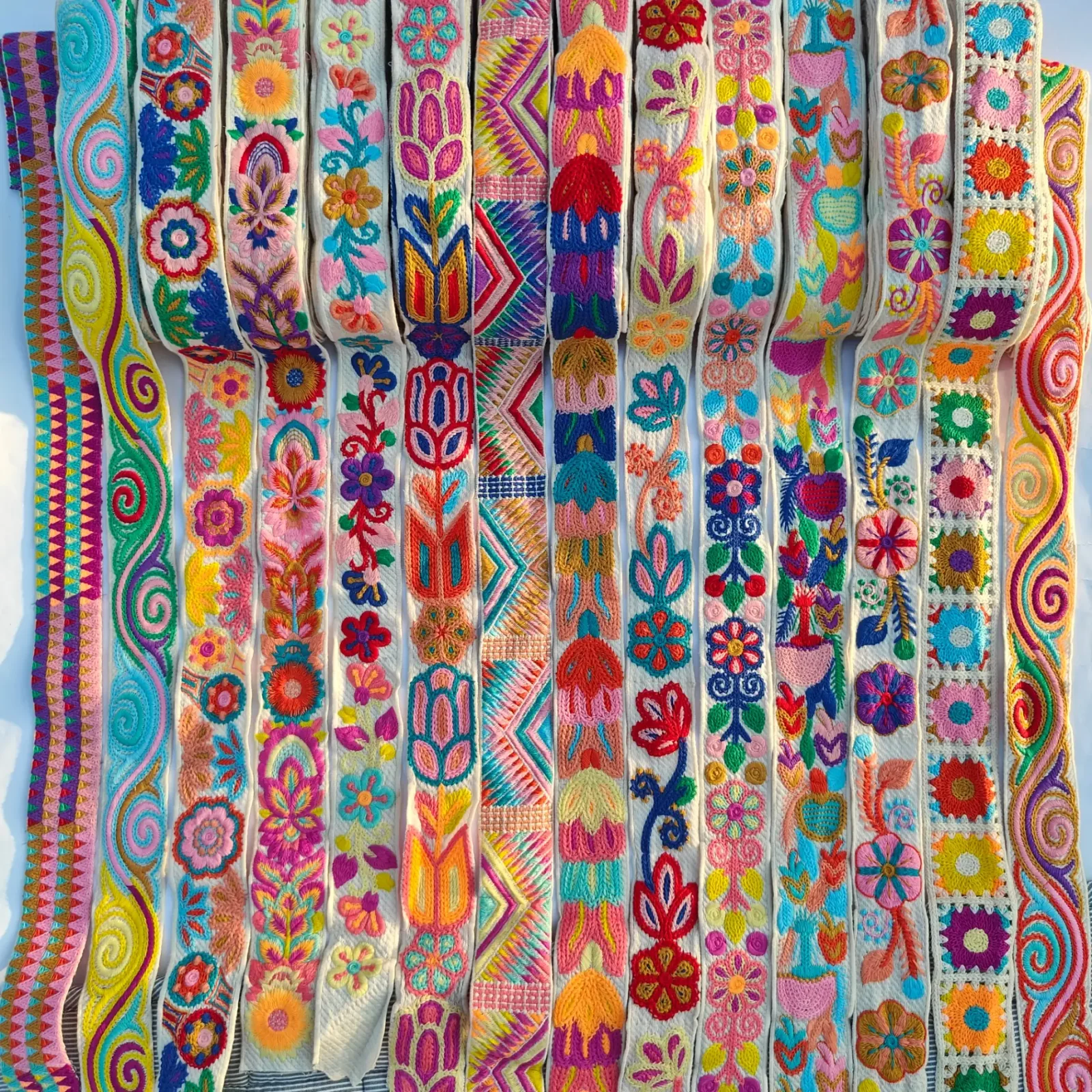
Geometric embroidery uses shapes and relationships such as diamonds, grids and zigzags; floral embroidery uses flowers, leaves and stems. Neither name determines the stitching method, material or garment performance. Choose between them by deciding what the design should do on a particular garment panel: define an edge, create a steady rhythm, draw attention to one area or fill a surface. A small isolated motif is rarely enough to make that decision.
Compare the design language, not a supposed quality level
A geometric reference may be strict and regular or loose and hand-drawn in appearance. A floral reference may show recognisable plants or highly simplified petals. Avoid briefs that equate geometric with modern and floral with traditional: those words do not specify the requested drawing. Name the actual elements, such as stepped diamonds, rounded rosettes, branching stems or a flower inside a grid.
The V&A embroidery guide describes both geometric and floral designs within embroidery traditions, helping separate motif subject from technique. In a design brief, use two fields: one for the drawing language and one for the proposed construction. For a flower inside a diamond grid, specify whether the flower or the surrounding angles should dominate the finished panel.
Technical references
Use the same visual questions for both
Compare references at a similar displayed scale, on the intended background colour and with comparable visible areas. Otherwise a large close-up of one design may appear more prominent simply because it is shown differently. The table sets discussion points, not universal rules about either motif family.
| Question | Geometric reference | Floral reference |
|---|---|---|
| What creates rhythm? | Shape spacing, angles and grid relationships | Flower spacing, stem paths and leaf groups |
| Where is the focal point? | A dominant shape, intersection or band | A main bloom, cluster or branching point |
| What happens at a panel edge? | A line or shape may be interrupted | A stem or flower may be interrupted |
| What must the brief identify? | Shape, scale, direction and spacing | Flower form, scale, direction and spacing |
Check direction before selecting the drawing
Both families can be directional. A row of upright tulips has a clear top, but so can a sequence of arrows or stepped triangles. Conversely, scattered flowers or repeated circles may have no preferred top in the approved drawing. Turn the reference through the orientations that the garment team intends to use and mark those that are acceptable.
Then view more than one repeated unit. A pleasing individual flower may create an unwanted stripe when its stems align; a diamond may form a strong diagonal across the panel. These are design observations to make on the actual reference, not inherent faults. Record whether the visible rhythm is wanted before requesting a new motif or changing its size.
Three garment positions change the decision
For a straight front band, compare how a geometric sequence or a chain of flowers leads the eye along the opening. For a shaped sleeve panel, place the actual outline over each reference and inspect the elbow and cuff areas. For a broad skirt panel, step back and compare the overall rhythm as well as the individual detail. The same drawing can read differently in these three positions.
As a worked design example, imagine a blouse with a calm body and an accent cuff. A buyer might choose spaced diamonds for a regular cuff rhythm or small linked flowers for a continuous stem line. Neither choice establishes softness or suitability for sewing. Keep the proposed ground, thread and garment construction unchanged while comparing the drawings, then evaluate the chosen material sample.
Approve a drawing set that the team can reproduce
Keep a full design view, a close-up and a garment placement view together. Identify the chosen motif, its intended visual scale, the accepted orientations, background colour and areas where the drawing must remain recognisable. If a flower-grid combination is preferred, mark which element should dominate rather than asking vaguely for a mix of the two.
Record the comparison decision in plain language: retain the branching stems but reduce their visual prominence, or retain the angular rhythm without adding extra shapes. This is clearer than asking for more elegant embroidery. A revised sample should be reviewed against that recorded aim. Detailed usable-width calculations and production cutting plans belong to their own specifications after the design direction has been selected.
Discuss your embroidery project
Send All4Lace the geometric or floral references you prefer, a garment-panel outline, the desired direction and visual scale, plus quantity and colour requirements, so we can discuss a clearly defined sample target.
Contact Zhijin