Sourcing & Orders
Metres, Yards or Pieces: Write Lace Fabric Quantities Clearly
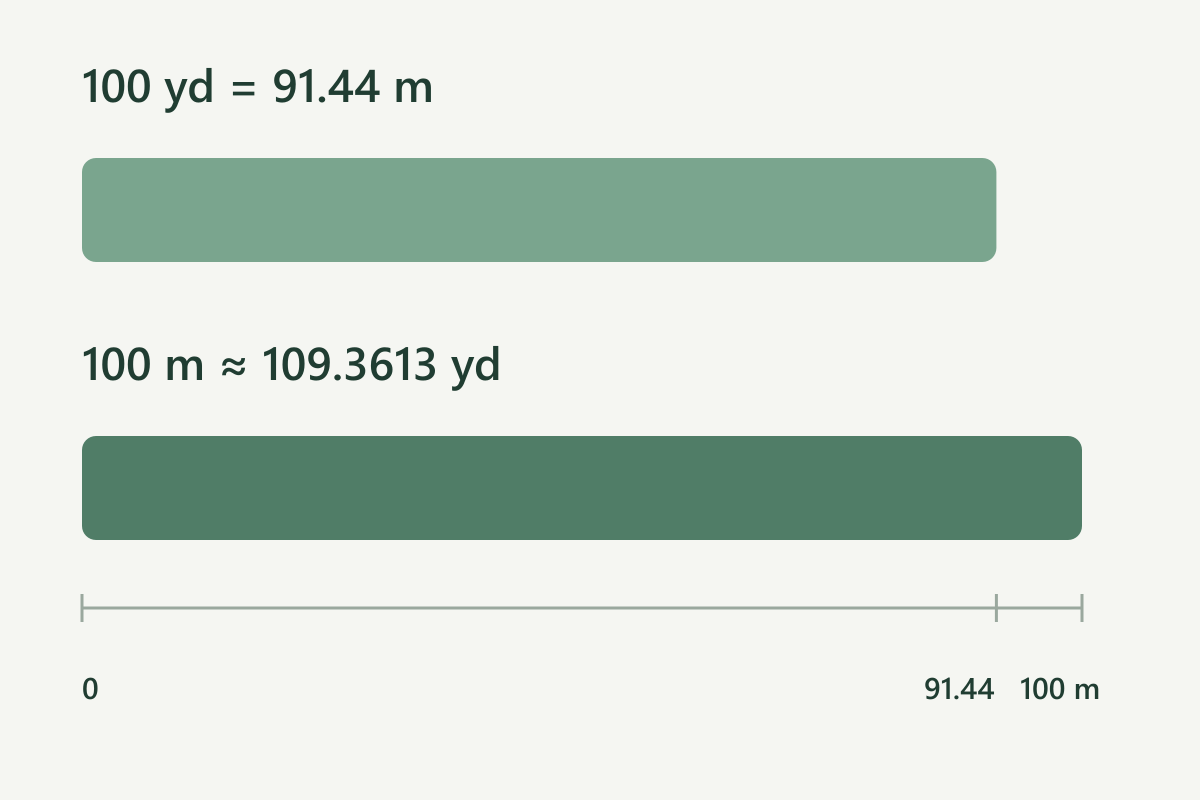
For continuous lace, metres and yards normally describe length along the roll. Pieces count separate items, while pairs and sets need a stated composition. Convert the length first, then compare the same width and product form. A unit label without these details can leave two people discussing different quantities.
Use the international yard conversion
One international yard equals exactly 0.9144 metre, as documented by NIST. Multiply yards by 0.9144 to obtain metres; divide metres by 0.9144 to obtain yards. Keep the unrounded value during calculation and agree how the final ordered or invoiced quantity will be rounded.
For example, 100 yards is 91.44 metres. By contrast, 100 metres is approximately 109.3613 yards. The difference matters when a requirement is copied between a cutting sheet and a purchase order. Write both the number and the unit in each document instead of relying on a previous message to supply the meaning.
| Starting quantity | Converted quantity | Meaning |
|---|---|---|
| 1 yd | 0.9144 m exactly | Linear length |
| 100 yd | 91.44 m | Linear length |
| 100 m | About 109.3613 yd | Round only as agreed |
| 1 m² | An area, not 1 m of fabric | Width is also needed |
Technical references
A length does not describe the amount of usable surface
Ten metres at an agreed rectangular width of 1.40 metres represents 14 square metres. Ten metres at 1.10 metres represents 11 square metres. These figures are arithmetic illustrations, not catalogue specifications. They explain why equal ordered lengths can provide different amounts of surface.
For embroidered cloth, ask which width is being quoted: total ground width, decorated span or agreed usable width. The rectangular area still does not establish how many garment panels can be cut. That requires the actual outline, orientation and any matching constraints. Use the existing cutting plan to make that next decision.
Check whether the product is a continuous trim or a separate item
A continuous narrow lace trim may be sold by length, even if photographs show individual flowers. A neckline applique or collar can instead be counted as a separate item. Do not change the unit merely because the decoration looks similar. Ask how the material will physically arrive and where one sellable unit begins and ends.
“A piece” may also mean a packaged roll in a supplier’s everyday language. That does not establish its length. Replace informal shorthand with a description such as “continuous trim, measured by metre” or “individual collar, counted by item”. Include any fixed pack quantity only after the supplier has confirmed it.
Spell out pairs, sets and colour splits
For a mirrored left and right component, define whether the order is for individual pieces or complete pairs. An illustrative requirement of 200 pairs would require 200 left and 200 right components if each pair consists of exactly those two items. This is a counting example, not a minimum order quantity.
A set may contain different parts, sizes or colours, so describe its contents rather than assuming everyone uses the same definition. Allocate the total to each agreed variant and check that the subtotals add up. A total of 400 pieces without a left/right breakdown is not equivalent to a confirmed order for 200 matched pairs.
Use the same unit from inquiry to receipt
A useful order line names the product reference, supply form, quantity, written unit and relevant width or set contents. For example: “Design A, continuous trim, 30 metres, finished width to the approved specification.” This is a wording example only; the reference and quantity do not identify a real order.
Check the quotation, purchase order, packing list and receiving record for the same basis. If one system requires another unit, preserve the conversion and rounding note beside it. Resolve any difference before dispatch, especially when a roll count is being used as a shortcut for a measured length.
- State metre, international yard, individual item, pair or defined set.
- Write the quoted width and what that width includes.
- Retain the conversion and rounding basis.
- Allocate colours, sizes and left/right counts explicitly.
- Reconcile the same unit on the order and packing record.
Discuss your embroidery project
Send All4Lace your product form, required quantity and preferred unit so the quotation can identify the same measurement basis as your purchase order.
Contact Zhijin