Materials & Applications
Ruffled Lace vs Flat Trim: Supply Shape, Length and Assembly Volume
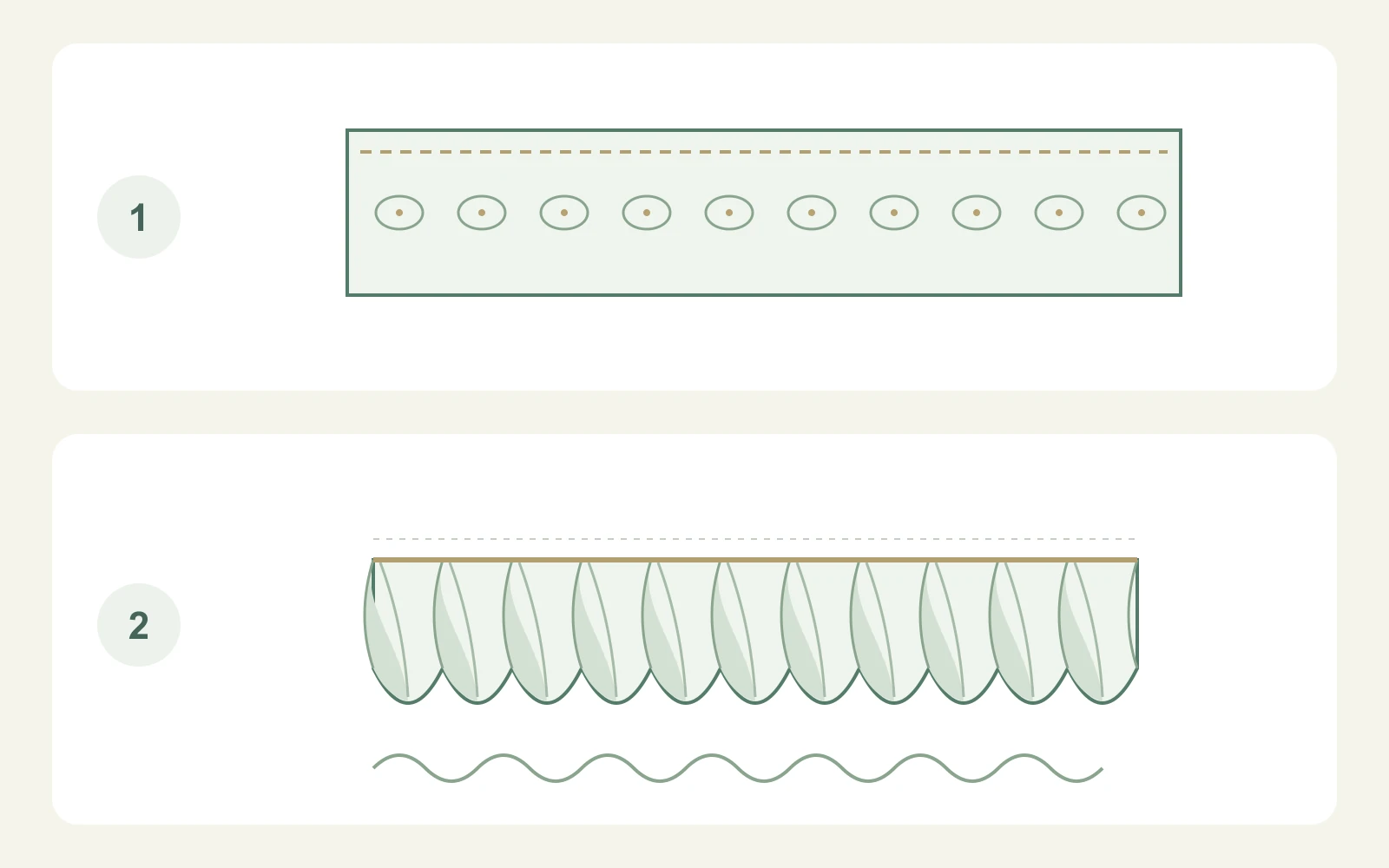
For purchasing, compare lace delivered with a formed ruffle against lace delivered flat. The first already presents folds or waves; the second still has its flat supplied shape. Decide which condition the garment team needs, then define length along the attachment and the desired visible volume. Similar motifs and quoted widths do not make the two offers equivalent. A useful brief describes what arrives and how it should look after assembly.
Confirm whether the ruffle is already formed
Folkwear’s own explanation distinguishes flat edging from edging supplied with gathers. Begin by asking for an unaltered view of the delivered trim. Identify any attachment band, formed folds and free decorative edge. Record whether the supplier is quoting that formed product or an unformed lace intended for later work.
Allocate the forming step explicitly. The request might call for a finished ruffled trim, or for flat trim whose later preparation is handled by the garment team. Keep that choice in the order description so both sides are approving the same supplied condition.
Technical references
Use separate fields for attachment length and material length
Finished attachment length is the span available along the line that will join the garment, in the agreed measurement state. Material length before forming is a different field, useful only when that production input is relevant and documented. For a formed sample, request the supplier’s record rather than opening or stretching it to guess the original length. Identify any elastic component and the relaxed or loaded state used for measurement.
Compare the same garment task
Compare the alternatives against one marked garment line. Keep supplied width, visible depth and stand-away profile separate. A ruffle can occupy space beyond its attachment line; the amount should be reviewed on the actual sample rather than assigned from the product name.
| Question | Formed ruffled trim | Flat trim |
|---|---|---|
| What arrives? | A specified formed profile | A specified flat strip |
| Which length is ordered? | State the attachment-length basis and measurement state | State the supplied strip length and later processing scope |
| What should be seen? | Exposed depth and side profile | Exposed area in the planned placement |
| What is approved? | Supply sample plus assembled volume | Supply sample plus intended assembly |
Example: two alternatives for one blouse cuff
Imagine a blouse cuff with a defined attachment path. Place a flat trim candidate and a preformed ruffle candidate on separate trial cuffs using that same path. Mark the intended exposed depth on each and inspect how the free edges sit when the cuff is closed. View the side profile as well as the front.
The design may prefer a restrained edge or a visible wave. Check whether the formed trim overlaps the cuff opening, covers a button area or adds unwanted material at the join. For the flat candidate, evaluate its supplied appearance unless the brief separately calls for a later forming stage. These trials compare final placement and volume, not a method for making gathers.
Review the supplied condition before reshaping it
Keep a sample in its delivered condition and record whether it arrived on a roll, card or folded pack. Compare a second section in the approved assembly. If packing has compressed the folds, agree the presentation condition for the review before judging a replacement. Any care evaluation should cover the selected trim with its attachment band and garment fabric, using the intended care conditions.
Specify the accepted volume and responsibility
The confirmation sheet should name the supplied shape, attachment length basis, visible depth, accepted profile and end-join appearance. State who is responsible for any later forming. Ask for quotes against that same sheet; price per length cannot resolve an unspecified length basis or unfinished stage. Preserve the approved assembly beside the supply sample so a reorder has both references.
- Identify flat or already formed supply.
- Separate attachment length from any documented input length.
- Mark exposed depth and check the side profile.
- Record forming responsibility and approve the end join.
Discuss your embroidery project
Send All4Lace your trim reference and garment attachment line, stating whether the supply should be flat or already formed, so we can discuss a sample with a clear length and volume target.
Contact Zhijin