Materials & Applications
Transparent, Iridescent and Metallic Sequins: Reading the Finish
Transparent describes seeing through a piece; iridescent describes a shifting colour effect; metallic describes a metal-like appearance. These terms answer different questions and can overlap. A transparent sequin may also be iridescent, and a metallic-looking one is not necessarily made of solid metal. A useful finish reference identifies the appearance you want before moving on to material, dimensions and attachment.
Transparency, surface and colour are different axes
A finish name is not a complete component specification. Sequins USA separates transparent, metallic, matte and several iridescent effects in its own finish descriptions, including combinations. This illustrates why one label cannot describe every visual property. Its commercial names do not establish a treatment, material or performance result for an All4Lace product.
Record a colour name separately from the effect. Silver can describe a metallic-looking surface, but a pale or clear piece can also produce a silvery highlight in one photograph. Likewise, white may describe the ground, the body colour of the piece or the overall impression. Identify the component you mean instead of treating the photograph’s brightest area as its base colour.
Technical references
Describe the visual effect without treating labels as exclusive
Use the distinctions below as observation prompts, then identify the actual reference offered. They are not a list of mutually exclusive grades or a guarantee that a finish will look identical under every light.
| Term | What to observe | What remains separate |
|---|---|---|
| Transparent | How the colour behind the piece remains visible | Body tint and any added effect |
| Iridescent | How visible hues shift as the reference turns | Transparency and actual material |
| Metallic effect | The metal-like reflective appearance | Whether the component is metal or another material |
| Matte effect | The character of the less glossy surface | Colour, transparency and other effects |
View the finish on the intended ground
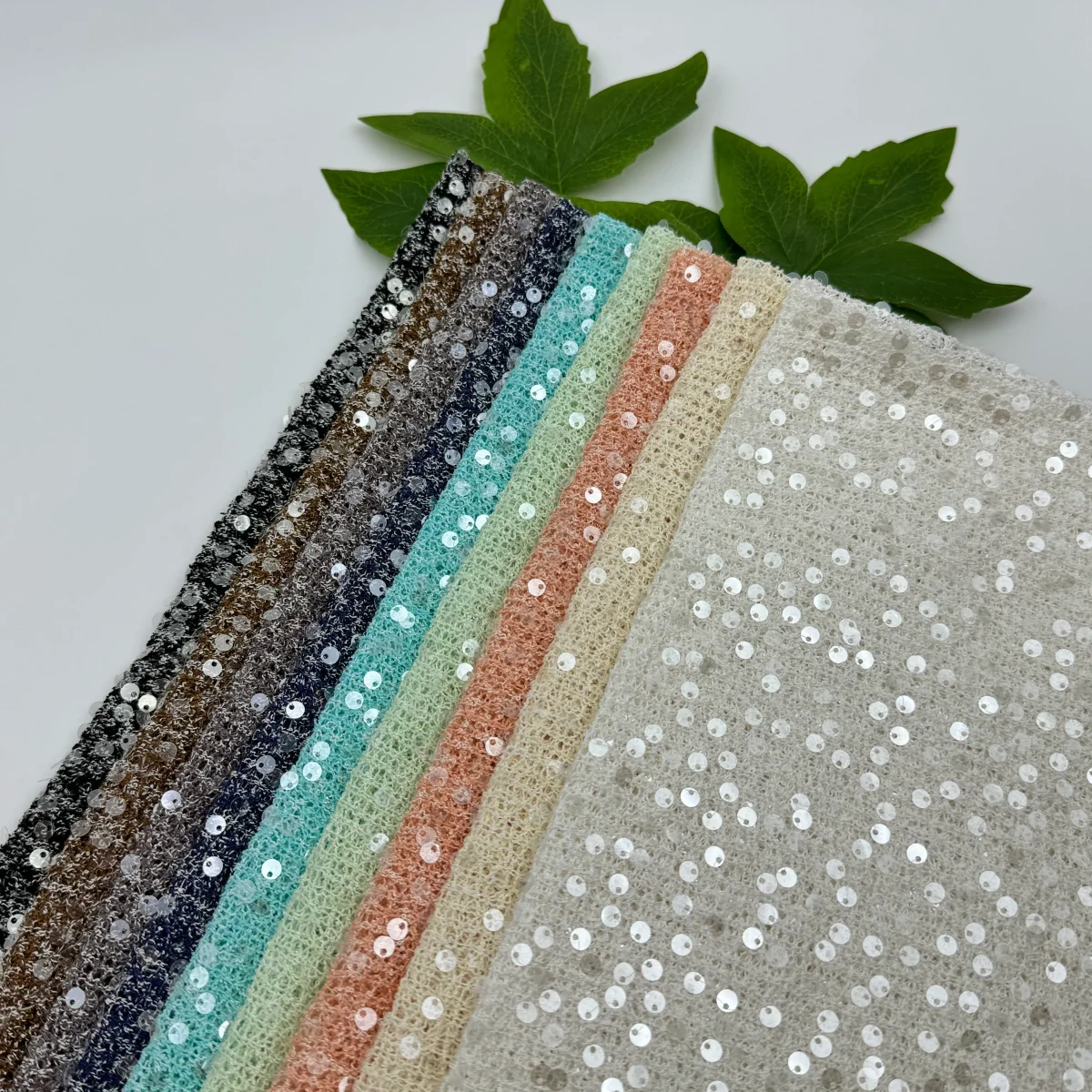
A transparent piece allows the material behind it to contribute to the visible colour. Compare it on the selected ground and lining rather than against the supplier’s display background alone. For an embroidered material, thread and other decoration also enter the picture. An attractive loose sequin is only one component of the final surface.
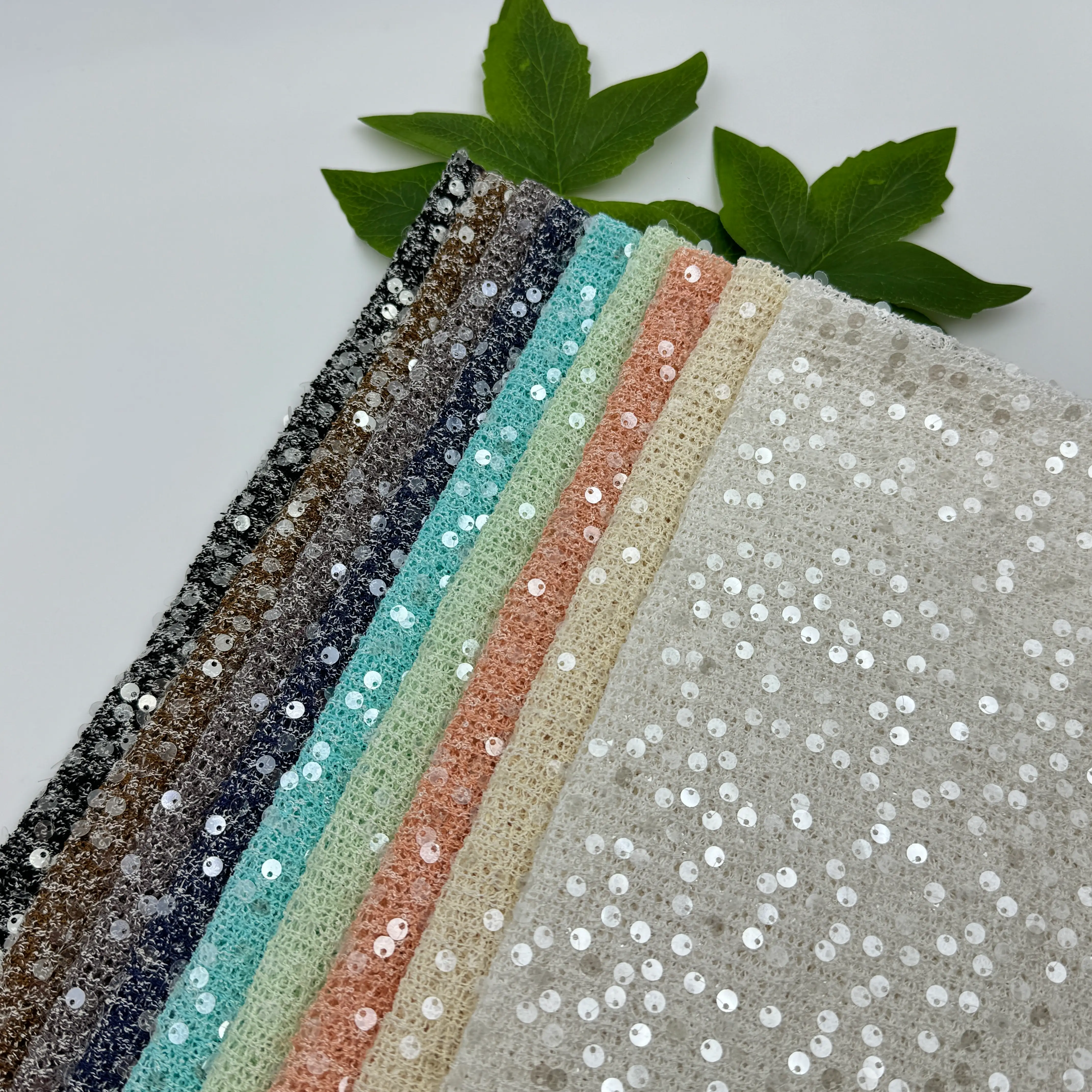
The clear-sequin mesh photograph here is an appearance reference, not a complete finish chart. It shows why ground colour belongs in the discussion, but a still image cannot establish the finish’s full response to turning or changing light. Keep the physical reference identifiable when deciding between alternatives.
Use a small repeatable viewing sequence
First compare both candidates flat under the same light and on the same background. Then turn them together and view them from a little farther away. Finally, place them where the garment will use them. This separates the close appearance of each piece from the combined appearance across a panel. Note which part of the sequence led to the preference.
If video is useful, keep the light, camera exposure and movement comparable between candidates. A moving clip can supplement the sample, but automatic exposure or a change of background can alter the apparent intensity. Do not promise that a selected finish will reproduce one promotional video under every event or studio light.
Approve the finish as one component of the fabric
After selecting the appearance, record the component reference, nominal size, shape, intended face and combination with the ground. State which changes are allowed. Replacing a finish, even with the same colour name, can alter the appearance of a motif. A reference code and an approved physical sample make that difference easier to discuss.
A finish name does not establish wash resistance, heat tolerance, attachment strength or the care of the garment. Those questions concern the actual component and finished assembly. Use the dedicated care-evaluation guide if a product brief includes those requirements, rather than assigning a universal care rule to all transparent or metallic-looking pieces.
Questions about sequin finishes
Is iridescent another word for reversible? No; a shifting visual effect and a design intended to flip between two faces are different ideas. Is every clear sequin colourless? Check the actual tint and added effects. Does metallic mean solid metal? Not necessarily; request the actual material. Can the same named colour look different on another ground? Compare the selected combination rather than relying on the name alone.
Discuss your embroidery project
Send All4Lace a physical finish reference if available, or a clear image plus a short clip under stated lighting. Identify the ground colour and which visual effect must be retained so we can discuss an appropriate sample.
Contact Zhijin