Materials & Applications
What Is Cord Embroidery? Raised Lines, Curves and Garment Details
Cord embroidery uses a separate cord or similar linear material arranged on a surface and secured with stitches. The cord contributes its own thickness, texture and outline; the attachment stitches hold that line in place. This makes the technique different from a raised-looking line formed only by embroidery thread. If you are sourcing the effect from a photograph, identify the surface material before discussing colour or price.
Two elements make the visible line
In the basic couching principle described by the Royal School of Needlework, a second thread anchors a thread or group of threads laid on the fabric surface. Industrial cording equipment also secures separate linear materials. These references explain a general principle; they do not identify the equipment or precise stitch programme used for an All4Lace item.
Look for the surface line and the small stitches holding it. Their colours may blend together or create a deliberate contrast. A dark attachment thread over a light cord can alter the visible rhythm of the line, even when the cord itself is unchanged. Include both materials in the colour reference.
How to describe a cord-like effect from a photo
Begin with the outline and surface texture. Does the line appear round, flat, twisted or wrapped? Where it changes direction, can you see a separate material following the curve? These observations help describe the target effect, but an image may not resolve whether the material is cord, tape, a built-up stitch or a mixture. Ask for a physical reference when that difference affects the design.
Avoid using corded lace as a complete technical specification. It can be a useful appearance term, while the actual ground and production method remain separate questions. Likewise, a crochet-like surface does not establish that the work was made by hand with a crochet hook.
Curves and joins deserve their own close-up
A straight length does not show how a cord behaves at a tight turn or where one line meets another. Examine an inside curve, an outside curve, a crossing and a visible start or end. These are useful places to discuss the intended outline, how the material sits and where a join should appear. Use the actual motif scale rather than a greatly enlarged decorative image.
Changing the scale can change those relationships. A wide surface material arranged in a broad curve may not produce the same outline when the motif is reduced. Where a design needs resizing, review the cord width, available spacing and overall contour together. The resizing guide covers the wider design-development questions.
Cord can share a design with other decoration
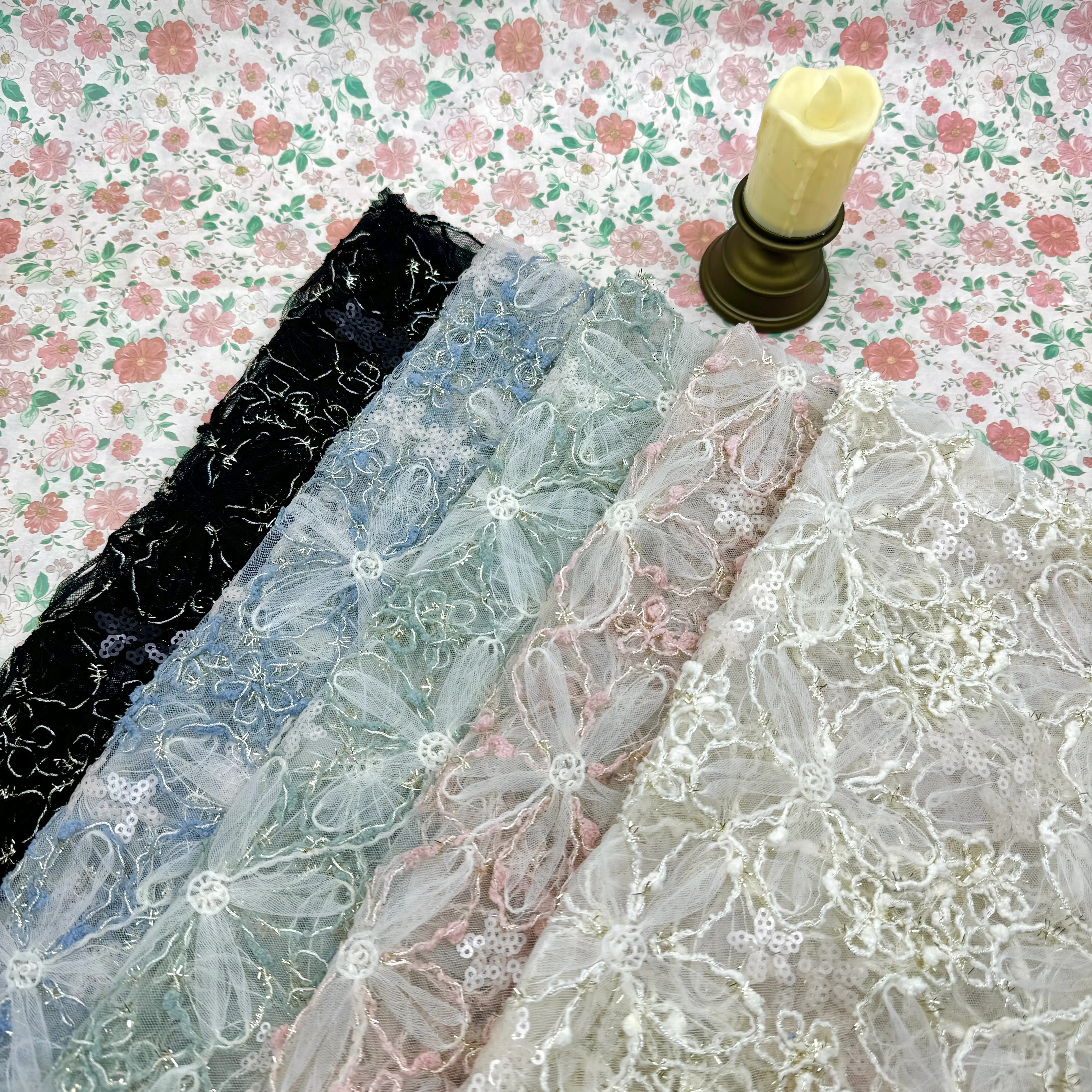
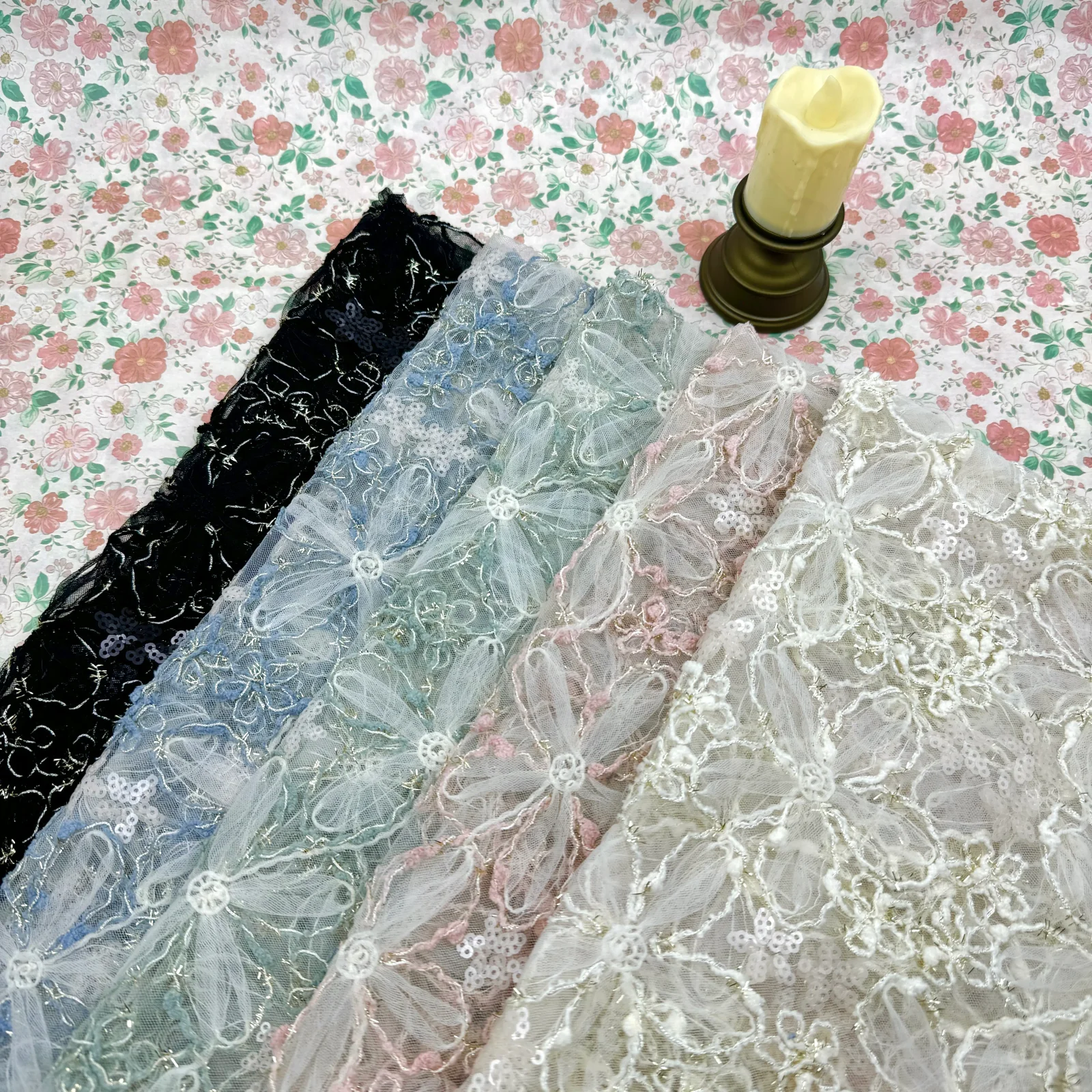
The mixed All4Lace reference shown here combines line-shaped decoration and sequins on a visible net. This is useful when the design calls for both an outline and reflected light. The elements should still be described separately so a revision to the sequins is not mistaken for a revision to the cord.
For a new reference, mark which elements must remain and which are optional. A clear development note might say that the curved outline should remain, while the sequin finish is open to alternatives. That gives the supplier room to propose a suitable sample without changing the part of the design that matters most.
Plan the line around seams and garment edges
On a cuff or hem, check whether the decorated line approaches the attachment edge and whether the trim can follow the intended garment shape. On a larger panel, lay the pattern over the design and look at places where cutting crosses the cord. Discuss how those cut ends and joins will be finished with the garment team.
A whole trim, a panel cut from fabric and a shaped motif create different edge conditions. Select the supply format before settling the finish. The reverse and an assembled sample can then answer practical questions that a surface close-up cannot.
Questions about cord embroidery
Is cord embroidery the same as tape embroidery? Both can secure separate surface materials, but cord and tape differ in shape and handling; use the dedicated comparison for choosing between them. Is every raised line cord? No. Can a photo confirm the cord fibre? No. Can the attachment thread be made less visible? Discuss the proposed thread, colour and construction on a sample rather than assuming it disappears.
Discuss your embroidery project
Send All4Lace a close view of the line and a whole-motif view. Indicate the garment position, desired contour and any areas where joins or cut ends must be avoided, so we can discuss a clear cording reference.
Contact Zhijin