Customization & Sampling
Lace Trim for Abaya Cuffs: A Practical Sample Approval Guide
A cuff trim can look right on a sample card and still pull a soft Abaya sleeve out of shape. Start with the finished sleeve: where the decoration sits, how the hand passes through the opening and what touches the wrist. This guide uses our actual floral lace photographs to build a sampling brief for a garment factory. The photographs help select candidates; a sewn pair of cuffs determines whether a candidate belongs in your collection.
1. Define the cuff before choosing the lace
Send a sleeve drawing with the decoration line marked. An overlay above the hem, a free scalloped edge and an inserted lace panel need different attachment space. State whether the cuff is open, closed, gathered or adjustable. Include the actual shell fabric and lining rather than asking a supplier to infer them from a fashion photograph.
Make the opening decision before ordering metres. A non-stretch decorative band around a closed cuff must accommodate the intended opening or fastening. Review movement on the garment size you are developing; a flat sleeve swatch cannot demonstrate that a wearer can pass a hand comfortably through the finished cuff.
2. Compare real floral trim candidates
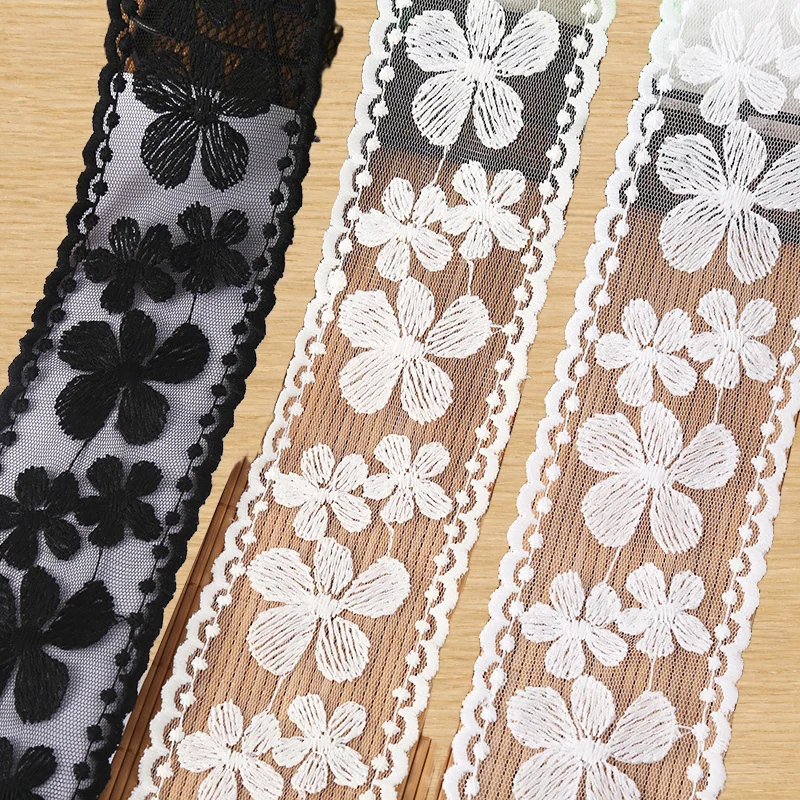
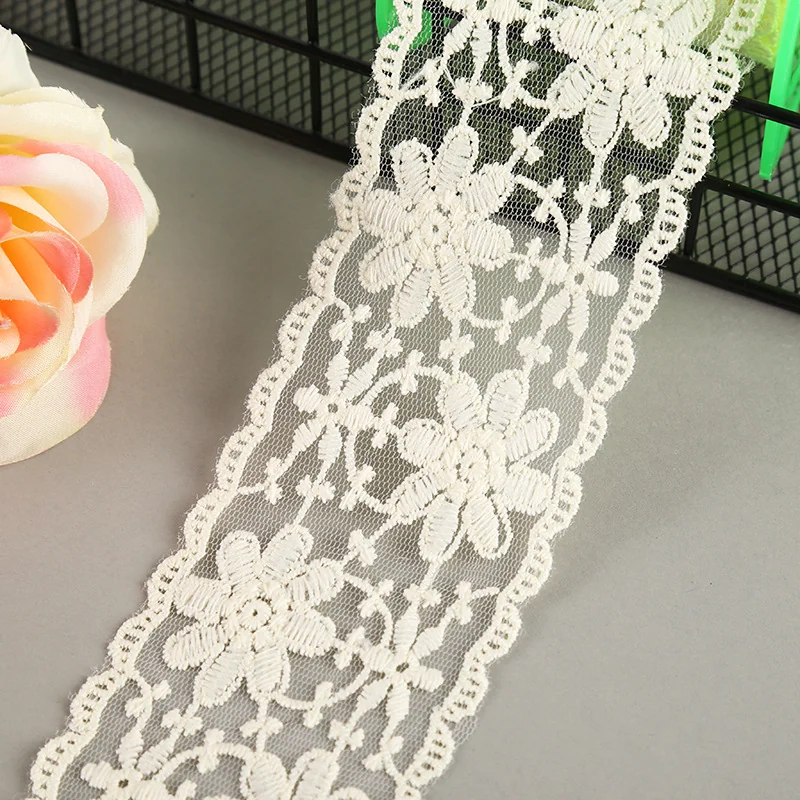
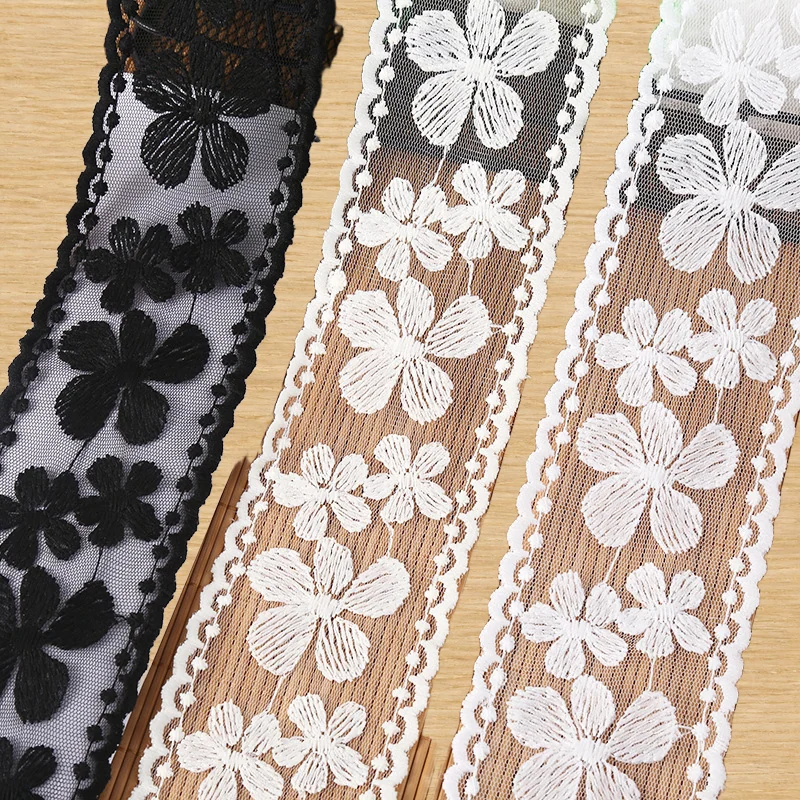
Our ivory floral lace trim is a useful starting point when an open floral outline is central to the design. The black-and-white floral reference lets you compare the visual effect of dark and light decoration. These are separate catalogue references: similarity in a photograph does not establish identical yarn, softness, dimensions or production conditions.
Shortlist two or three references and request enough length to make both cuffs, a joining trial and a care specimen. Record each product reference with its own physical sample label. Do not approve an entire photo group as one interchangeable material or describe any pictured colour as available stock without a current quotation.
3. Measure usable width, not just maximum width
For a scalloped or irregular trim, record the maximum width at a motif peak, the narrowest relevant area and the continuous zone available for stitching. Then mark how much will be hidden under the sleeve edge. The visible width after sewing is the dimension the designer needs; the widest point alone may overstate the decorative coverage.
Measure several places on the relaxed sample using the same reference points. Agree the measurement method and acceptable variation in writing before bulk approval. A catalogue dimension is a selection reference, not an agreed tolerance, and a ruler placed across a stretched lace sample gives a misleading comparison.
4. Check skin contact and finished sleeve movement
Handle both faces and the cut ends. Mark the face intended against the wrist and inspect raised knots, firm edges and exposed joining points. Softness is an approval judgement made on a sample with the intended wearer and application in mind; it cannot be established by how delicate a motif looks in a photograph.
Hang the sewn sleeve beside an untrimmed control in the same fabric. Lift and lower the forearm, bend the wrist and check whether the cuff flares, twists or catches. If the trim dominates the shell fabric, revise its placement, support or candidate reference, then repeat the comparison rather than approving the loose swatch alone.
5. Ask for composition and weight in the right units
Request the stated fibre composition for the exact reference and colour, including any ground, decorative thread or metallic-looking component. Do not infer cotton from a crochet-like appearance or metal content from a shiny thread. Where evidence is missing, keep the specification open and ask what documentation or testing can support the required declaration.
For a narrow trim, grams per metre often makes the cuff calculation clearer than fabric GSM. Weigh a measured relaxed length, subtract packaging and record the length and condition. Divide net grams by metres. Use the result with the actual cut length to estimate decoration mass, then verify the complete sewn cuff; this calculation does not measure softness or comfort.
6. Approve colour against the actual Abaya fabric
Send a labelled shell swatch and state whether the aim is a close match, deliberate contrast or a coordinated accent. For a black Abaya, compare the chosen trim on the black fabric rather than against a white desk. Check the base, decorative thread and seam thread together. A colour name or screen image is not a signed physical colour standard.
Agree the viewing lights and record the sample version used for approval. If a custom colour is requested, confirm feasibility, the colour-approval stage, charges and the minimum for that colour in the current quote. Our photographs show sample appearances; they do not promise that every shown shade can be reordered immediately or matched without development.
7. Plan the pair, the repeat and the join
Lay out left and right cuffs together. Mark the front-facing motif centre, the direction of leaves or scallops and where the seam can hide an end. Turning one strip around does not necessarily produce a true mirrored motif. If visual symmetry matters, approve both finished cuffs in the intended orientation before the cutting plan is frozen.
Illustrative arithmetic only: a 280 mm decoration path plus a 10 mm join gives 290 mm per cuff, or 580 mm per garment. For 1,000 garments that is 580 m before measured cutting losses. These numbers are not sleeve-size advice or a material quote. Add only the losses established by your real repeat layout, joins, roll ends and rejected sections.
8. Review the sewn sample before and after care
Use the intended shell, trim, sewing thread and seam arrangement in the trial. Coats identifies several possible contributors to seam puckering, so a wavy edge should trigger a controlled sewing review rather than an automatic judgement that all lace is unsuitable. Record the actual trial setup and change one variable at a time.
Agree a care procedure suitable for the intended garment before testing. Label an untreated control and the treated pair, then compare dimensions, colour transfer, edge curl, attachment and handfeel after the agreed drying and finishing steps. This is an approval plan, not a claim that the pictured trim has already passed a wash or colourfastness test.
Technical references
9. Send a complete cuff sampling brief
Use one revision-controlled record for the buyer, pattern room and supplier. The following fields make missing information visible before sample work starts. Keep commercial terms separate from design approval: accepting a motif does not accept a price, a colour minimum or a shipment date.
| Field | What to provide or agree |
|---|---|
| Placement and size | Sleeve drawing, opening, visible width, stitch line and left/right direction |
| Material and colour | Exact trim reference, shell swatch, composition evidence and approved colour sample |
| Trial and acceptance | Two sewn cuffs, measurement method, care procedure and recorded deviations |
| Quote and schedule | Quantity by style/colour, sample scope, current MOQ, destination and approval milestones |
Discuss your embroidery project
Send All4Lace your sleeve drawing, actual shell swatch, selected floral trim references and quantity by colour. Ask for a cuff sampling proposal with the unresolved dimensions, colour conditions and schedule clearly marked before bulk approval.
Contact Zhijin