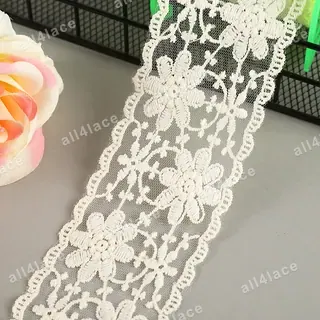
If a lace listing says “milk silk”, use those words to identify the listing and ask for a fibre breakdown for the selected item. The name alone cannot tell you whether the trim contains polyester, a regenerated protein fibre, silk or a blend.
Check the fibre name behind the listing
A finish can look smooth or silk-like across several fibre types. Ask the supplier which generic fibres the name refers to for the exact item and colour you want. A description of another fabric with the same trade name cannot establish the makeup of this sample.
The U.S. manufactured-fibre definitions list polyester separately from azlon, a fibre made from regenerated naturally occurring proteins. Those definitions help distinguish the possibilities. They do not establish that a particular listing described as milk silk contains either one.
Sources & further reading
Ask which part of the lace the declaration describes
Find out whether the document describes the embroidery thread, the ground where present, or the finished trim. Ask for generic fibre names and percentages by weight on the stated basis. Keep the reference, colour and lot on the same record so the figures can be traced to the quoted sample.
A product name or hang-tag can carry less information than a full fibre declaration. The U.S. Federal Trade Commission’s labelling guide explains the difference between a hang-tag and the information required on covered textile products. For an order, keep the supplier’s composition record with the quotation and the approved swatch.
Sources & further reading
Use the ivory floral trim as a practical example
The original product record for the ivory floral trim below uses the name “milk silk”. Its fibre composition and percentages are still to be confirmed. The photograph helps you compare the floral shape and trim form. The sample is quoted by the yard, so specify your preferred length as well as the intended garment placement.
Write a request the supplier can answer
You can ask for the generic fibres and percentages for the quoted reference and colour, the part of the trim each result covers, and the lot represented by the declaration. If a composition requirement affects approval, agree what document or independent test is needed before the order is released.
- Write down the item reference, colour and sample lot.
- Separate embroidery thread, ground and finished-trim claims where applicable.
- Match the fibre declaration to the approved sample and quote.
Discuss your embroidery project
Send the trim reference, colour and intended use to All4Lace, and specify which composition information you need before approving a sample.
Contact Zhijin